In 1959, Black children attended segregated schools, and their lives often revolved around their Black church.
But that year, a park was created on Oswego Avenue in Takoma Park as a meeting place for Black children to “attend dances, play records and socialize,” according to Artie Harris, Montgomery County Chair of the Planning Board. The park represents “the hard-fought journey” of the Black community.
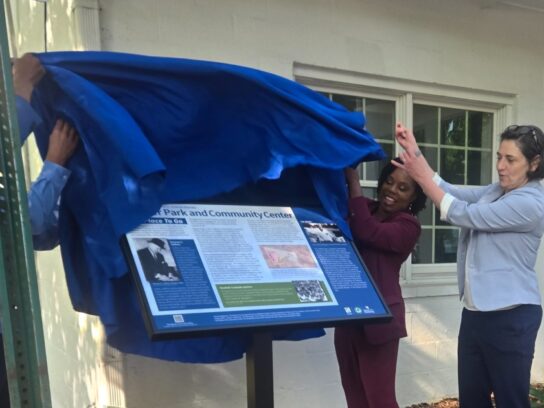
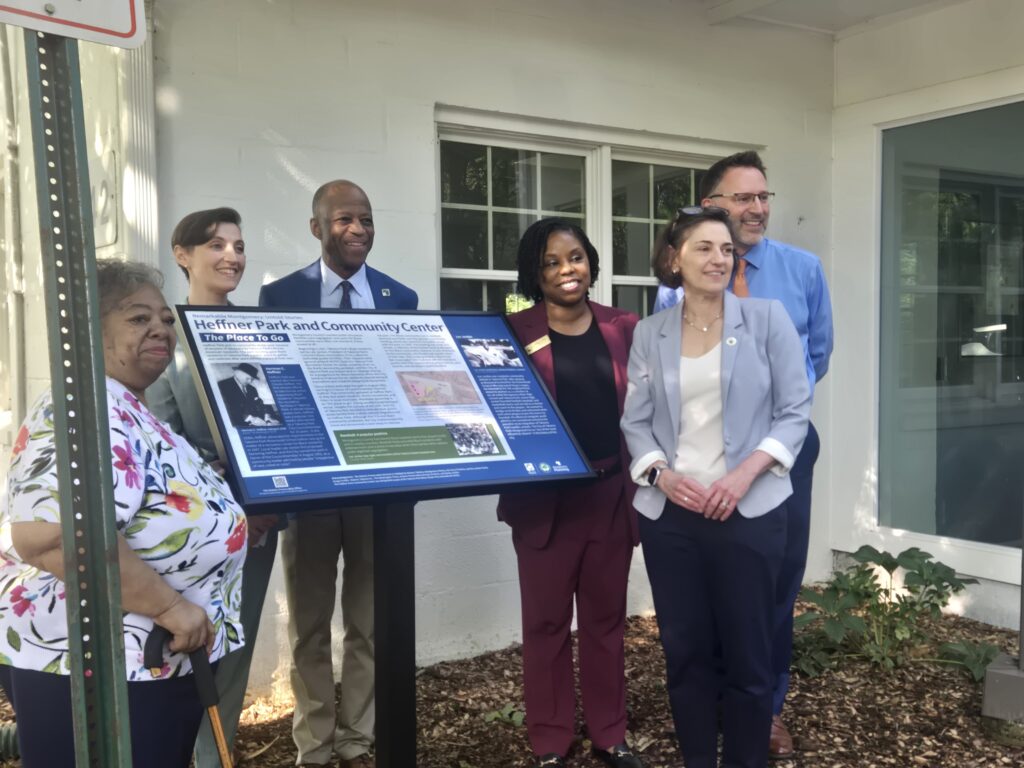
Thursday morning, Montgomery County and Takoma Park officials and long-time residents gathered to unveil a plaque at Heffner Park, which was named in 1952 after former Takoma Park Councilmember Herman Heffner, “the first elected official to take formal action supporting Black residents’ requests for recreation facilities,” according to the plaque.
“During segregation, recreation opportunities for Blacks were limited,” explained Rebecca Ballo, the county’s Historic Preservation Division Chief.
It is important “to understand our past, and we are determined not to repeat it,” said Takoma Park Mayor Talisha Searcy. Everyone should work toward “creating a truly equitable society,” she said, adding, “It’s not just about a name we leave on a building. It’s about the legacy we leave.”
County Councilmember Kate Stewart, a former Takoma Park mayor, talked about the importance of past injustices to ensure they are not repeated. “Today, it is not just about a plaque,” she said, stressing the importance of countering national attempts to erase history.
The late Lee Jordon, president of the Colored Citizens Association in the area, was honored for his leadership and mentorship in church and sports.
According to the plaque, Jordan played professional baseball for the Homestead Grays in the Negro League. He worked as a custodian at the then all-white Montgomery Blair High School and Takoma Park Junior High.
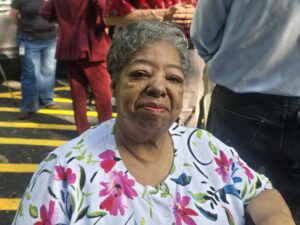
Patricia Matthews
Patricia Matthews, the only survivor of Jordan’s five children, lovingly recalled coming to Heffner Park. She attended a segregated school on nearby Geneva Avenue in Takoma Park, where there were only two teachers for the first through sixth-grade school.
She grew up unaware of the inequities, she told MCM. “The Black community here was like a city within in a city. We were taken care of.”
Watching the plaque unveiling was “an honor” and a chance to come “full circle,” she said. “There are so many people who have so many stories about how he (her father) turned their life around.”
Matthews handed over a small folder containing minutes from the Colored Citizens Association “all the way back to 1949.”
According to the plaque, “Heffner Park and its community center exist because of decades of advocacy by Takoma Park’s African American residents. The park building gave Black residents of Takoma Park a public place to gather and celebrate after years without a place of their own.”
Also on the plaque, it states, “Beginning in 1941, Takoma Park’s Black residents, led by Lee Jordan, President of Takoma Park’s Colored Citizens Association (CCA) called for dedicated public facilities. Their requests were ignored.”
The marker is the latest project from Remarkable Montgomery: Untold Stories, a partnership between Montgomery Planning and Montgomery Parks to install markers throughout the county and bring recognition to people, places and events with significant histories that have been undervalued in the past.

Comments are closed.