Neighbors in Montgomery County’s farm country are reading Gov. Wes Moore’s new data center executive order line by line, searching for what it means for their community.
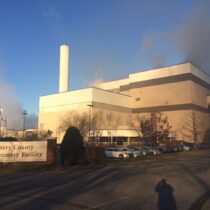
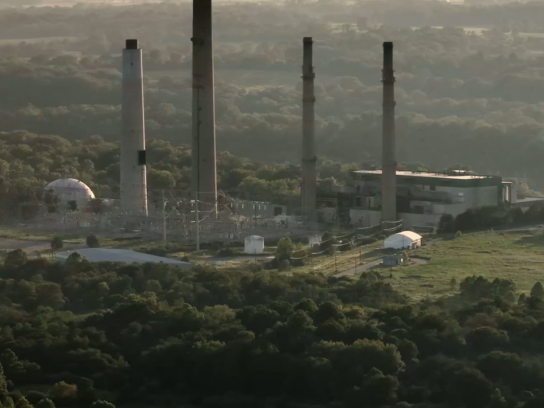
The recent order creates a state review for large data centers. For people in Dickerson, it raises a familiar question: What happens to the old coal plant along the Potomac River?
“It’s another piece of the puzzle,” said Steven Findlay, a board member of the Sugarloaf Citizens Association.
Findlay read the order twice. “That was like reading … quantum physics,” he said.
Gov. Moore’s order arrives as Montgomery County is in the middle of an 18-month pause on permits for large data centers. The county’s review has put the Dickerson proposal on hold, and local leaders say the state’s new framework will inform but not replace their decisions.
Not everyone is sold. Environmental groups call the order too vague and want lawmakers to pass a statewide pause.
A view from Dickerson
Findlay has lived in Montgomery County for 45 years. He first heard about plans for a data center at the former coal plant site about four years ago, when Terra Energy, the company that owns the site, contacted the Sugarloaf Citizens Association.
“It hit us like a ton of bricks,” Findlay said.
Atmosphere Data Centers, a California company, later took over plans for a data center campus on part of the site.
Four years later, Findlay still has more questions than answers. Water tops his list.
“This thing is right on the Potomac River,” he said. “That’s a big deal.”
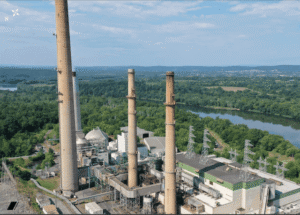
Plant smokestacks and industrial buildings sit near the Potomac River, raising questions about water use and environmental impact.
Earlier plans called for using the old plant’s river intake to cool the data centers. The water would then flow back into the Potomac, MCM reported.
Findlay said residents also want to know how much power the facility would draw and where it would come from. Neighbors worry about noise and construction traffic, too.
Findlay’s concerns match national polling. A recent Gallup survey found 71% of Americans oppose AI data centers in their area. Opponents most often cited water usage, energy demand and loss of farmland as their top concerns.
He credits the county pause with giving residents time to learn and weigh in.
“It’s great that we passed the moratorium,” Findlay said. “We all get to sit back and go, ‘All right, let’s begin to tackle these questions,’ and do so in a way that’s transparent to our communities.”
What the state executive order does
The order creates a state Data Center Task Force. It reviews projects that expect peak demand of 25 megawatts or more.
The task force will rate each project as aligned, conditionally aligned or not aligned with five state priorities:
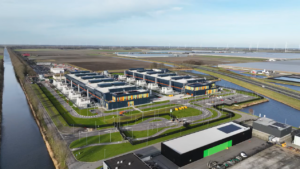
Large data centers can span dozens of acres and require significant cooling and electrical infrastructure.
- Data centers pay their own way
- Marylanders share in the economic benefits
- Communities have a voice
- Air, water and the environment stay protected
- Developers stay transparent and accountable
Large data centers can span dozens of acres and require significant cooling and electrical infrastructure.
The order also bans new nondisclosure agreements between state agencies and developers. It creates a public dashboard to track what developers promise and deliver.
“They need to pay their own way, or they need to go away,” Gov. Moore said.
He also pledged the state “will not go around a local community’s ‘no.'”
Where Montgomery County leaders stand
The County Council voted unanimously earlier this year to pause new permits for large data centers for 18 months under Expedited Bill 19‑26. The Council also passed a separate zoning measure that defines what counts as a data center.
“This effort complements Montgomery County’s 18-month pause on data center development,” said Council President Natali Fani-González. “I look forward to working with the members of Maryland’s Data Center Task Force to ensure that the interests of Montgomery County residents are protected.”
She also said that she anticipate’s drafting new zoning rules in 2027 with the new Council with “the benefit of a variety of sources of information and lessons learned.” Those sources include a state data center impact report and the governor’s task force.
Fani-González said the Council has “no current plans to change zoning for smaller data centers.”
“I welcome Governor Moore’s executive order and its emphasis on protecting ratepayers, hearing from communities and making developers’ commitments public and accountable,” said Councilmember Laurie‑Anne Sayles. “The state’s review may provide useful information… but it does not decide the county’s land‑use questions or replace our local review.”
Sayles plans to introduce community benefit investment agreement legislation to make any project’s benefits and obligations “clear and enforceable.”
County Executive Marc Elrich said his staff is reviewing how the state framework fits the county’s work.
“Those questions need to be answered before we make decisions that could have consequences for decades,” Elrich wrote in a newsletter to residents.
Environmental pushback
Angie McCarthy, clean energy campaign manager for Nature Forward, called the order “a good first step.” She praised the ban on nondisclosure agreements and the new dashboard. But McCarthy added the order falls short on environmental protections.
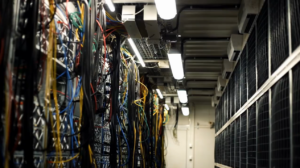
Large data centers rely on extensive cooling and electrical systems.
Nature Forward said the order does not define “clean generation,” does not protect farmland or forests and does not address impacts on overburdened communities. The group wants a statewide pause until the General Assembly passes enforceable protections.
Food & Water Watch called the order too vague. The group said it lacks clear details on how the state will evaluate projects or protect residents.
“The General Assembly should not allow the governor to set ambiguous goals for this dangerous industry,” said Grace DeLallo from Food & Water Watch.
The group wants lawmakers to pass a statewide moratorium. It said a pause would allow time for study, risk assessment, public input and firm regulations.
Food & Water Watch said the order sets no clear measures for impacts on health, electricity rates, water or property values. The group also raised concerns about power for the Dickerson project.
“The Dickerson proposal requires massive amounts of electricity, likely requiring the buildout of a new power plant,” DeLallo said.
Industry response
Atmosphere Data Centers told MCM it is reviewing the executive order and could not answer questions yet. The company said it will share more information when it can.
Findlay said interest now stretches well beyond Dickerson. Residents across the county are watching how the next 18 months unfold.
“It’s now extremely clear the community cares about this issue,” he said.