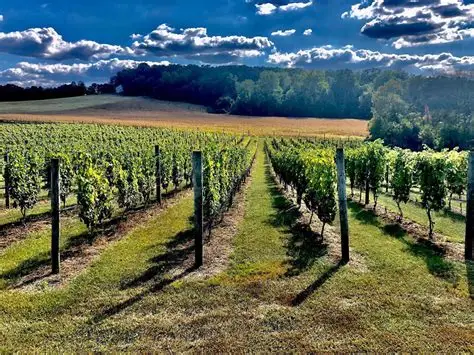
Manolo Gomez is the head winemaker at the award-winning Sugarloaf Mountain Vineyard in Dickerson. Since 2007, he has seen some challenging times from Mother Nature. The frost of April 21 has set an all-time record of loss.
“A year ago, we were at about 60 to 65 tons of production, and this year we hope for five or 10. The warm early spring produced buds that could not stand that cold,” said Gomez.
The battle is carried out daily by hand. Machines can harvest but lack the detail necessary, especially at this time. Along with Assistant Winemaker Cori Duffer, they are trimming back the foliage on each vine to help maximize the plant energy for the grapes. There are 22 acres and 44,000 vines for them to manage. Trimming is just one of the procedures to help maximize the crop.
“We are working to help save next year — and we are resilient,” said Gomez.
Their level of care and attention to the vineyard and grapes reflects a genuine dedication to their craft.
Statewide Losses
The Maryland Wineries Association reported a total loss of more than 36% of the state’s grape acreage. Projected wine sales estimate a $24.4 million deficit for the 2026 vintage. Some orchards and vineyards report a near-total loss of their crops for 2026, according to the Farm Bureau.
The Maryland Farm Service Agency and Maryland Wineries Association report losses exceeding 67.5% across specialty crops, with over 320 acres impacted. Preliminary reports from the Maryland Farm Service Agency indicate the loss of up to 94% of the apple crop, 99% of the peach crop, and 98% of the barley crop, according to Gov. Wes Moore. The state estimates $4.2 million in ongoing maintenance costs for grape crops.
Limited Financial Assistance
While the USDA’s Supplemental Disaster Relief and Farmer Bridge Assistance programs have since closed, on June 15, Gov. Moore announced a Federal Secretarial Disaster Declaration following the devastating spring freeze.
“Maryland’s farmers are resilient, but the scale of this climate event exceeds local and state recovery capacities,” Moore said. “As highlighted by recent Maryland Farm Bureau surveys, our agricultural community remains vulnerable to extreme weather volatility and requires enhanced financial accessibility to maintain long-term viability.”
Even with the loan assistance program, winemakers and farmers will not recoup their financial losses. The impact on crops will last, and consumers will begin to feel it in the availability and price of fruits and vegetables into the fall. Wine lovers can support local vineyards by finding solace in vintage wines from past years’ harvests.
Flower farm turns to climate-smart solutions amid changing weather

Comments are closed.