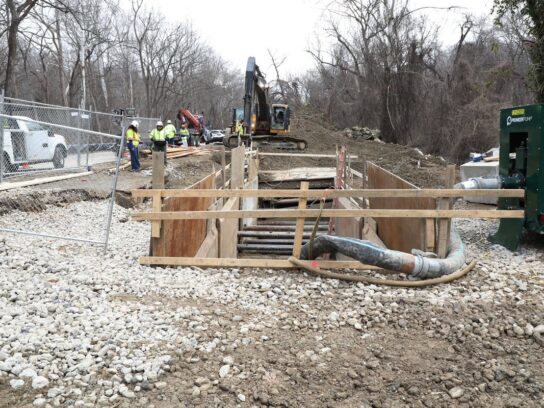
DC Water begins cleanup work at the site of the Potomac Interceptor collapse. The 240-million-gallon sewage spill into the river posed a major public health threat for the region, according to the Potomac Riverkeeper Network. The work follows approval from the National Park Service of a restoration plan.
A section of the 72-inch Potomac Interceptor failed Jan. 19 near Clara Barton Parkway. The break caused a major sanitary sewer overflow into the Potomac River and surrounding areas.
DC Water will remove contaminated soil, brush and debris from the collapse site. Crews are clearing damaged vegetation and impacted areas within the C&O Canal National Historical Park. Work will focus on the collapse area, nearby wetlands and affected streams.
DC Water is coordinating with the National Park Service and other agencies. The agency states that cleanup aims to stabilize the land and protect natural resources.
Phase 1 environmental restoration is now underway at the Potomac Interceptor site. Crews have begun hauling contaminated soil & clearing debris. Broader restoration will continue after emergency repairs are completed in mid March. Full restoration plan▶️: https://t.co/8rBCK7ryAg pic.twitter.com/IUJ2ahM5El
— DC Water (@dcwater) March 2, 2026
The emergency bypass system remains in place. DC Water reports no overflows into the Potomac River for weeks, with the last confirmed overflow occurring on Feb. 8.
Crews clean and prepare the pipe for emergency repairs. Workers plan to install a geopolymer liner, similar to concrete, to reinforce the damaged section. DC Water expects emergency repairs to finish by mid-March.
DC Water continues daily water quality monitoring in the Potomac and Anacostia rivers. The agency posts sampling data and updates online. Drinking water systems remain unaffected.
Protecting public health and restoring the environment remain top priorities for DC Water. Information and updates regarding the collapse and water quality are posted on DC Water’s official website.
Comments are closed.