This month I will give you three songs you can sing while hiking the famous Camino de Santiago in northern Spain. Two are tailored to the Camino and one is, IMHO, the greatest Irish trekking song. I will explain each song and also provide the words and guitar/ukulele chords. These were my favorite songs to sing while training for the Camino and on the Camino itself. Singing or whistling while hiking is a great way to increase your lung capacity, learn how to control your breath, and make the miles go by quicker.
I didn’t hear anyone else singing on the trail, and did get some funny looks, but I also got many compliments, and some fellow hikers joined in on the choruses or easy lines. Note that recent studies have shown that individual and group singing increases health, happiness and human connections!
That Old Camino de Santiago
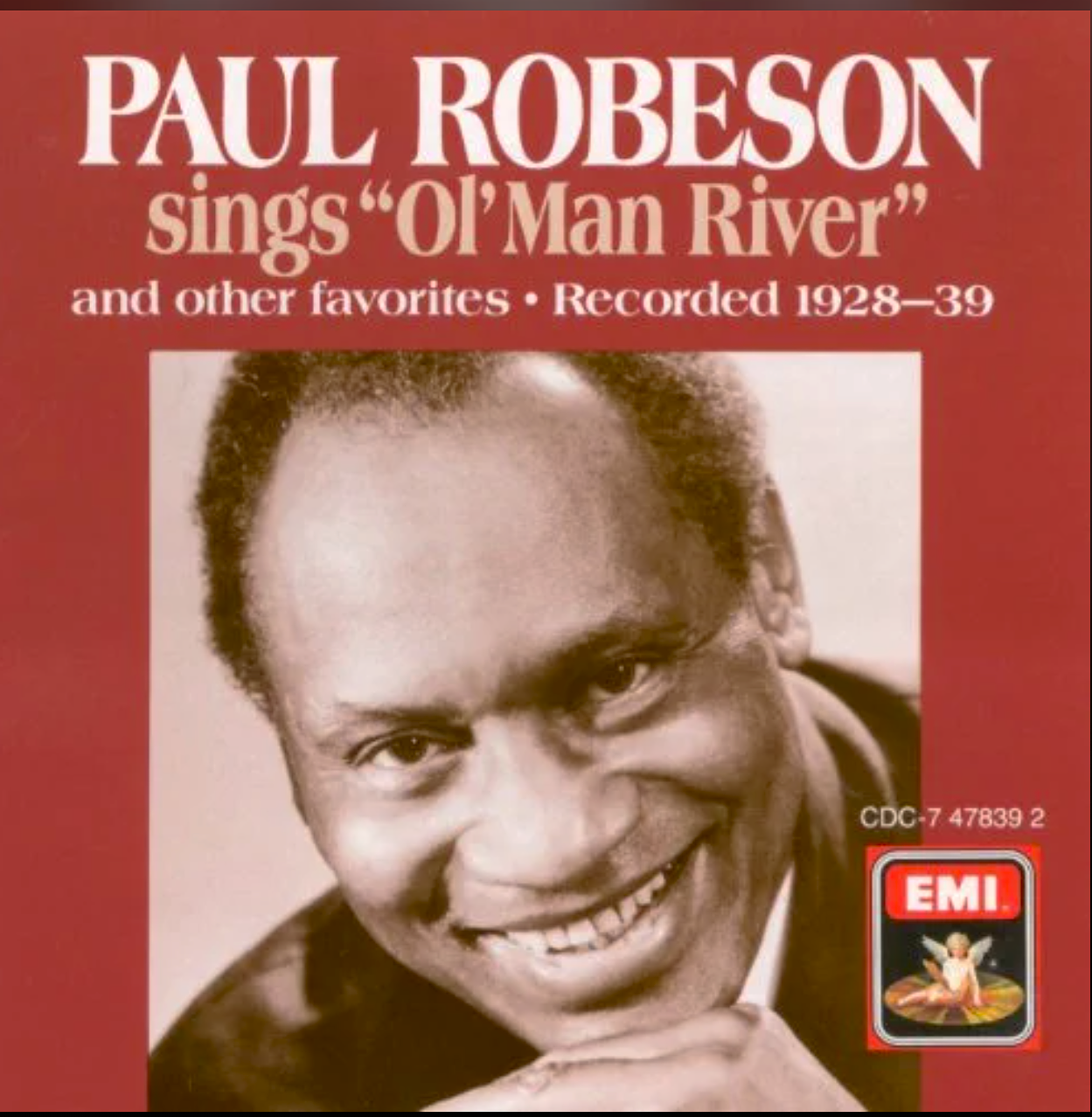
This song is based on “Old Man River” from the 1927 stage and later film musical Show Boat. It was rated by the American Film Institute as in the top 100 tunes in 100 years of film music. The original song was a lament about the difficult conditions for Black workers along the Mississippi River during the paddlewheel riverboat era, and it celebrated their determination and grit.
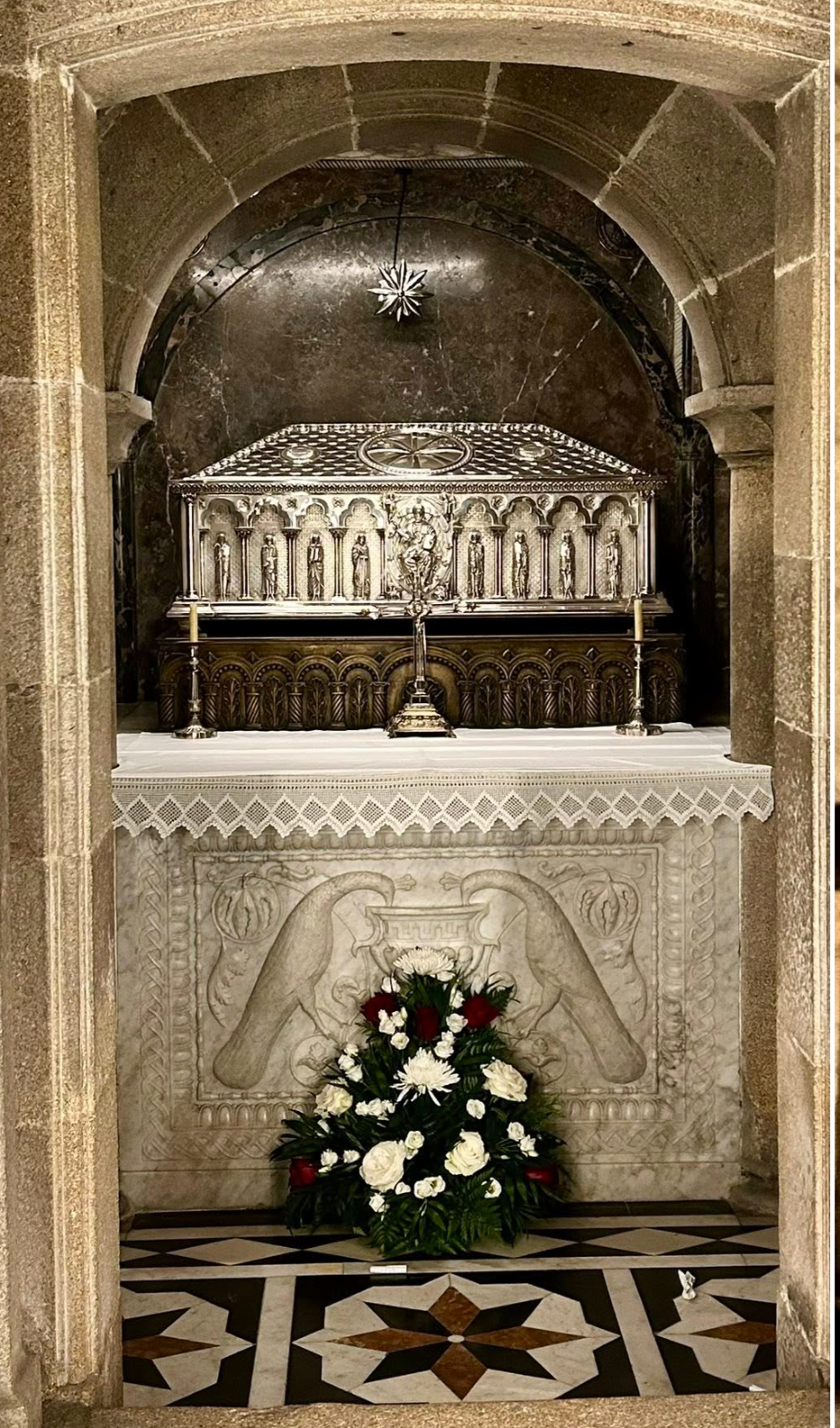
The third line in the first verse of my version of the song refers to Santiago (de Compostela) the town, the end point for all the Caminos, and also to the Saint, namely Iago – or James – the disciple of Christ whose bones are reportedly preserved in a silver box in the crypt of the town’s Cathedral.
The first line in the second verse refers to a “palomino,” a created rhyme and pun on “pal of mine” but also a reference to the fact that you can ride the Camino on horseback.
The “cattle” reference in the third verse comes from the many cattle you will see grazing in the fields beside the Camino.
“Get that stamp” in the fourth verse comes from the requirement to get your pilgrim passport stamped twice a day, in order to get the highly desired Compostela certificate. On the Camino Francés it is easy to collect up to six or more stamps per day, since almost every shop, restaurant, church and hotel has stamping devices and ink pads ready. But on some less-trafficked Caminos, especially in England, France, Germany and rural Spain, this is much more difficult.
In the same verse “the Albergue” is one of hundreds of barracks-like facilities that costs perhaps $7 to $20 per night for a bunk bed and shower. These are sometimes full and you might have to leg it onward to the next Albergue or even camp on the rugged Camino Primitivo or other less-traveled Caminos.
“Bikin’” in the fifth verse references the biker’s Camino route, which is often different and a bit easier than the hiking trail. Although bikers must go 200 kilometers to get their Compostela (compared to 100 for the hikers) they generally stick to paved roads and avoid steep rocky climbs. And their bikes can carry their day bags. So, they have it easier, and us hikers are a bit jealous and disdainful.
“Maxi” or large maximum blisters are the bane of a hiker’s existence. See my October 2025 column for preventative measures. “Take a taxi” refers to the many taxi phone numbers posted at most hotels and Alburgues. Clearly some hikers are tempted….
That Old Camino de Santiago
Tune: Ol’ Man River, Jerome Kern & Oscar Hammerstein II, 1927;
New words by Lew Toulmin 2025, Waltz
Intro: G C D7 G
G C
There’s a pilgrim path called the Old Camino
G D7
And that is where I want to be
Em Am
That path it leads to Sant Iago
Em Am G
He’s the one who will set me free!
G C G C
That Old Camino, my pal-omino,
G C G C
he don’t say nothin’, but must know somethin’,
D D7 D D7 G C G
That Old Camino, he just keeps rollin,’ along.
G C G C
He don’t raise cattle, he don’t plants cotton,
G Am Em Fmaj7
and them what plants it, they’re soon forgotten
D Am D C G C G
But Old’ Camino, he just keeps rollin’ along.
Gmaj7 Em Gmaj7 Em
You and me, we sweat and strain,
Gmaj7 Em Gmaj7 Em
body all achin’ and racked with pain.
Gmaj7 Em Gmaj7 Em
Tote that pack; get that stamp,
Gmaj7 Em Gmaj7 Am D
The Albergue’s full, we’ll have to ca-aaamp!
G C G C
I gets weary, and sick of hikin’,
G Am Em Am
Maybe I’ll cheat – and take up bikin’!
G Em Am D7 G C G
but that Old Camino, he just keeps rollin’ along.
G C G C
My blister’s a maxi, maybe I’ll take a taxi,
G Am Em Am
But that’s no go, ‘cause me and Old Camino,
G Am G Am D7 G C G
We gotta keep hikin’, we gotta keep walkin’, we gotta keep rollin’ along!
The Rocky Road to Dublin
This is one of the greatest Irish hiking songs, with a wonderful rhythm and story. It is often rated as “Ireland’s favorite folk song.” I sang it many times while hiking the Camino. The most famous version is by Makem and Clancy, but they and many groups sing it so fast and it has so many colloquialisms that it is impossible to understand. So I will decode it here.
In the first verse, our hero is leaving his home and family in Tuam, a town near the west coast in County Galway, in the Province of Connaught. He is sad that he must head for Liverpool in England to get work, likely due to the recent Irish famine and economic collapse of 1845-52. He is “off to reap the corn,” meaning he is seeking work, similar to our phrase of “earning a crust of bread.” He buys a “pair of brogues” – new shoes for his journey. And he “cuts a stout blackthorn,” which means a strong, heavy walking stick or “shillelagh” – which is used as a fierce weapon in the last verse.
In the chorus, he tells us to “Hunt the Hare.” This is an old Irish jig about hunting rabbits and the vicissitudes of life. Our hero wants us to “turn” our partner and dance a jig along with him as he hikes and dances down the rocky road to Dublin – and the road of life.
The phrase in the chorus of “whack for al de rah” has no meaning in English or Gaelic, but is a musical expression of joy, excitement and combativeness.
In the second verse, our hero arrives in Mullingar, a town in central Ireland, and takes “a drop of the pure” – Irish whiskey. The “Paddy” is him, and a generic name for any Irishman. He meets some local girls who seem to want him to stay, due to his beguiling “curious style.”
“Paddy” arrives in Dublin in the third verse, but is sad that he can’t stay long, probably because he has no money. Then his small “bundle” of possessions that “wobble” on the end of his “stick” is stolen in a “neat locality” – a rich neighborhood. Trying to find the thief, he finds that the authorities and locals distain his rural Connaught accent and won’t help him.
Next Paddy “lands on the quay” in Dublin and jumps aboard a ship bound for England. He is put down in a pigsty in the wet bottom of the vessel, but remains cheerful and plays some “funny rigs” – lighthearted musical compositions. But when the ship is “off Holyhead” (a port on NW Anglesey in Wales) in the Irish Sea, he gets very seasick and wishes he “was dead” or back on land “on the rocky road to Dublin.”
(I have sailed and capsized a very small boat in the Menai Straits, part of the Irish Sea, and know that is no fun to be cold, wet and miserable there!)
In the final verse he arrives at his destination of Liverpool (and likely will seek work on the docks, or perhaps even ship out as a deckhand). But immediately he encounters a gang of local “boys of Liverpool” who disparage “old Erin’s isle” (Ireland) and make him very angry. He starts fighting them with his “shillelagh” but is hard pressed (“hobblin’”) until a group of Irishmen from his county of Galway see his plight and join in “the affray” and defeat the Liverpudlians.
THE ROCKY ROAD TO DUBLIN
D.K. Gavan, 1867, minor changes by Lew Toulmin 2024-5, bass strum
Intro: Am G Am
[Am] In the merry month of June, from me home I started, left the girls of Tuam,
[G] so sad and broken hearted, [Am] saluted Father dear, kissed me darling mother
Drank a pint of beer, [G] me grief and tears to smother
[Am] Then off to reap the [G] corn, [Am] leave where I was [G] born
[Am] Cut a stout [G] blackthorn, to banish ghosts and goblins
[Am] Bought a pair of [G] brogues, [Am] rattlin’ o’er the [G] bogs
[Am] Frightenin’ all the [G] dogs, on the rocky road to Dublin
CHORUS: [Am] One two [G] three four [Am] five
Hunt the Hare and turn her, down the rocky road
And [G] all the way to Dublin, [Am] whack for [G] al de [Am] rah!
[Am] In Mullingar that night, I rested limbs so weary, started by daylight,
[G] me spirits bright and airy, [Am] Took a drop o’ the pure, to keep me heart from sinking
That’s the Paddy’s cure, [G] whenever he’s on for drinking
[Am] And I saw the lassies [G] smile, [Am] laughing all the [G] while
[Am] At me curious [G] style, ‘twould set your heart a bubblin’
[Am] They asked if I was [G] hired, [Am] wages I [G] required?
[Am] ‘Till I was nearly [G], tired! On the rocky road to Dublin CHORUS
[Am] In Dublin next arrived, I thought it such a pity, to be so soon deprived,
[G] a view of that fine city, [Am] well then I took a stroll, all among the quality
Bundle it was stole, [G] all in a neat locality
[Am] Somethin’ crossed me [G] mind, [Am] when I looked [G] behind
[Am] No bundle could I [G] find, upon me stick a wobblin’
[Am] Enquiring for the [G] rogue, [Am] they said me Connaught [G] brogue
[Am] Wasn’t much in [G] vogue, on the rocky road to Dublin CHORUS
[Am] From there I got away, me spirits never failing, landed on the quay,
[G] Just as the ship was sailin’, [Am] the Captain at me roared, said that no room had he
But when I jumped aboard, [G] a cabin he found for Paddy
[Am] Down among the [G] pigs! [Am] So I played some funny [G] rigs
[Am] Danced some hearty [G] jigs, the water round me bubbling
[Am] But when off Holy [G] head, [Am] wished meself was [G] dead
[Am] Or better far in[G] stead — on the rocky road to Dublin! CHORUS
[Am] Well, the boys of Liverpool, when we safely landed, called meself a fool,
[G] I could no longer stand it, [Am] me blood began to boil, temper I was losing
Poor old Erin’s isle, [G] they began abusing
[Am] “Hurrah me soul!” [G] says I, [Am] shillelagh I let [G] fly
[Am] Some Galway boys were [G] nigh, and saw I was a hobblin’
[Am] With a loud [G] “Hurray!” — [Am] they joined me in the [G] affray
[Am] We quickly cleared the [G] way, on that rocky road from Dublin
CHORUS: [Am] One two [G] three four [Am] five
Hunt the Hare and turn her, down the rocky road
And [G] all the way to Dublin, [Am] whack fo [G] ral de [Am] rah!
[Am] whack fo [G] ral de [Am] rah!
[Single]: [Am] Whack fo [G] ral de [Am] rah!
Over the Hills and Far Away on Camino
This fantastic English military song dates back to the late 17th century, and one famous version from 1706 by George Farquhar in his play “The Recruiting Officer” refers to British soldiers fighting “over the hills and far away” in Flanders, Portugal and Spain in the War of the Spanish Succession. My version is mainly derived from the “Sharpe” TV series set in the Napoleonic Peninsular War (1808-1814) in Spain and Portugal.
“The Way” in the first verse refers to the nickname “The Way” for the Camino, usually the Camino Francés, and also to the 2010 movie by the same name with Martin Sheen and Emilio Estavez. “The hills” mentioned throughout the song is a reference to the many, many hills on the Camino. If you walk the entire Camino Francés (about 500 miles), you will gain about 45,000 feet of elevation, taller than Mt. Everest!
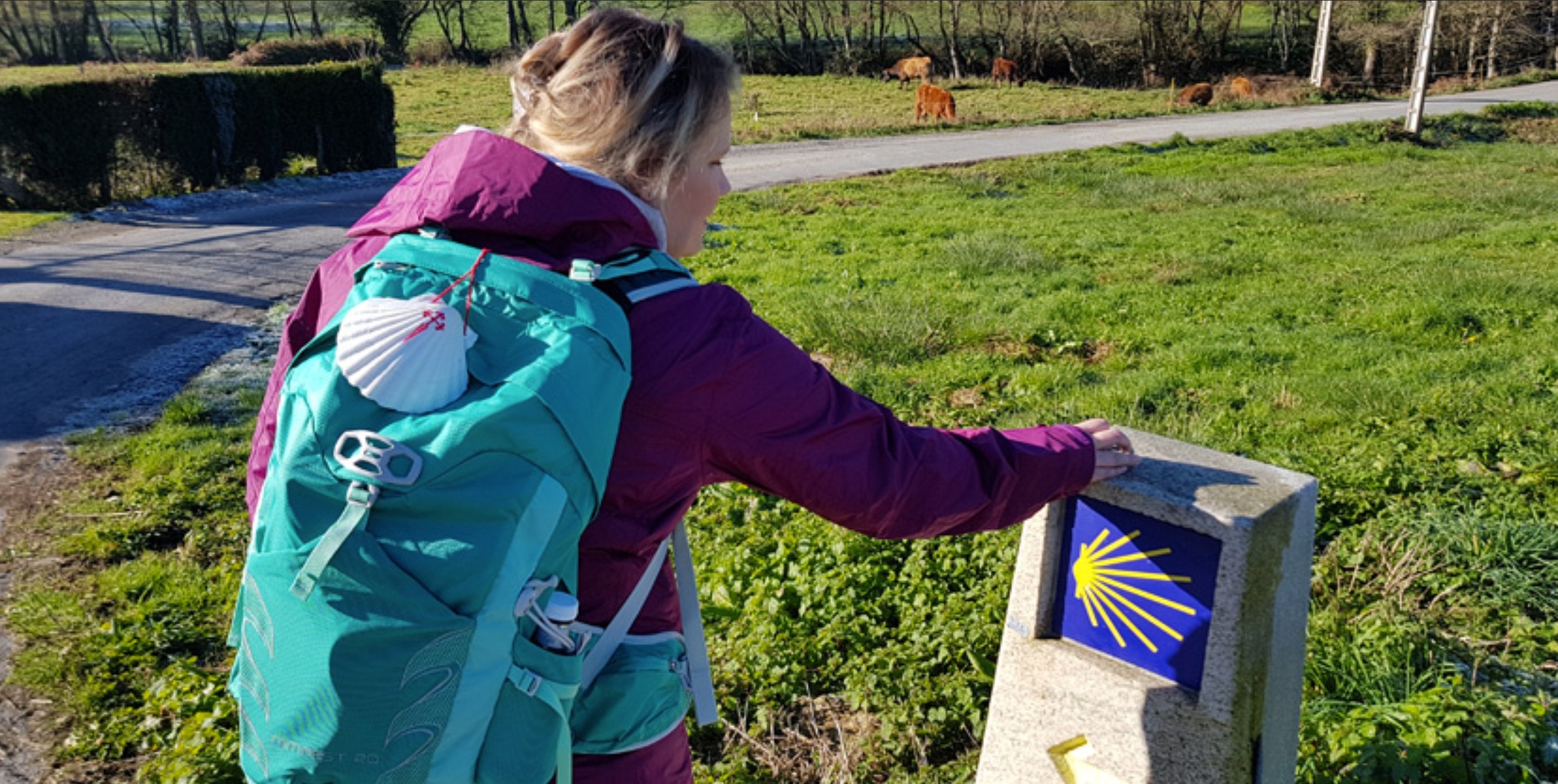
In the last verse, “sacred shells” are carried by almost all pilgrims on their backpacks. These are usually actual white seashells purchased at the start, with a painted red cross of St. James. I chose a shell-like patch, since I was afraid a shell might get damaged while putting down and picking up the pack numerous times.
OVER THE HILLS AND FAR AWAY ON CAMINO
Tune: Over the Hils and Far Away, Original Trad. c. 1690;
Napoleonic Peninsular War version, c. 1810 and “Sharpe” 1993
New words by Lew Toulmin, 4/2025; waltz
Intro: C G7 Dm C
[Single strokes]
[C] Well here’s a tune you all can [G7] hum
[G] If on Camino [Dm] you would [G] come;
[C] Enlist and walk the Way today [G7];
[G] Over the hills & [Dm] far [G] away!
Chorus:
[Waltz]
[C] O’er the hills of northern [G7] Spain
[G] We walk until [Dm] our goal we [G7] gain
[C] St. James doth call & we [G7] obey
[G] Over the hills and [Dm] far [G] away.
[C] Now though I travel far from [G7] Spain
[G] A part of me [Dm] shall yet [G] remain
[C] For the Way is with me night & day [G7]
[G] Over the hills & [Dm] far [G] away.
[C] So let us walk until we’ve [G7] won
[G] With sacred shells [Dm] shining in the [G] sun
[C] Along the road to come what may [G7]
[G] Over the hills and [Dm] far [G] away
Final Chorus:
[C] O’er the hills of lovely [G7] Spain
[G] We walk until [Dm] our goal we [G7] gain
[C] St. James doth call & we [G7] obey
[G] Over the hills and [Dm] far [G] away,
[Dm] far [G] away, [Dm] far [G] away…..
Chorus
As the song says, once you have hiked the Camino, it is “with you night and day.”
Buen Canta y Buen Camino!
*****
Note that this column is a follow-up to the logistics and blisters/feet/training articles on the Camino de Santiago from September and October of 2025, and my earlier general Camino articles. For these pieces see:
https://www.mymcmedia.org/hiking-the-famous-camino-de-santiago-part-1-logistics/
https://www.mymcmedia.org/hiking-the-camino-de-santiago-blisters-feet-and-training/
https://www.mymcmedia.org/blog-top-tips-for-tackling-el-camino-de-santiago-part-1/
https://www.mymcmedia.org/blog-el-camino-de-santiago-part-2-regional-highlights/
Photos and captions:
- Paul Robeson (1898-1976) was an American bass-baritone concert artist, All-American and professional football player, valedictorian at Columbia Law School, lawyer and activist. His version of “Ol’ Man River” is considered the greatest, and he rewrote some of the lyrics which he deemed racist.
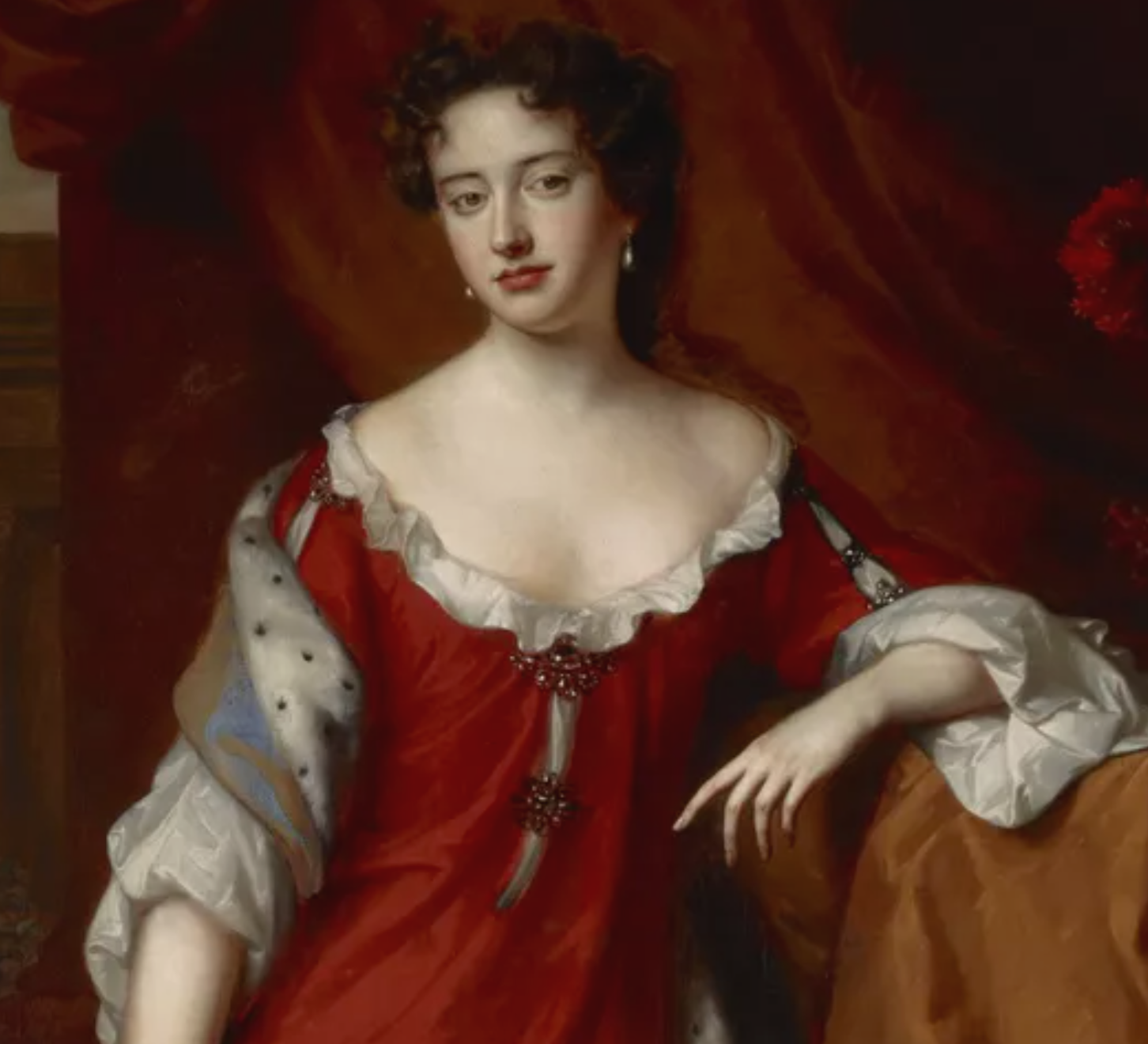
2. Queen Anne of Britain in 1685, before being crowned. She was one of the most important but least recognized monarchs of Britain. Her reign (1702-1714) set the stage for the creation and expansion of the British Empire. An early version of “Over the Hills and Far Away” has a line in the chorus of “Queen Anne commands and we obey.” (Painting by Jan van der Varat.)
3. This silver relic box in the crypt of the Cathedral of Santiago de Compostela reportedly holds the bones of St. James, one of the twelve disciples of Christ. According to legend he left the Holy Land, preached in northwest Spain, returned to Palestine, and was martyred there in 44 AD. His bones were sailed in a stone boat to Padron (Iria Flavia) in Galicia, Spain, buried, lost, then re-discovered in the 9th century by a hermit following a shower of stars (“Compostela”).
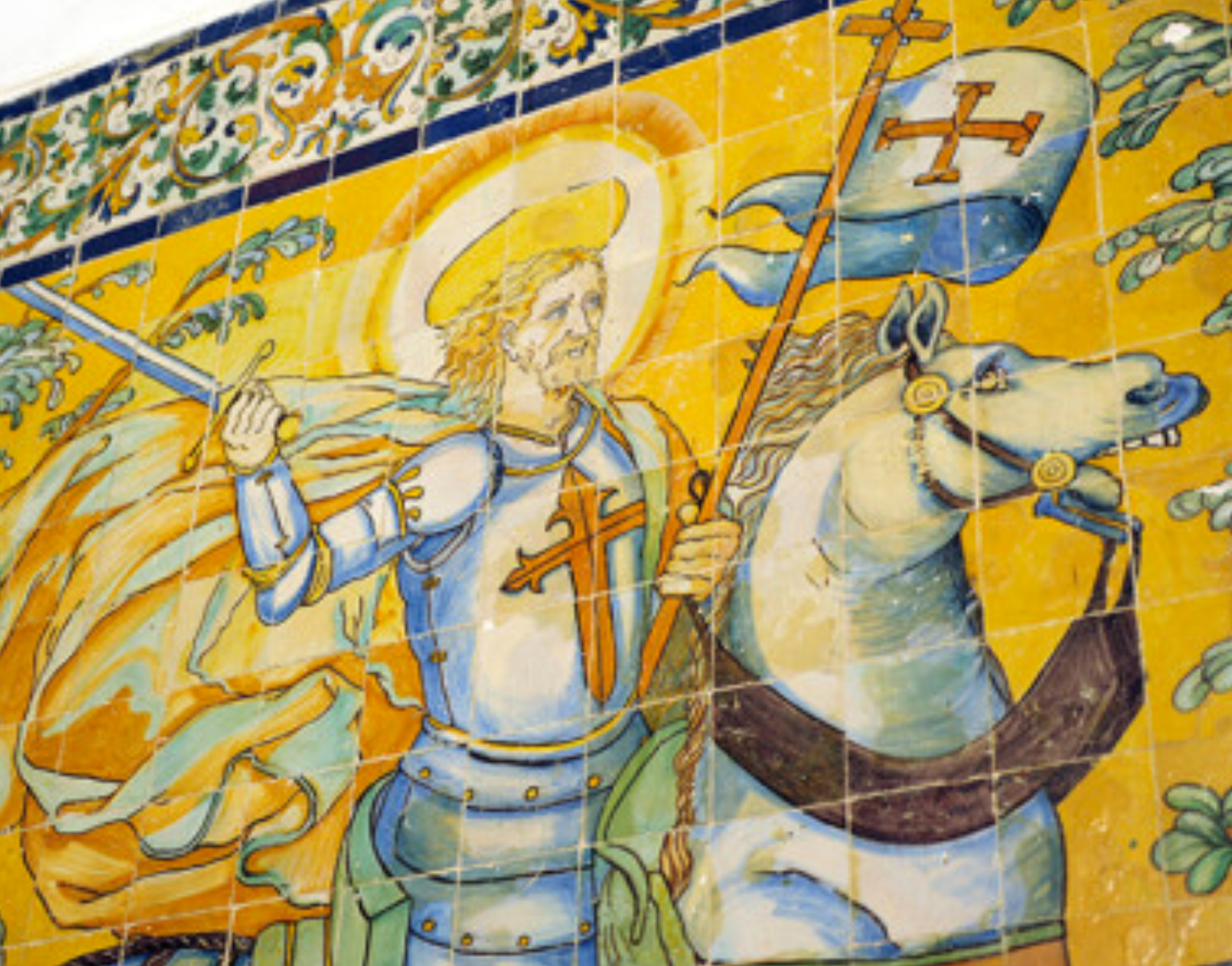
4. James as a warrior. To help support the Spanish Christians’ attempt to drive the Moors from Spain, the saint was transformed from a preacher of peace into a fierce warrior against Islam. Early “Fake News”! The stylized cross shown here is still used as one of his symbols.
5. The cross of St. James is shown here in two forms: on the left on the “sacred shell” on the hiker’s backpack, and on the right in abstract form on the way post.
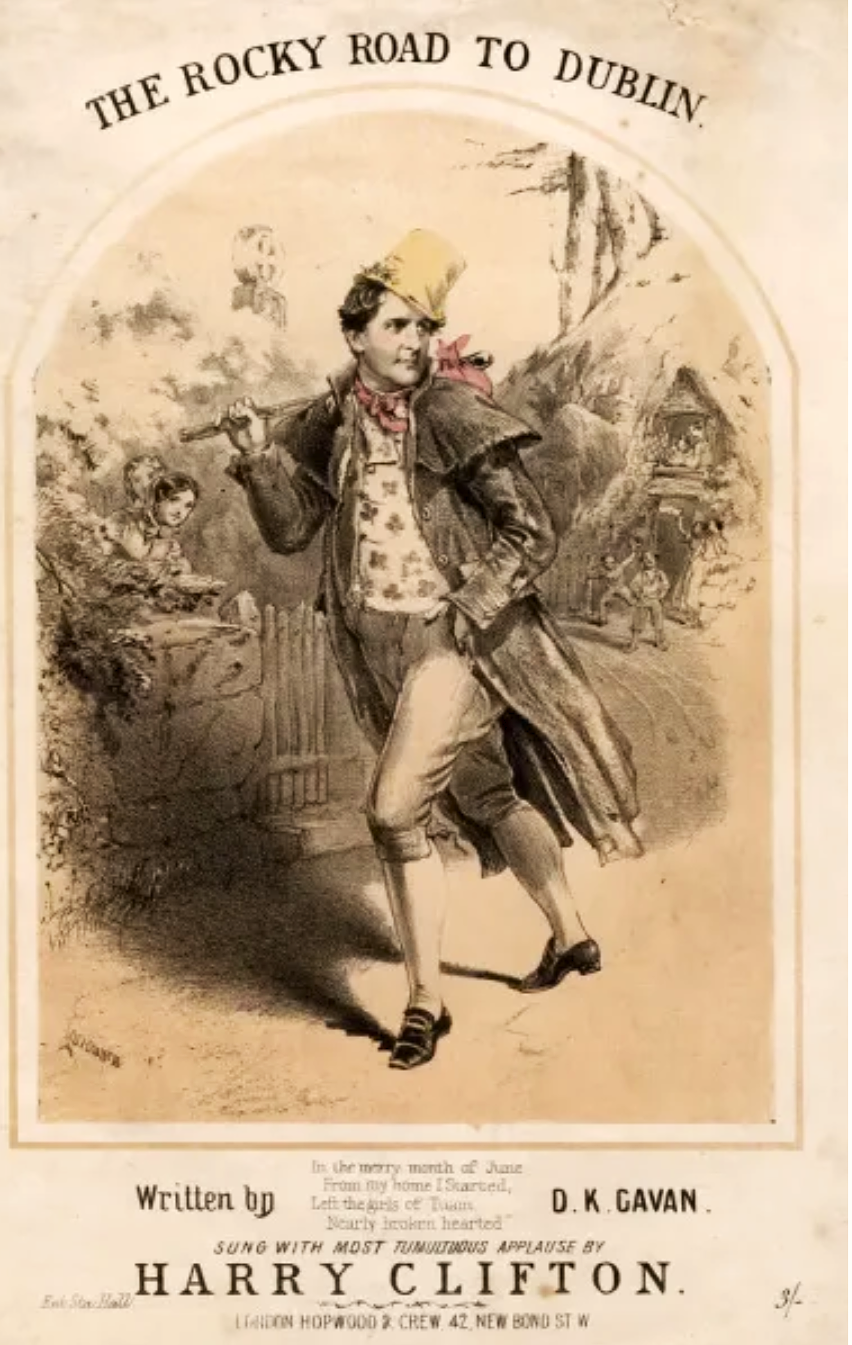
6. The original cover to the 1867 sheet music for “On the Rocky Road to Dublin.” This is not exactly how I envisioned my hero as I sang his song while on Camino! Do you think he has a beguiling “curious style”?
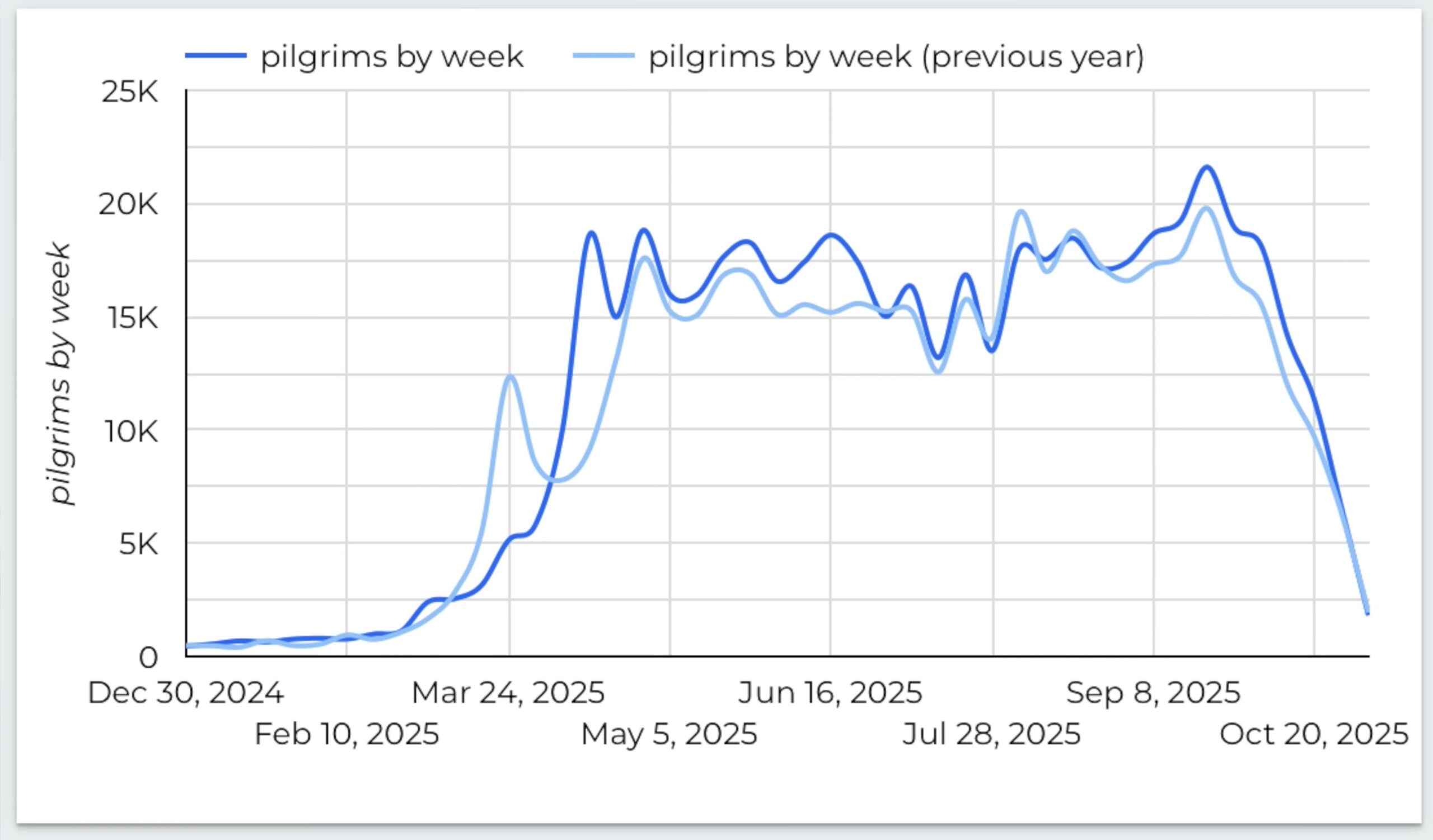
7. Chart showing the most popular months for pilgrims on the Camino, as measured by the number of Compostela certificates issued. Since many pilgrims do not bother to get certificates, the actual numbers are much higher, perhaps by 50 to 100%. The grand total number of pilgrims hiking all the Caminos de Santiago in 2025 is estimated to be about 570,000, a new record, with about 46% of these walking on all or part of the Camino Francés.
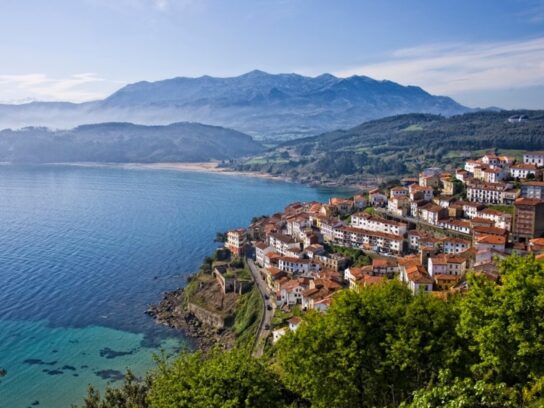
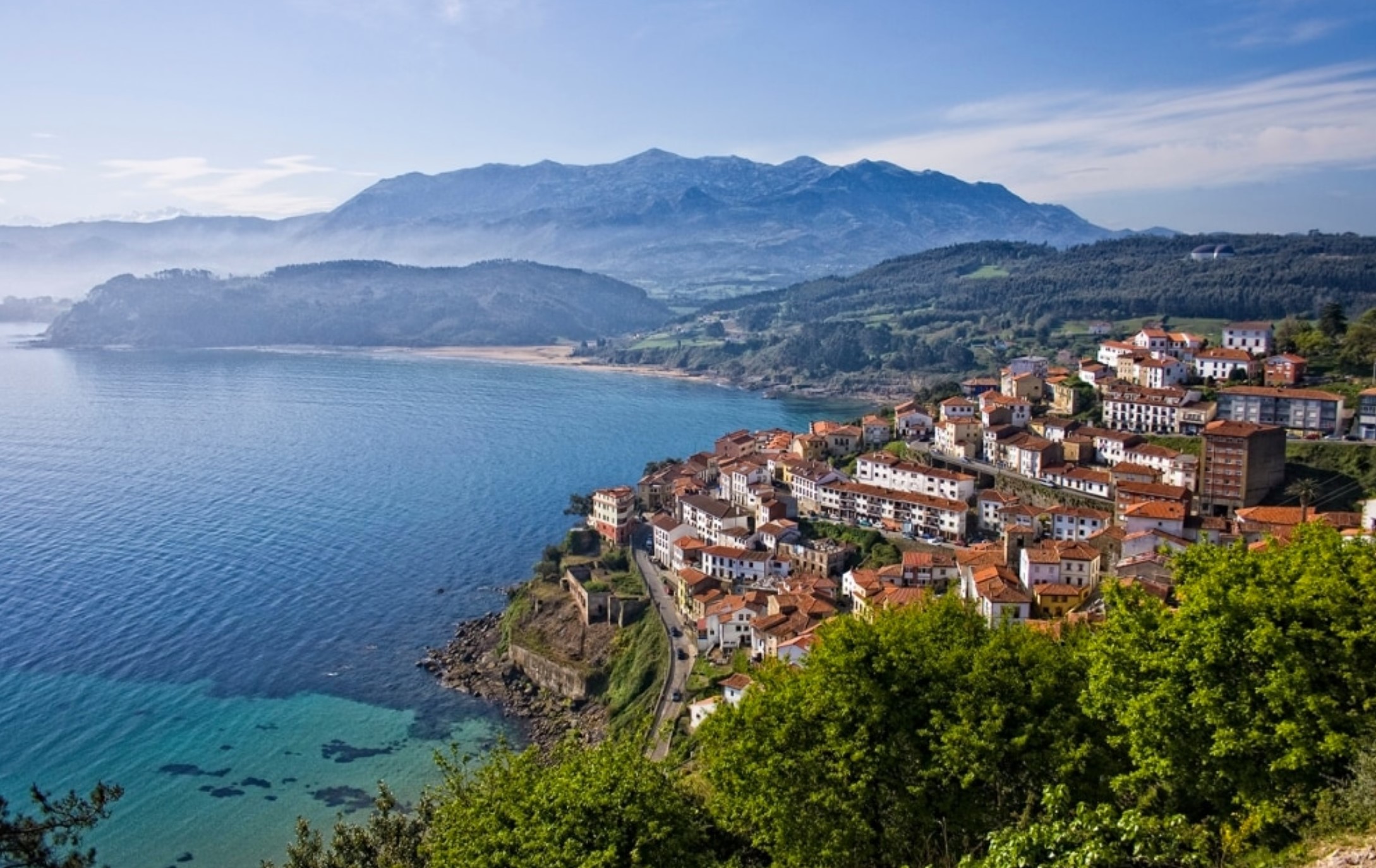
8. The village of Lastres in Asturia, on the Camino del Norte, which runs right along the north coast of Spain, averaging about 50 miles north of the more popular but somewhat less beautiful Camino Francés.
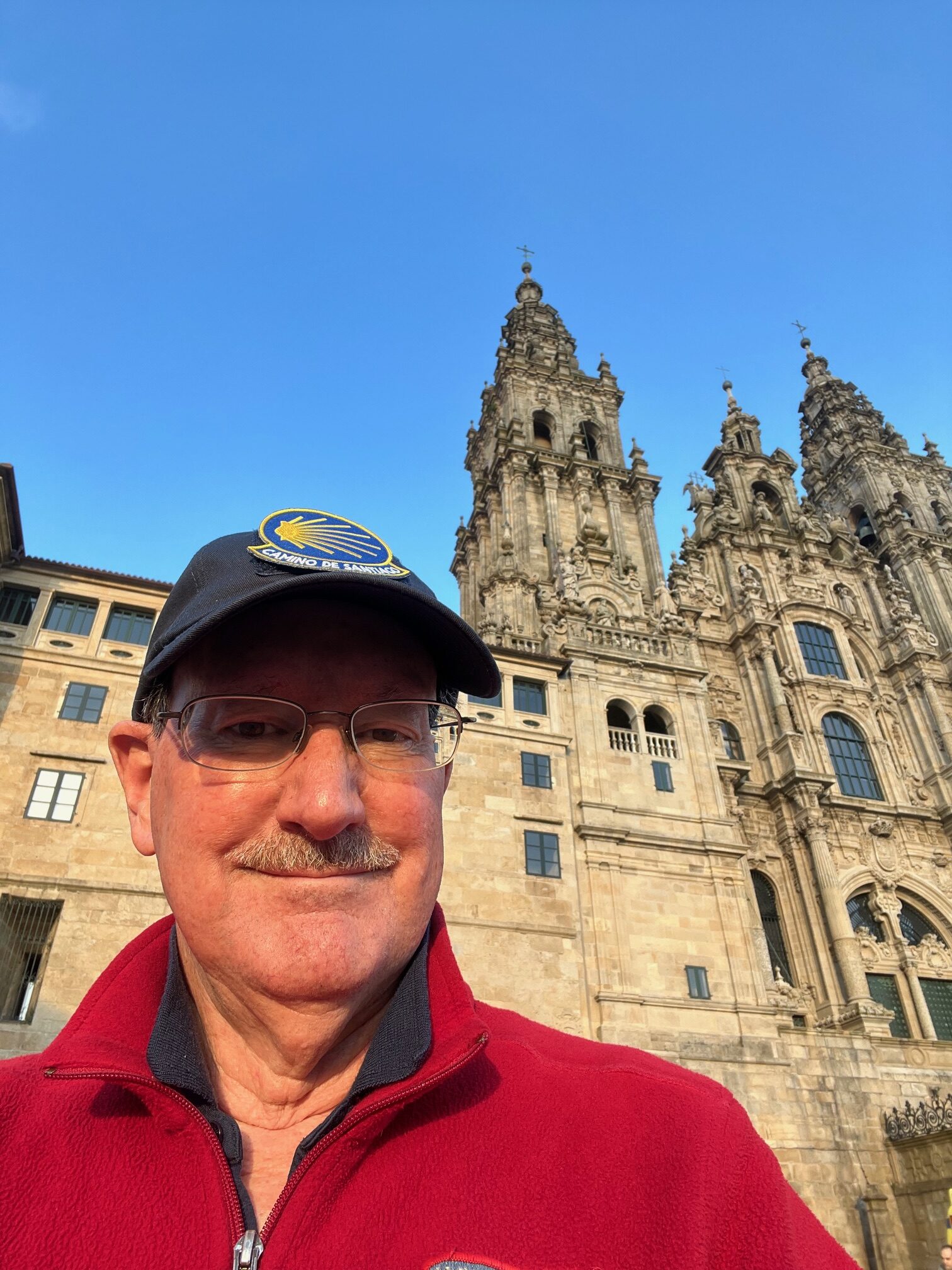
9. Your author at the end of the Camino, in front of the Cathedral of Santiago de Compostela.



Comments are closed.