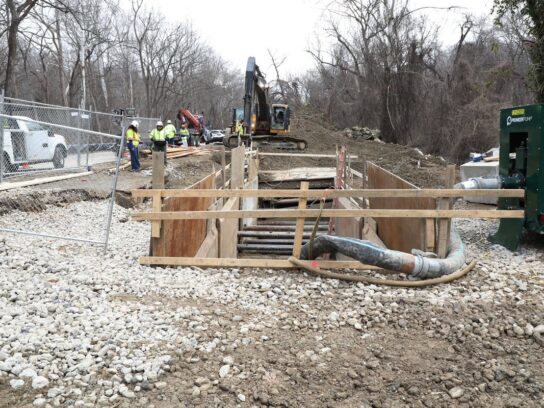
Montgomery County has lifted its recreational advisory for parts of the Potomac River after water flow was restored following the Jan. 19 Potomac Interceptor collapse and resulting sewage leak.
According to Montgomery County Health Officer Dr. Kisha Davis, drinking water was not affected as the break occurred below the drinking water intake.
Residents still are advised to avoid the specific land impacted by the sewage overflow currently designated in the initial phase of the DC Water Remediation Plan.
Recreational activities downstream, beginning with Lock 8, may resume.
However, an advisory is still in effect for areas closest to the spill site, including portions of the Potomac River within 200 feet of Swainson Island and within 200 feet of the Montgomery County shoreline between Swainson Island, a narrow island located just downstream of Lock 10 that can be accessed by walking when the water is low, and Lock 8 in Cabin John. This part of the river is closest to the original and subsequent overflows and has shown elevated bacteria levels in recent weeks.

Potomac River sewage spill site. Photo credit: Sophia Hernandez-Piña
“With sewage flow now returned to the Potomac Interceptor pipe and drainage and ongoing rehabilitation of the C&O Canal underway, the risk of additional bacterial contamination has been greatly reduced,” Davis said in a statement.
The county, as well as many other local jurisdictions and agencies, continue to test water from the Potomac River.
Because river bacteria levels fluctuate, especially following a significant rainfall like that occurred on Monday, bacteria like E. coli will elevate, according to Davis.
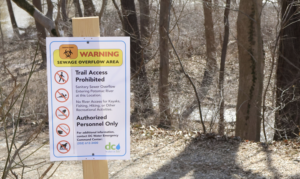
Water activity warnings at Potomac River.
Anyone who has been exposed should report it to DC Water at 202-612-3400. Montgomery County residents or visitors may also report an exposure involving symptoms to DHHS’ Disease Control Office at 240-777-1755.
If visiting these areas, the county Department of Health and Human Services recommends:
- Avoid Contact: do not come into contact with the water or shoreline in the impacted areas. Keep children and pets away from the water’s edge and ensure pets do not drink from the river. The two greatest risks of illness from contaminated water are accidental swallowing and contact with an open wound or sore.
- Hygiene and Exposure: if exposure occurs, wash skin and hands immediately with soap and clean water. Pet owners should thoroughly rinse their pet’s paws and fur.
- Medical and Veterinary Care: anyone experiencing vomiting, diarrhea, a rash, or skin irritation after exposure should contact a healthcare provider immediately. Pet owners should contact a veterinarian if their pet becomes ill after exposure.
- Swimming Caution: swimming or other activities in any natural body of water always pose some level of risk. Children five years and younger, older adults, and those with weakened immune systems are at higher risk of contracting illness from natural bodies of water.
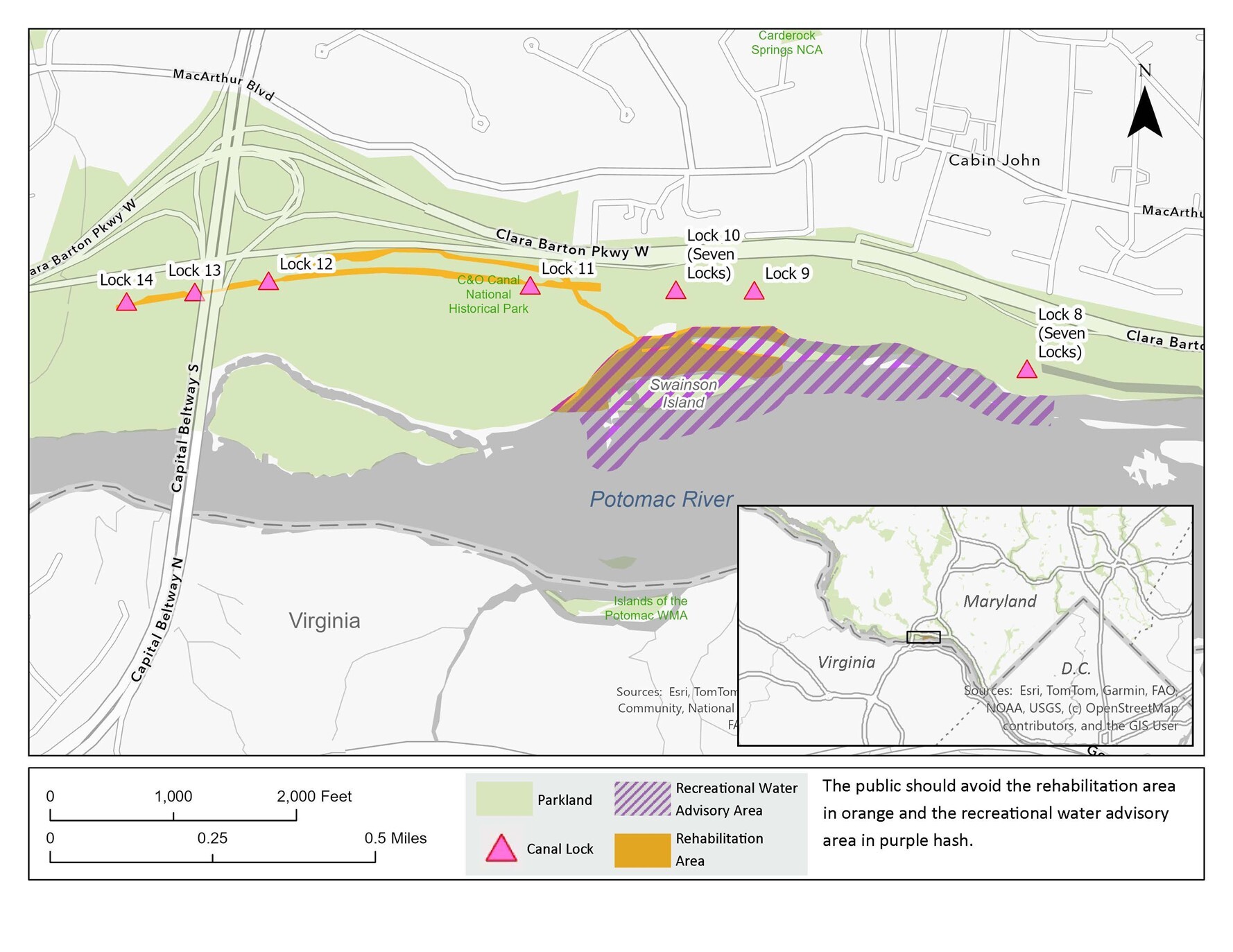
The Maryland Department of Health also issued an update on its recreational water advisory concerning Montgomery County.
DC Water Video