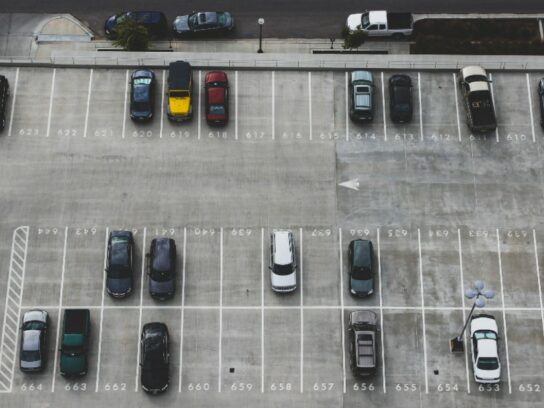
The Montgomery County Planning Department has issued new guidelines to create safer and more accessible parking facilities after a review of current conditions.
A new design guide was presented during a Montgomery County planning meeting Thursday. County-owned and privately owned parking lots and garages would be redesigned to more sustainable, safe and accessible.
About 125 people a year were struck by vehicles in parking lots and parking garages between 2016 and 2024 (excluding 2020 and 2021) in Montgomery County, according to Montgomery Planning and the Montgomery County Department of Police. During that period, there were five fatalities (all pedestrians) and 1,532 reported injuries from crashes in parking facilities,” saidMontgomery Planning officials in Thursday’s statement, sourcing MCPD data.
“This guide provides practical, data-driven solutions that will help create parking facilities that are safer for everyone, support the county’s environmental goals, and better connect people to where they live, work, and visit,” said Jason K. Sartori, director of Montgomery Planning.
The guide supports Montgomery County’s Vision Zero commitment with parking-facility designs that reduce the risk of serious and fatal crashes. Also supporting the county’s goals on accessibility, climate action and clean water.
The project was supported by a $120,000 grant from the U.S. Department of Transportation in 2023.
The new design guide informs developers, engineers, planners, transportation professionals and policymakers on requirements for safety, and recommendations based on the circulation of vehicles and people.
Montgomery Planning is working in collaboration with project consultant Toole Design to review county crash data, national parking-facility safety research, industry best practices, and existing county requirements.
Key design principles include:
- Minimizing conflict points between vehicles, pedestrians and bicyclists.
- Reducing vehicle speeds in areas with high pedestrian activity.
- Prioritizing pedestrian and bicycle access.
- Creating connected networks of walkways and bikeways.
- Improving visibility and so-called “way finding.”
- Designing for older adults, children and people with disabilities.