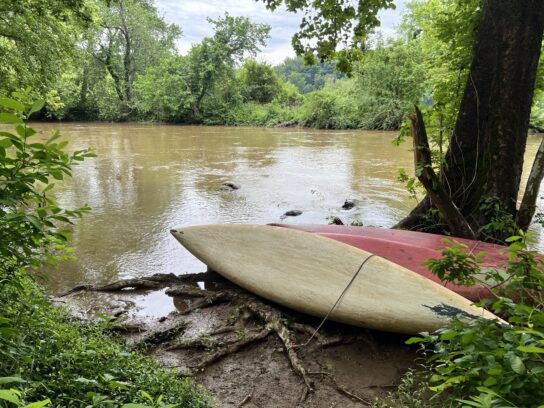
Months after a major sewage spill contaminated portions of the Potomac River, Minnie’s Island, an eight-acre conservation property in the middle of the river, remains closed as environmental advocates continue to raise concerns about cleanup efforts and potential long-term ecological impacts.
Located just downstream from Lockhouse 8 in Cabin John, the island is owned and managed by the Minnie’s Island Community Conservancy, a nonprofit organization dedicated to restoring and protecting the natural area while connecting residents with nature through educational programs and community events.
For Joseph Saliunas, board president of the Minnie’s Island Community Conservancy, the aftermath of the spill remains vivid.
“We were really ground zero for absorbing the impacts from it,” Saliunas said. “You could look out here at the water and see the milky, white, gross-looking flow. You could see dead fish. For the first two days we saw gulls feeding on the dead fish. And it smelled really, really bad.”
The island sits approximately a half-mile downstream from where sewage entered the Potomac River. According to Saliunas, one conservancy board member was on the island when the contamination arrived.
“The river was in a drought then, so the water was crystal clear,” he said. “And then they noticed it getting murky and smelly, and they knew something was off immediately.”
The all-volunteer conservancy took ownership of Minnie’s Island in 2021 after it was donated by Potomac Conservancy. Since then, the organization has hosted educational programs, scouting activities, guided nature tours and community events.
Many of those activities have been suspended since the spill.
“We just don’t know what the impacts are going to be when you look across all dimensions of water quality and chemistry and impacts on biological organisms and wildlife,” Saliunas said.
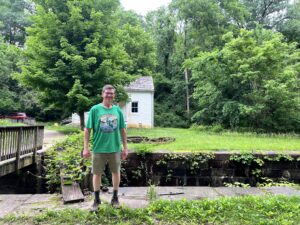
Joseph Saliunas, Minnie’s Island Community Conservancy
While some restrictions on recreational use of the river have been lifted, conservation groups say questions remain about contamination in shoreline sediments and possible long-term environmental effects.
“That’s the thing with a spill of this magnitude, there’s a lot of things we just don’t know,” Saliunas said.
The concerns extend beyond Minnie’s Island. During a congressional hearing held in the wake of the spill, DC Water officials defended the agency’s response and pledged continued transparency.
“From the outset, our commitment has been not only to respond aggressively, but also to communicate transparently, work collaboratively and learn from this event as we continue strengthening our systems for the future,” said David Gadis, CEO and general manager of DC Water.
Conservation groups, including leaders from Minnie’s Island and Sycamore Island, have criticized portions of DC Water’s remediation plan and are calling for additional accountability, more frequent monitoring and continued environmental testing.
The groups say reopening the island remains difficult without additional information about the spill’s impact on water quality and aquatic life.
“Even after the health advisory is lifted, people will be hesitant to come out here for a while,” Saliunas said.
County health officials acknowledge community concerns but say recent testing shows the Potomac River has largely returned to pre-spill conditions.
“The risk of recreating in the water is now kind of back to what it was before the sewage spill,” said Dr. Kisha Davis, Montgomery County’s health officer. “People should feel comfortable interacting with the water, kayaking, boating, rafting — all of those things.”
Even so, conservation advocates say continued monitoring will be critical before Minnie’s Island can safely reopen to the public. For Saliunas, the island’s importance extends beyond recreation.
“Minnie’s Island is a treasure,” he said. “It’s a wilderness inside the Beltway.”
As summer gets underway, leaders with the Minnie’s Island Community Conservancy say they hope ongoing testing and environmental monitoring will provide clearer answers about the spill’s long-term impacts and ultimately pave the way for the island’s reopening.


Comments are closed.