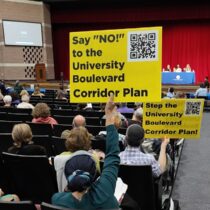
By a vote of seven to three, Montgomery County Councilmembers approved the University Boulevard Corridor Plan Tuesday morning with little of the drama that marked the numerous public meetings on the plan.
The plan refers to a three-mile stretch of University Boulevard from edge of East Indian Spring Drive, just south of I-495, to Amherst Avenue in Wheaton. It is a sweeping plan involving changes to the road itself, safety measures for pedestrians and cyclists, and increased property heights.
Councilmembers Will Jawando, Kristin Mink and Sidney Katz once again voted in opposition to the plan as they did last week during a straw poll.
The University Boulevard Corridor Plan was designed to improve safety, increase economic development and create more housing opportunities.
“I am so proud of this sector plan,” said Council President Natali Fani-González, whose district includes much of the area involved. The plan increases housing density and protects pedestrians and cyclists along “one of the most dangerous places in the state of Maryland.”
Rather than just complain about the lack of housing, “You’ve got to take actions,” she said. “That’s how you more forward.”
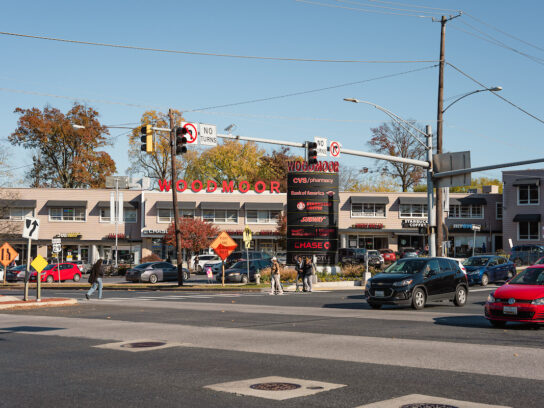
Property heights were lowered from the original plan in some commercial areas, including Four Corners and the Woodmoor Shopping Center. Height requirements for some housing also were reduced from what was included in the original plan.
The plan calls for a varied housing stock along University Boulevard. Zoning that has been limited to single family homes now may also include duplexes, triplexes, townhouses, condominiums and small apartments. However, nothing may be changed unless the property owner agrees.
“The University Boulevard Corridor Plan marks a major step forward in making our communities safer, more connected, greener, and more accessible for everyone who uses our streets, especially students who attend the two high schools in the plan area,” said Councilmember Andrew Friedson, chair of the Planning, Housing, and Parks Committee. “By prioritizing pedestrian safety, improving crossings, expanding multimodal options and calming dangerous traffic patterns, we are creating a corridor that supports mobility and safety for all.”
One of the changes made to the original plan includes the exclusion of the Kemp Mill Shopping Center, Kemp Mill Urban Park and the Yeshiva of Greater Washington along Arcola Avenue.
Also, the rezoning of detached residential properties now is limited to properties abutting University Boulevard and Colesville Road.
What previously were connections to University Boulevard by vehicles now are paved trail connections for pedestrians, thereby not increasing vehicle traffic through the neighborhoods.
Related Post
Wider Sidewalks & Less Traffic: County Planners Present University Boulevard Redesign to Council