Last month I left us in the attractive river town of Portomarin, an early stop on my 102 kilometer (km) hike on the Camino Francés, part of the complex Camino de Santiago trail network. This month I will describe my remaining hike from Portomarin to Santiago de Compostela, one of the top three pilgrimage sites in the world!
Leaving Portomarin, I headed out for the longest leg of my planned journey – 9 miles. The day was hotter than recently, in the 70s F, and I ate a lot of carbs along the way and didn’t remember to drink lots of water. The countryside was lovely but the numerous hills and false crests took a toll. (As you may know, a false crest is seen when you are climbing a long hill, and through the trees you think you see the final hill crest, but when you get there, you realize there is a lot more uphill climbing to go, and perhaps more false crests ahead. Rather demoralizing.)
I finally reached my alburgue, Casa Tania, in Ligonde at about 5 pm. I collapsed to get a rest, but felt odd and bloated. After a restless nap, my stomach told me to go into the shared bathroom to get some relief. I resisted its urging, but finally went in and threw up – embarrassing! Was it something I ate? Too many carbs? Not enough water? The heat? All of the above? Anyway, I felt much better and next morning was able to set off again – singing more Irish traveling songs!
I was walking along later that day in a light drizzle, when fifty yards ahead of me a pilgrim suddenly turned to his right on the trail, dropped to his knees, and began to pray. I don’t know why he did that, there was nothing to see in the distance, and I never saw that again. But he must have been having a religious experience.
Many pilgrims hike for religious reasons. As an agnostic Unitarian, I am not very religious and was hiking mainly to get in shape and test my stamina. But I did find the hike to be a spiritual experience, mainly through “forest bathing,” soaking up the gorgeous countryside, and getting away from the constant insanity of American politics.
The trail varied every few miles — sometimes it was dirt path with occasional puddles or a bit of mud, sometimes a narrow paved road (but almost no traffic), sometimes it was a gravel path beside a main road with noisy trucks and cars. Often it was a dirt and gravel trail though woods and pretty fields. I was glad that I was not wearing heavy hiking boots, and my “trail runner” wide shoes were perfect for the task.
Every other day or so it rained, usually a long drizzle or a quick, heavy downpour. I was lucky and never got soaked, since I could usually duck into a café or use my poncho, umbrella and rain pants.
On the road to Melide, about halfway, I sat down to rest at a stone bench and table, where two ladies were also resting. It turned out they were a mother and daughter team from the upper Midwest of the US. We began chatting and sharing tips and experiences. They were only walking at 2.0 to 2.5 mph, while I was usually doing 2.9 to 3.1 mph. So I headed out and left them behind, but for several days I ran into them again as we leapfrogged each other, and we had a lunch together, along with other companions they had gathered. It is easy to make friends on the Camino – there are so many kind and caring people sharing a terrific experience.
Getting stamps in my Pilgrim’s Credential was fun and actually required – two stamps per day is the minimum to get the Compostela certificate at the end of the trail. On many days I got four or more stamps, since each was different, interesting and often amusing. Sometimes I had to ask a shop owner or bartender to stamp the credential, and other times there was just a stamp on a barrel head outside a shop – do it yourself. Sometimes a voluntary donation was optional, some were free, but a really fancy stamp with a wax seal might cost 2 or 3 Euros.
Each night my second pack, with extra clothes, socks and backup gear, arrived ahead of me, thanks to the Pilbeo shipping service. The pack was always in the lobby of the alburgue, along with many others. No worries, mate!
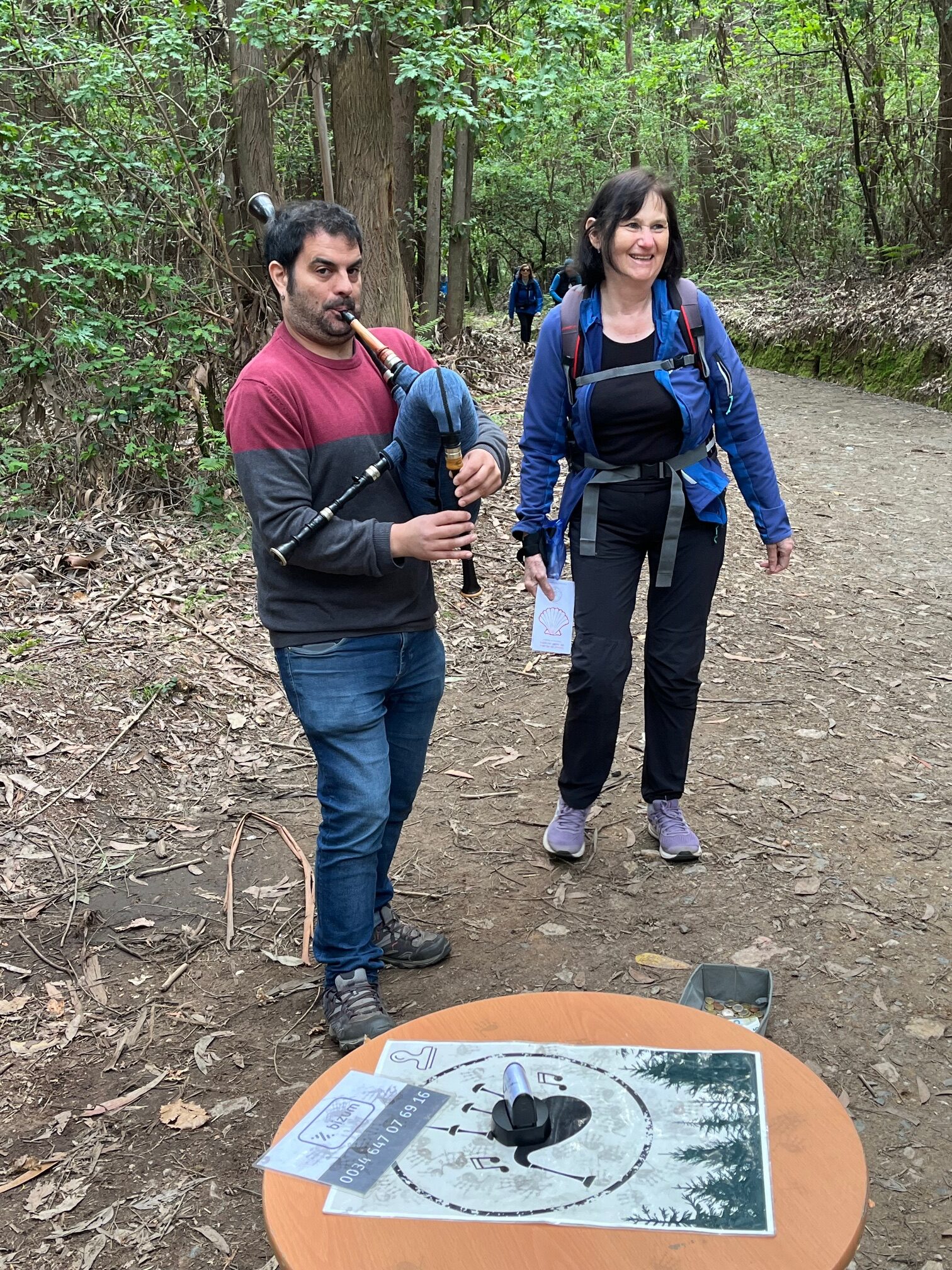
A highlight of the hike was reaching the last long climb of the trail, near the airport about eight miles east of Santiago. At the crest a lone bagpiper was playing Galician tunes, and stamping pilgrim credentials for a couple of Euros. I knew it was mostly downhill into Santiago from there.
My last overnight stop was in the modern, rather plain Pensione Xacobeo Lavacolla, six miles east of Santiago. It was expensive, at 95 Euros (about $105) but it turned out to be really worth it. The very helpful landlady gave me tips on how to see the rare and exotic Botafumeiro ceremony in the Cathedral in Santiago. She said that there are only a few feast days each year (such as Christmas, Easter, Ascension, Pentecost and St. James’ Day) when the Botafumeiro (a giant incense burner) is scheduled to be swung across the transept of the Cathedral in a huge arc. But she said, “This week there have been many school groups on the Camino, and they can afford to pay the fee to have the Botafumeiro swung this Sunday. There is no longer a set schedule for the ceremony, except for the feast days, so you have to rely on luck and prayer!” She recommended going into the Cathedral almost two hours before the noon Sunday Mass to get a good seat. This was the most likely time and day for the strange ceremony, over 400 years old. She was right!
Come back next month to hear about reaching my goal, and the Botafumeiro and its swing through one of the most sacred spaces in Christendom.
This piece is a follow-up to last month’s article on my first stops on the Camino de Santiago, and my earlier Camino articles. For these pieces see:
- https://www.mymcmedia.org/hiking-the-famous-camino-de-santiago-part-1-logistics/
- https://www.mymcmedia.org/hiking-the-camino-de-santiago-blisters-feet-and-training/
- https://www.mymcmedia.org/hiking-the-famous-camino-de-santiago-part-3/
- https://www.mymcmedia.org/hiking-the-famous-camino-de-santiago-dont-forget-do-forget-this/
- https://www.mymcmedia.org/hiking-the-famous-camino-de-santiago-part-5-i-get-rolling-along/
- https://www.mymcmedia.org/blog-top-tips-for-tackling-el-camino-de-santiago-part-1/
- https://www.mymcmedia.org/blog-el-camino-de-santiago-part-2-regional-highlights/
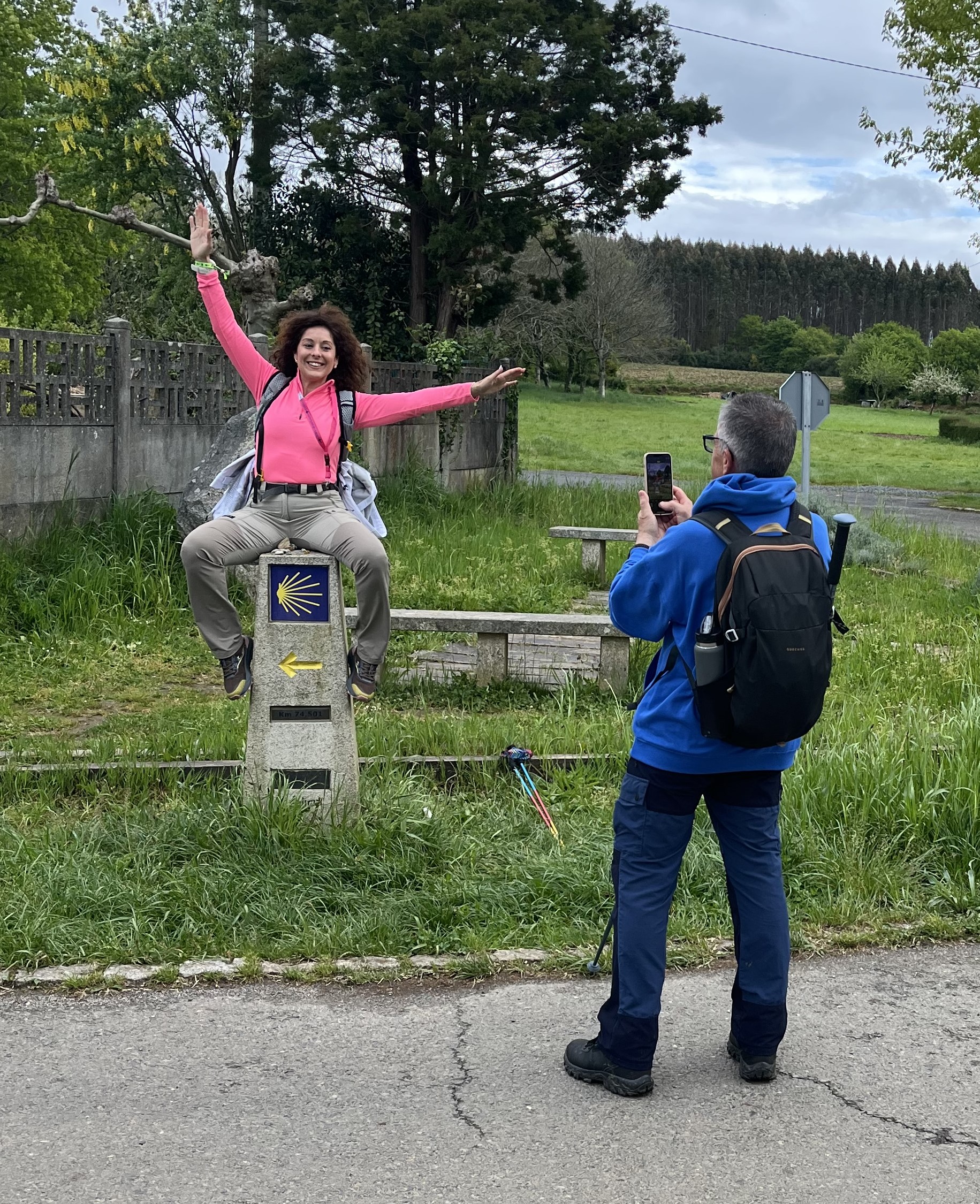
A. There is a lot of joy along the Camino. Here a pilgrim gets her photo taken, perched on a trail marker. She is precisely 74.501 kilometers from the main square in Santiago! The hard-to-read inset grey panel on each marker gives the distance to the third decimal point.
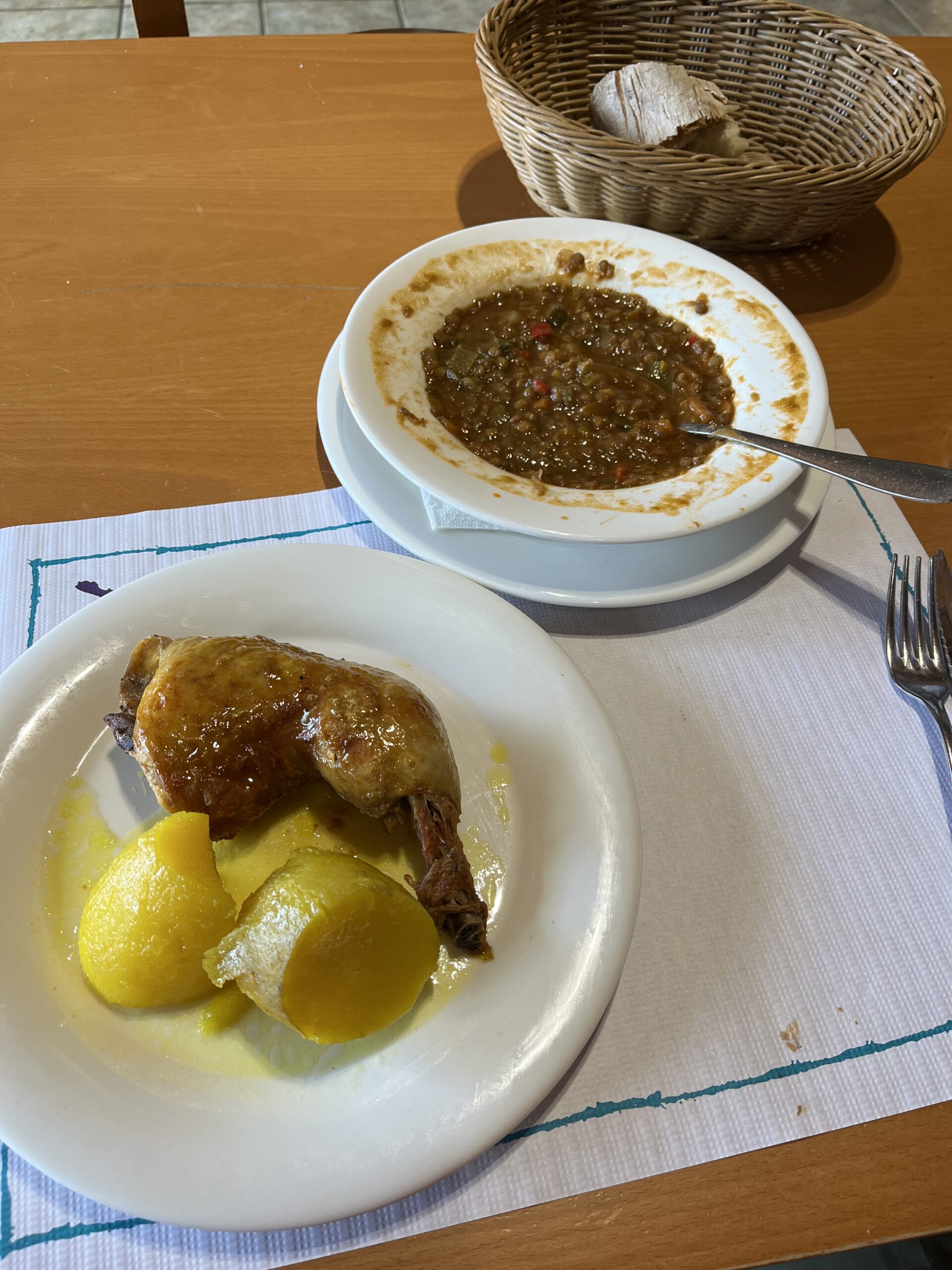
B. A typical Pilgrim’s Plate meal, made cheap and filling for Camino walkers. Lots of protein and carbs, with three dishes, and usually only about 6 to 15 Euros per person, but not high cuisine. Overall I think the food is better in the Basque country of NE Spain than in Galicia.
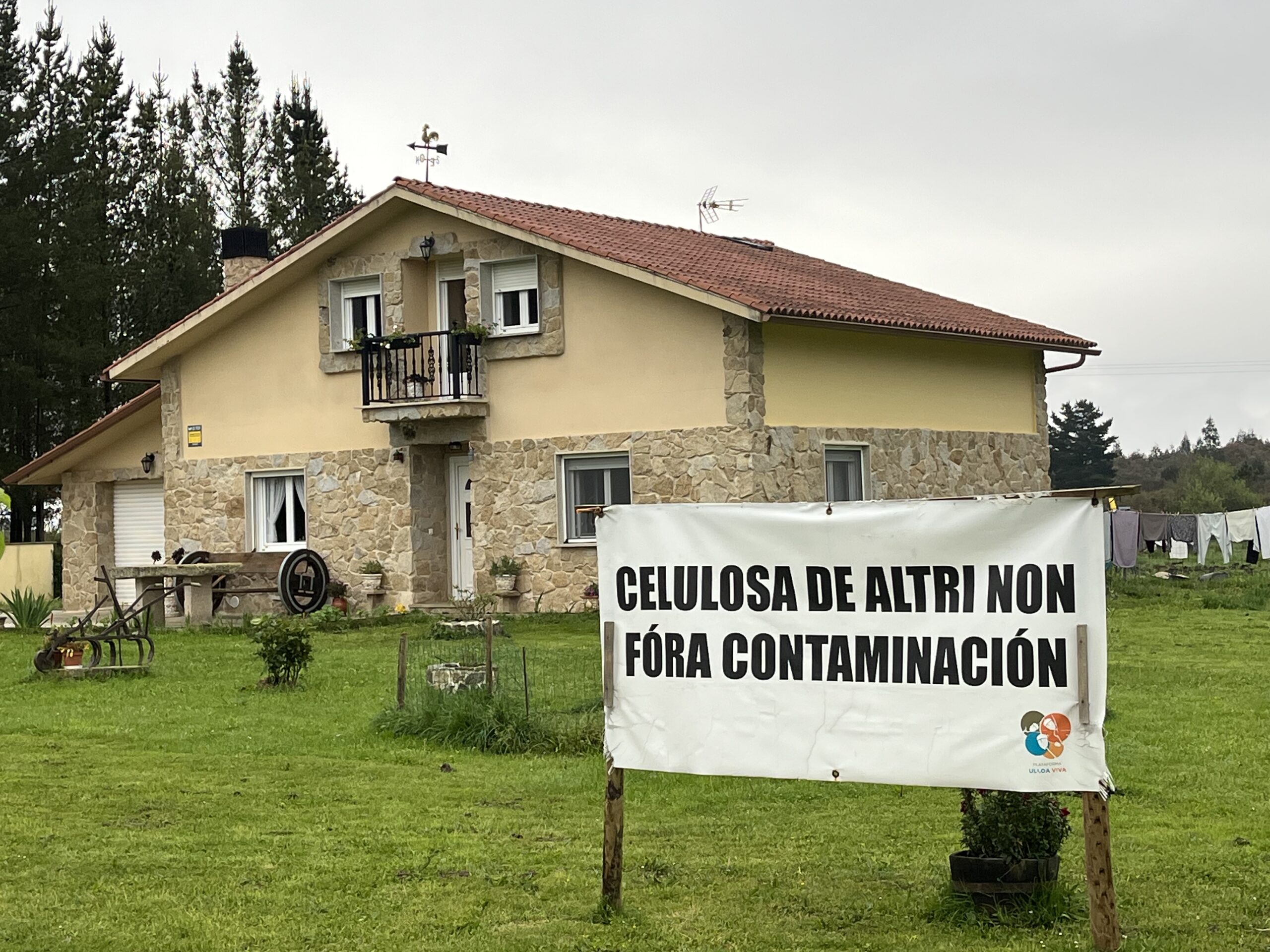
C. A sign beside the Camino, with the household protesting a proposed Portuguese cellulose plant that will pollute a local stream and smell up the area. The plant was rejected by the Portuguese citizenry, so the investors are trying to build it in Spain.
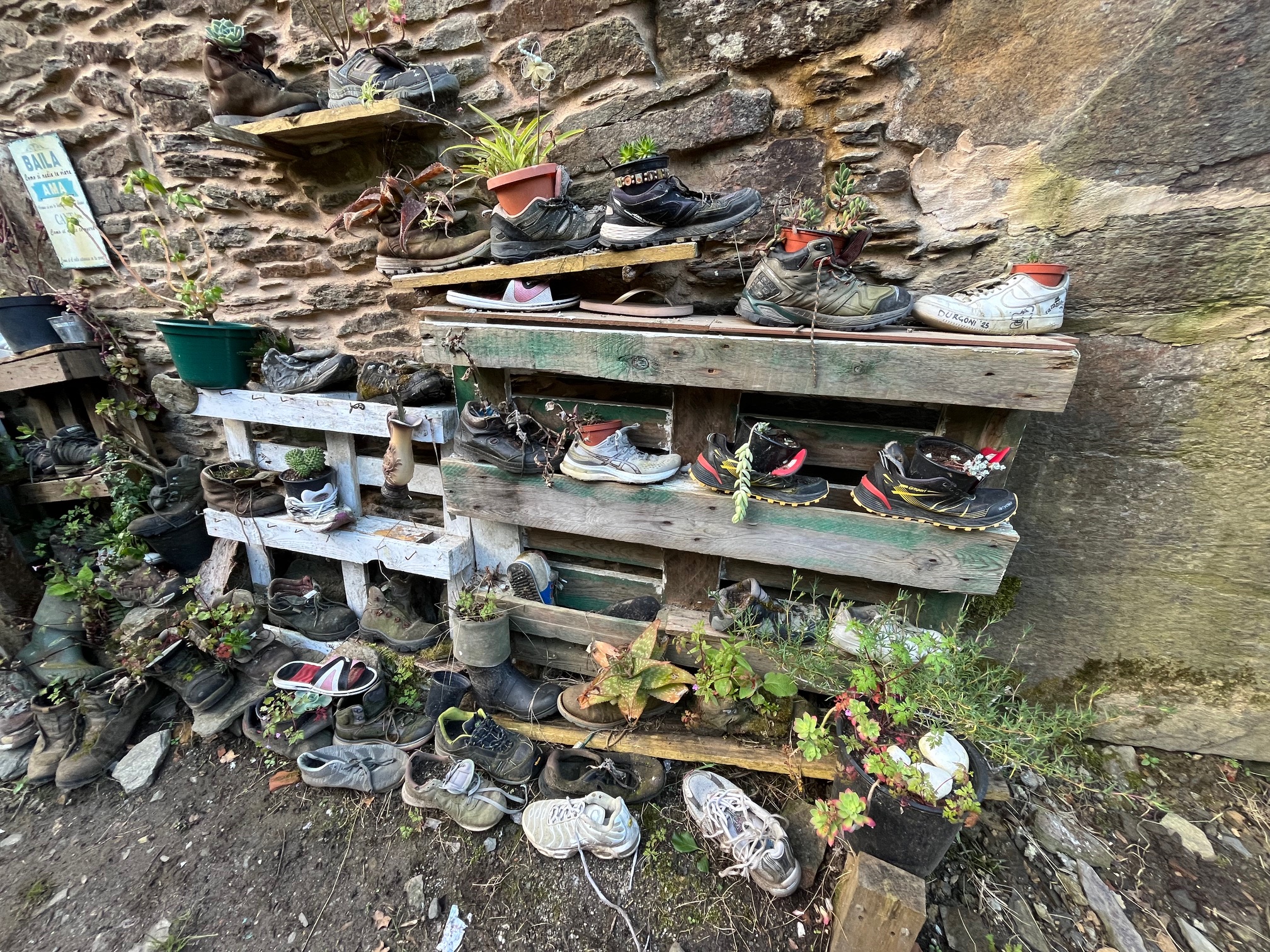
D. Worn out hiking shoes and boots transformed into plant holders, on a wall beside the Camino.
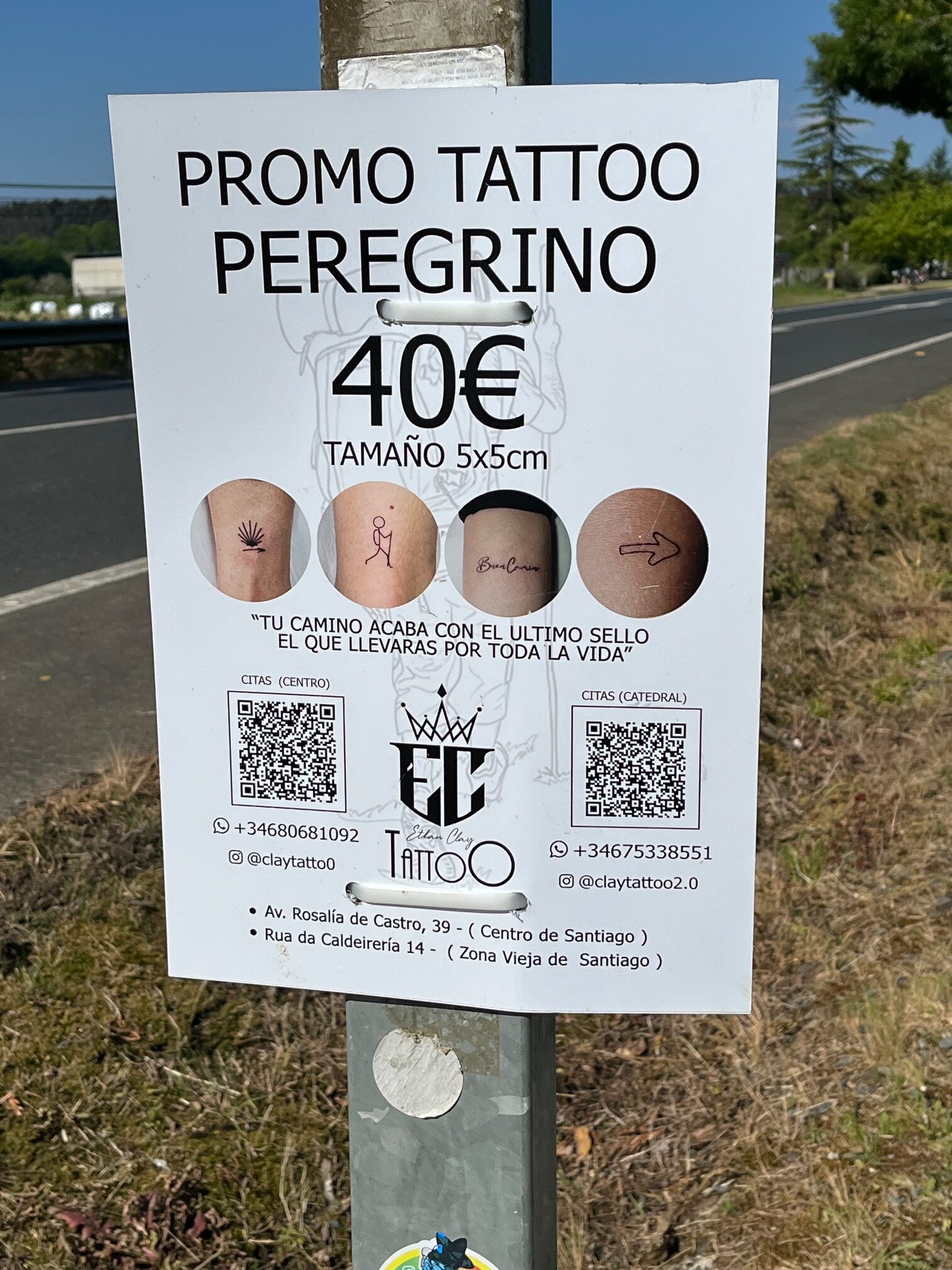
E. Many Pilgrims get tattoos to commemorate their hike. The cost is only 40 Euros (about $45) for a tiny one, but the sky is the limit for big ones.
F. A Galician bagpiper and a Pilgrim at the crest of the last major climb before reaching Santiago de Compostela. For three Euros he will stamp your Credential with a small black image of a bagpipe – if you make it that far!
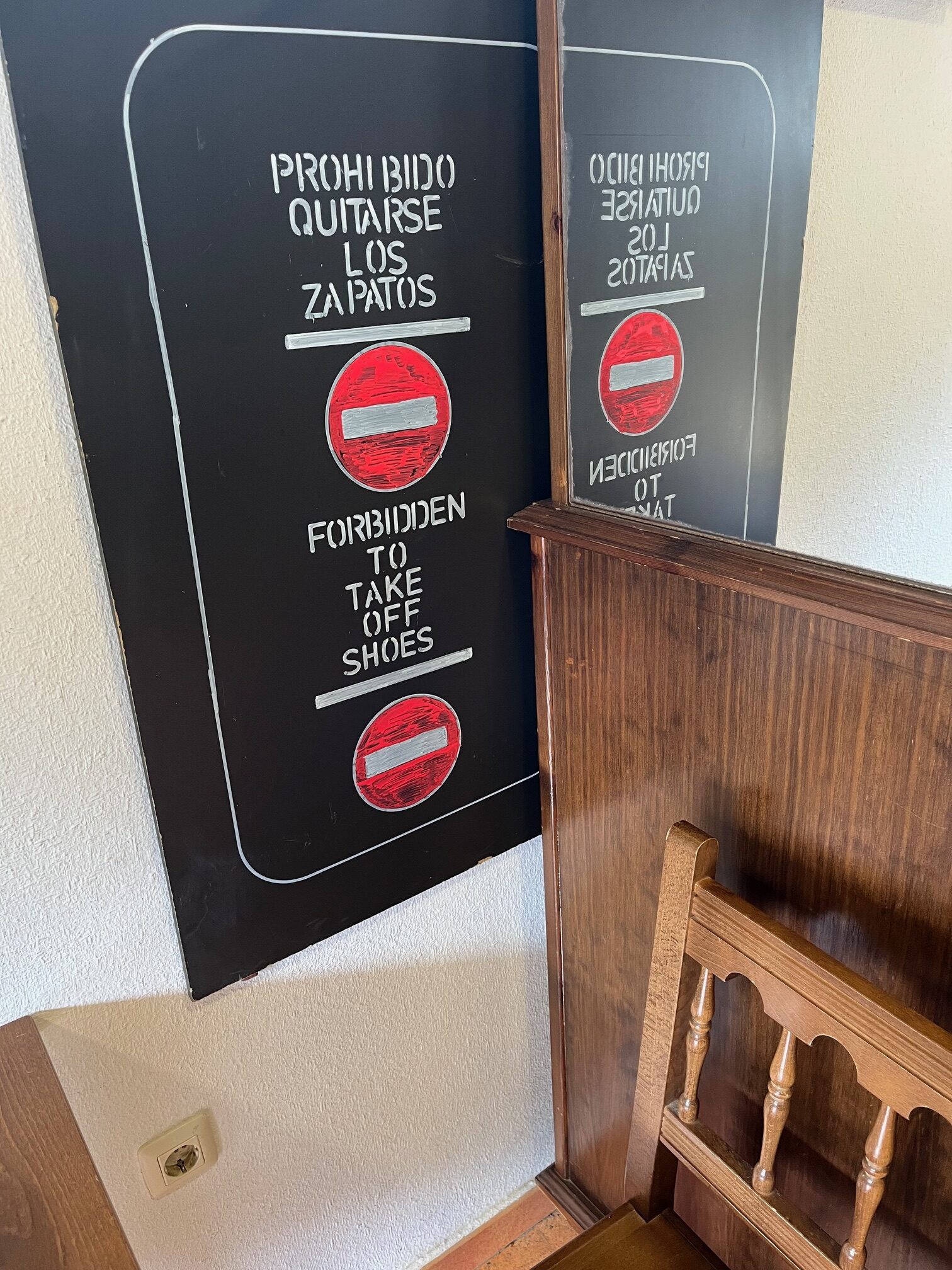
G. A Pilgrim-oriented restaurant on the Camino near the Santiago airport orders me NOT to take off my shoes! I am more used to people demanding that I DO take them off. But I guess smelly, sweaty, dirty, blistered feet are not very appetizing….
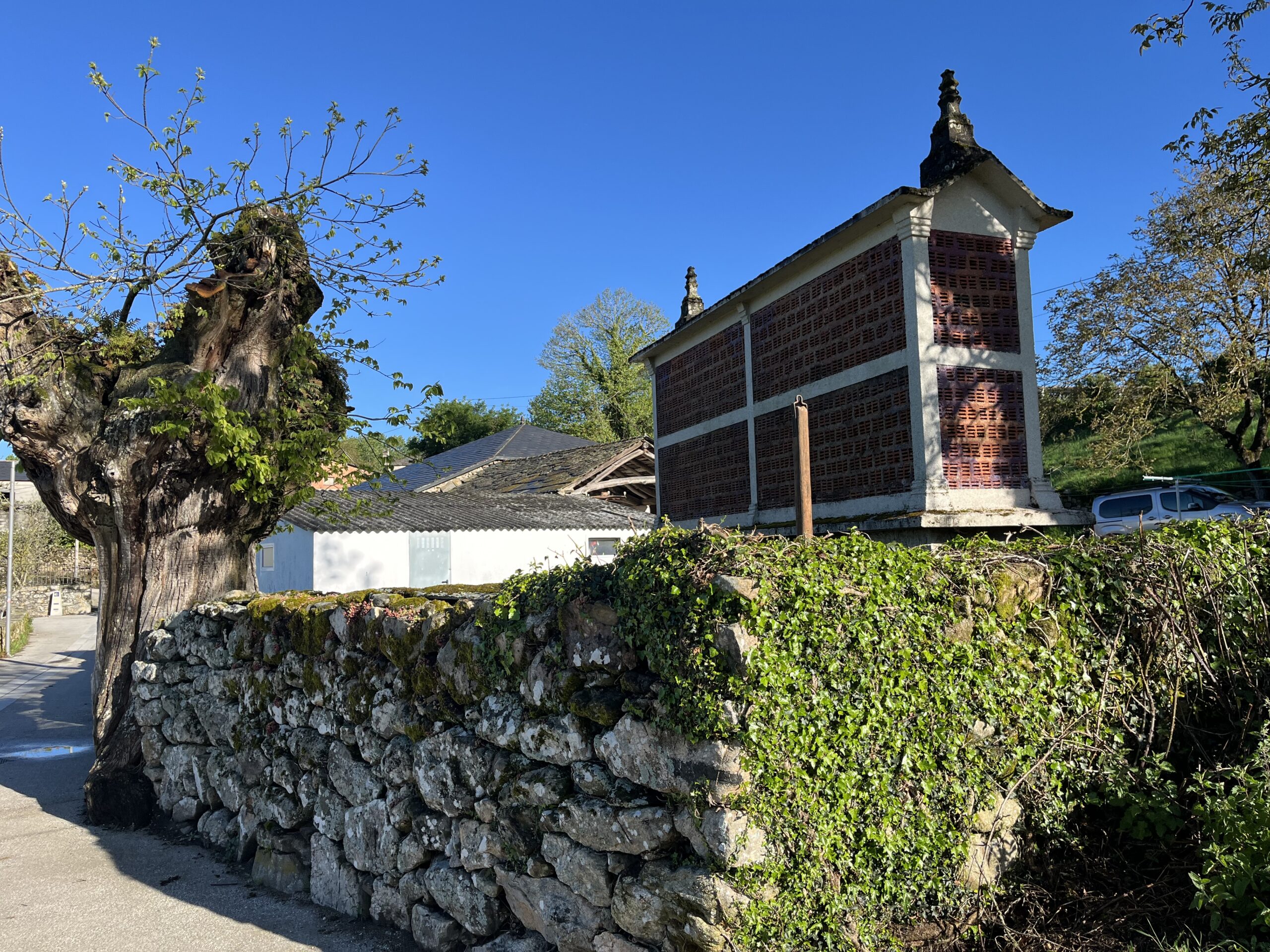
H. One of many horreos beside the trail. These are used in Galicia for storing grain and hay, and keeping out birds and rats. They date back to Roman times and the Galicians are very proud of them.
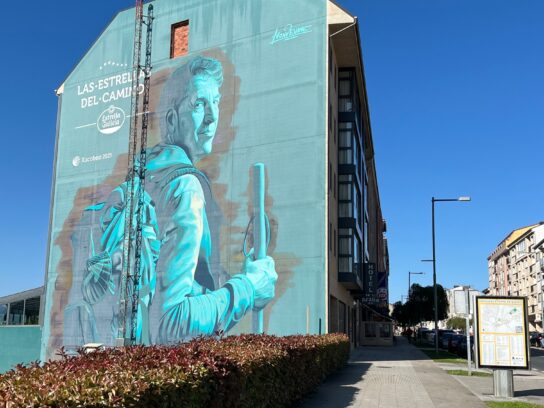
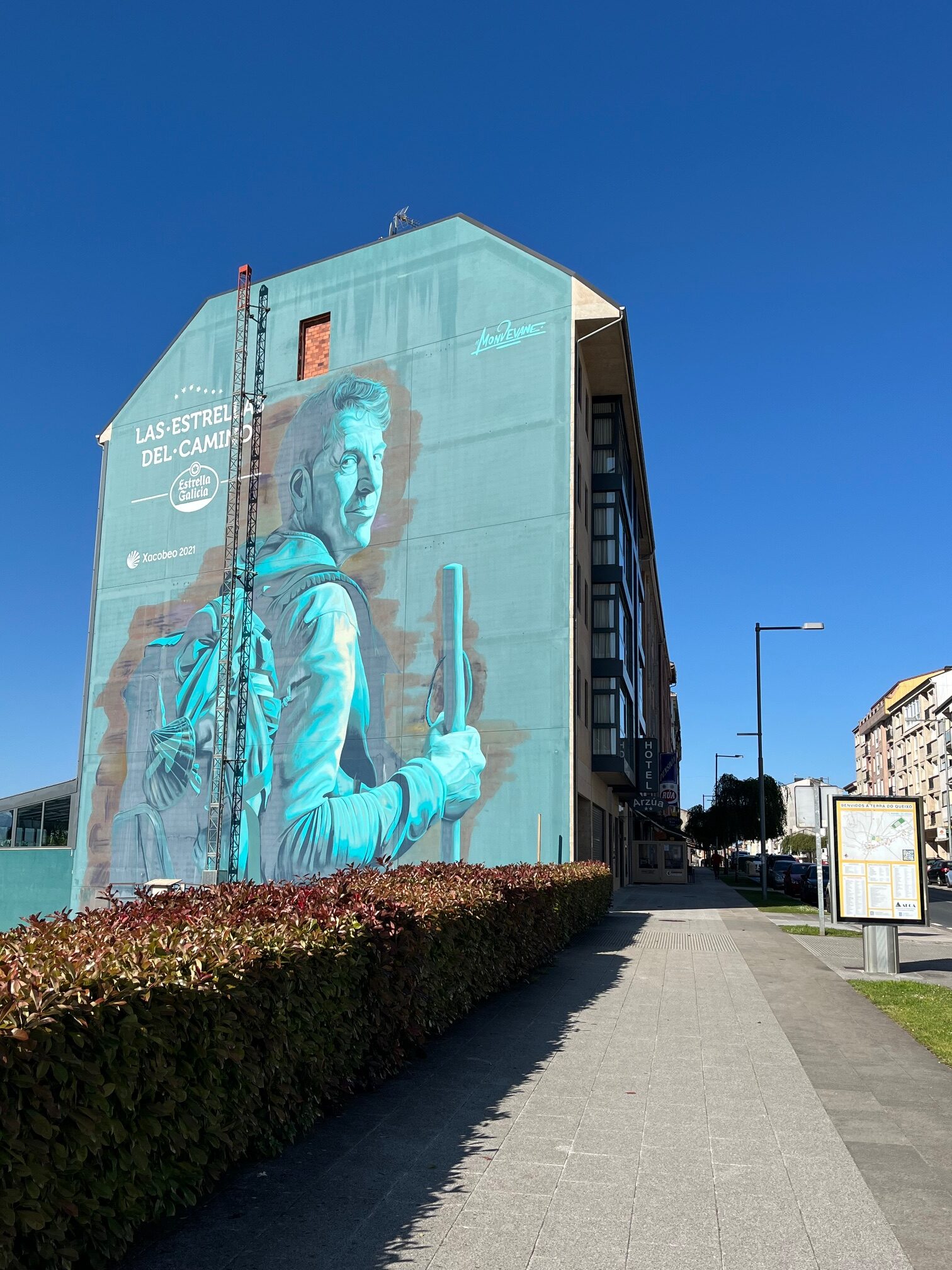
I. A huge mural beside the sidewalk Camino trail entering the town of O Podruzo, of a Pilgrim hiker headed towards Santiago de Compostela.



Comments are closed.