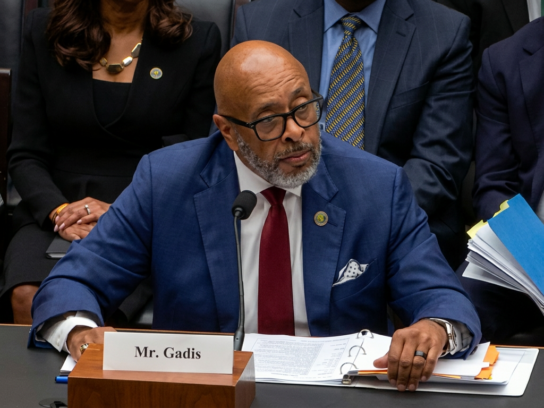
Members of Congress pressed officials from DC Water, U.S. Environmental Protection Agency’s the Office of Water and U.S. Army Corps of Engineers, Baltimore District on Wednesday over the January collapse of the Potomac Interceptor, a major sewer line failure that released an estimated 240 million gallons of untreated sewage into the Potomac River and raised concerns about the nation’s aging water infrastructure.
The hearing, titled “Corrosion, Collapse, and Clean-Up: Examining the Potomac Interceptor Collapse,” was held by the House Committee on Energy and Commerce and focused on accountability, delayed repairs and the risk of future failures.
DC Water CEO and General Manager David Gadis said the incident highlighted critical lessons about maintaining sewer systems that, in some cases, date back more than 60 years.
“Our focus remains where it has been since January 19: protecting public health and the environment, restoring the impacted area, assessing what occurred and ensuring we apply every lesson learned from this event,” Gadis testified.
Lawmakers questioned why concerns about the damaged section of pipe had been identified as early as 2017 and 2018, but repairs had not yet been completed. Gadis said permitting delays, including approvals involving the National Park Service, slowed the process.
“We have to go through the process,” Gadis told lawmakers, adding that environmental permits are still pending years after concerns were first raised.
Committee members repeatedly asked whether another collapse could occur along the 54-mile interceptor system, which runs near the Potomac River and close to drinking water intakes serving the Washington region.
Rep. John Joyce from Pennsylvania asked Gadis how confident he was that another major break would not happen again.
“We’re hopeful that we do not have another break like this one,” Gadis responded. “But there are no guarantees when dealing with an aging infrastructure that’s more than 60 years old.”
Gadis testified that the collapse was worsened by large boulders and rocks placed above the pipe decades ago during construction. According to DC Water, those materials contributed to a blockage that prevented sewage from flowing properly through the system.
To prevent future failures, the utility said it has expanded inspections using closed-circuit television cameras, a remote light detection technology called LiDAR, drones and ground-penetrating radar to identify vulnerable areas, including sections where heavy rock may be sitting above underground pipes.
DC Water also confirmed that the utility has identified three additional projects that now require accelerated repairs following the January collapse.
“We surveyed the entire field,” Gadis said. “Because of January 19, we feel there are three projects that we do need to move forward.”
Lawmakers from both the Democratic and Republican parties emphasized that federal funding and faster permitting processes will be critical to modernizing aging water infrastructure and preventing similar disasters in the future.


Comments are closed.