Maryland health officials are urging residents to take precautions when handling fresh produce after reporting an increase in cases of Cyclospora, a parasite that can cause intestinal illness.
The Centers for Disease Control reported this week that the outbreak in Cyclospora cases may be linked to shredded iceberg lettuce which is served in Taco Bell locations located in Indiana, Kentucky, Michigan, Ohio and West Virginia.
The Federal Food & Drug Administration is also working with the shredded lettuce supplier in Mexico to see if it went to other Taco Bell locations nationwide.
The Maryland Department of Health has confirmed 32 cases of cyclosporiasis, the illness caused by the Cyclospora parasite, in Maryland this year, with 28 of those cases reported between May 1 and July 7. State health officials continue to monitor the cases and have not identified a common source linked to the infections.
Cyclospora is a microscopic parasite that infects the intestines and can spread through contaminated food or water. According to the Maryland Department of Health, infections are most commonly reported during the spring and summer months, when fresh produce consumption tends to increase.
Health officials say residents do not need to avoid fresh fruits and vegetables, but should take steps to reduce their risk of illness.
Montgomery County Health Officer Dr. Kisha Davis shared with MCM specific measures residents can take to continue enjoying seasonal produce safely.
“Cyclospora is serious, but we can still enjoy the fresh produce of the season by making a few smart, proactive choices to protect ourselves from illness,” Davis said. “By choosing fresh, whole heads of produce instead of pre-packaged bagged salads, cooking vegetables when possible, and giving raw items a thorough wash, we can reduce the risk of exposure and keep our summer meals both healthy and safe. If you are experiencing symptoms, contact your doctor for evaluation.”
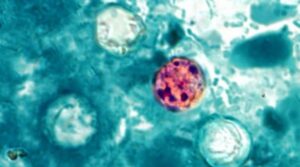
Courtesy: CDC
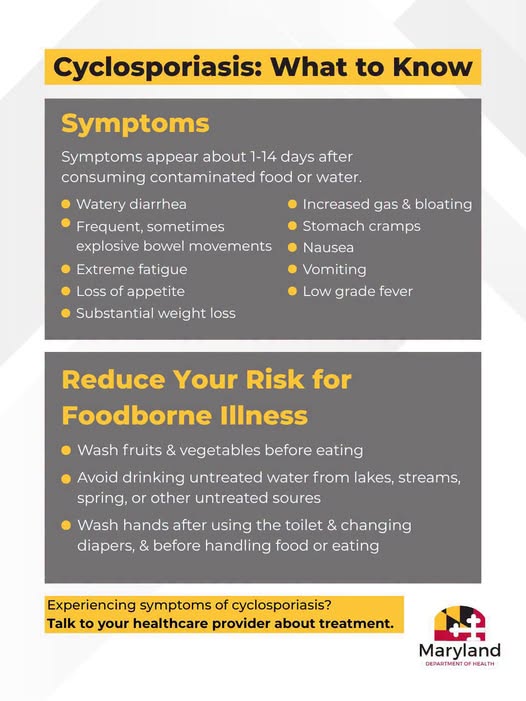
Washing fruits and vegetables before eating them, washing hands after using the bathroom, after changing diapers and before preparing food or eating is recommended by the Maryland Department of Health to help reduce the likelihood of illness.
Residents should also avoid drinking untreated water from lakes, streams, springs or other untreated sources and avoid contact with human or animal feces.
State health officials note that cooking food to at least 158 degrees Fahrenheit can kill the parasite and reduce the risk of infection. Additional information about prevention and treatment is available through the Maryland Department of Health.
Symptoms of cyclosporiasis typically appear about one week after exposure but can develop anywhere from one to 14 days later. Common symptoms include watery diarrhea, frequent bowel movements, stomach cramps, nausea, vomiting, loss of appetite, fatigue, bloating and low-grade fever.
Without treatment, symptoms can last for weeks and may come and go over time. Health officials advise anyone experiencing persistent diarrhea or other symptoms to contact a healthcare provider.
As summer continues, health officials are encouraging residents to practice good hand hygiene and safe food handling habits to help prevent Cyclospora and other foodborne illnesses.