Summer heat and humidity present unique challenges for people living with sickle cell disease, a disorder in which abnormally shaped red blood cells can block oxygen flow to the body’s organs and cause severe pain. In Maryland, a state that has the 5th highest rate of people living with sickle cell disease in the nation, about one in every 13 Black or African American babies are born with the sickle cell trait, according to a recent report commissioned by the Maryland General Assembly.
Heat-related illnesses, such as dehydration and heatstroke, can be deadly for a person living with sickle cell, according to the National Institutes of Health. Moving fast from extreme outdoor heat into freezing air conditioning can also cause complications, constricting blood vessels and causing severe pain. Even seemingly harmless summer activities, such as swimming in a cool pool or the Chesapeake Bay, can cause problems for some people with the disease.
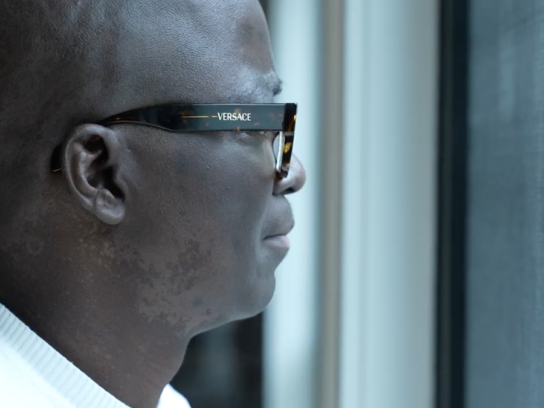
Those are health challenges Bethesda resident Ese Sifo knows all too well. After discovering he had sickle cell after his childhood, the 45-year-old human resources executive, husband and father of two decided to undergo an innovative new treatment that had the potential to free him from frequent and debilitating pain spells caused by fluctuations in temperature, among other factors.
Using his own stem cells as part of the treatment, along with chemotherapy, Sifo became the first man in Maryland to undergo that new medical treatment, according to his doctors.
Watch MCM’s recent news documentary to hear Sifo’s story from pain to freedom, then continue reading below.
Why take the risk?
“I was looking for more time with my family. I was looking for more time with my kids,” Sifo told MCM. “I didn’t want to be trapped in a house and just kind of watch them live their life and not be a part of that.”
That desire ultimately led Sifo to the University of Maryland Medical Center.
“I’d lived in Denver, Houston and Atlanta — and all of [my prior] primary care doctors that I had were focused on how to maintain my crises, how to maintain my pain and how to just keep me at a bearable level where living was comfortable, as comfortable as could be,” Sifo said.
Then in 2023, he moved to Montgomery County and found new doctors at UMMC who introduced him to something he had never heard of: gene therapy. A child later became the first person in Maryland to receive the therapy, followed by a woman in Silver Spring. But an adult male from the area had not yet undergone the treatment, according to UMMC.
“But I just thought that was so pivotal because … He knew so much about sickle cell disease,” said Sifo of one of his doctors. “He had referrals to the NIH … He said, ‘Hey, you know, the FDA just approved two methods of treating sickle cell, the gene therapy. Again, I was surprised because of how much he knew, how up-to-date he was with these things. And so I explored it with my insurance company and my wife, and I talked about it.”
But the decision to get the treatment did not rest solely with the patient and his doctors.
Navigating the Red Tape
Sifo’s medical team stepped in to help secure payment authorization from his health insurance company, said Dr. Jean Yared, Sifo’s hematologist at the University of Maryland Greenebaum Comprehensive Cancer Center and School of Medicine.
“It took us several months to get him approved for this treatment,” Yared said, citing the complexity and expense involved in manufacturing and collecting the patient’s cells. “In terms of, you know, manufacturing the cells, collecting the cells. Having said that, he finally got approved and we were able — we were fortunate — to be able to successfully treat him.”
The treatment involved collecting Sifo’s cells, genetically modifying them and returning them to his body after weeks of intensive treatment.
Another member of Sifo’s medical team, hematologist Dr. Jennie Law, said the therapy can reduce painful episodes known as vaso-occlusive events.
“Individuals living with sickle cell disease, unfortunately, suffer from a variety of both acute and chronic complications, which can impact their life expectancy as well as their quality of life,” Law told MCM.
A different future takes shape
For Sifo’s wife, Mari, the treatment represented something even bigger than a medical breakthrough. When the couple married, she said they talked openly about the shortened life expectancy associated with sickle cell disease. She recalled celebrating when he turned 40 and telling her husband to “give me until 60.”
“And 60 felt like I was asking for the world,” Mari said.
Two months out from the gene therapy treatment, Sifo said he is pain-free and has a new lease on life.
He was still recovering from the chemotherapy he had to undergo as part of the overall stem cell gene therapy process, but said he can see a different future taking shape.
“I want to learn to swim,” said Sifo, something he once considered unimaginable.
“That freedom of movement is probably one of the most valuable gifts,” said Mari, who also hopes her husband’s story encourages others living with sickle cell disease to advocate for advancing their health — not just maintain it.
“Never miss an opportunity to educate someone,” she said.
Doctors are careful, though, about calling gene therapy a cure. So they call it “transformative.”
“The reason why we’re calling this a transformative therapy is that it corrects a lot of those life-altering abnormalities. Specifically, it improves one’s hemoglobin, which will allow for better organ perfusion and organ health,” said Law. “And it reduces the frequency of these vaso -occlusive events, which can be so disabling to our patient population.” Prolonged life expectancy is also a potential benefit, said Law, as those living with sickle cell disorder have life spans that are typically 20 years shorter than average, according to the Centers for Disease Control.
But after a lifetime of living with sickle cell disease, Sifo’s outlook is based on leaps of faith.
“I feel like I’m doing things that I’ve never done before,” Sifo said. “I feel like the sky is the limit at this point.”


Comments are closed.