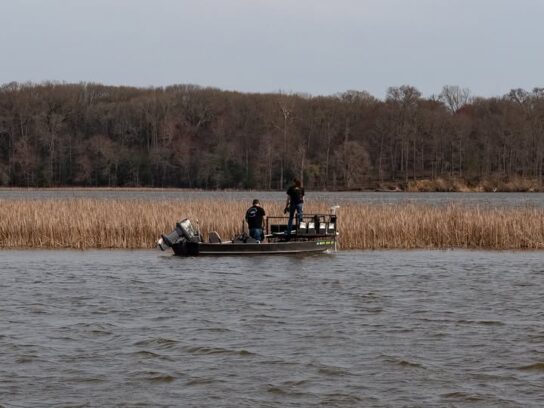
Residents filled the Glen Echo Town Hall on Monday evening seeking answers about the safety of the Potomac River months after the Jan. 2026 Potomac Interceptor sewage spill contaminated sections of the river near Minnie’s Island and the C&O Canal.
“Is it safe to walk the trails with my dogs and my children?,” one resident asked during the meeting. “Why does it still smell bad?”
The questions reflected the lingering concerns shared by many community members despite assurances from officials that the Potomac River has largely rebounded and recreational activities can resume with caution.
Representatives from DC Water, the Maryland Department of the Environment and the Maryland Department of Health told residents that cleanup and restoration efforts remain ongoing while water quality testing shows significant improvement.
Montgomery County Health Officer Dr. Kisha Davis announced that the Montgomery County Department of Health and Human Services has lifted its health advisory for the Potomac River after continuous monitoring showed bacterial concentrations had returned to acceptable Environmental Protection Agency safety levels.
“Water conditions have improved enough for recreational activities on the river to resume,” Davis said.
Davis said activities such as kayaking, rowing and trail use may continue, but Davis and other health officials urged residents to avoid shoreline areas and river sediment between Lock 11 and the shoreline surrounding Minnie’s Island.
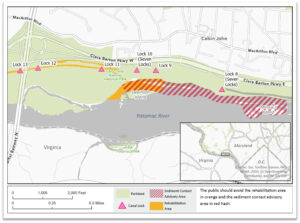
“Please keep children and pets away from these specific environments,” Davis warned.
While officials emphasized that the river is safe for most recreational purposes, they cautioned residents to remain vigilant, particularly after heavy rainfall. Davis said bacteria levels in natural waterways often surge for 48 to 72 hours after storms.
Residents were advised to avoid ingesting river water, protect open wounds and thoroughly wash skin, clothing and pets after contact with affected sediment areas.
Amanda Zander, a DC Water environmental and infrastructure program manager, told attendees that the utility has been working since February to contain the overflow and monitor recovery efforts.
According to Zander, water quality is tested daily at 10 locations along the river. DC Water has also deployed robotic technology into the Potomac Interceptor pipeline to assess the damaged infrastructure and prevent future failures.
“The Potomac River is resilient,” DC Water representatives told residents, adding that testing shows the river has “rebounded” and returned to normal water quality levels in most areas.
Still, several environmental advocates said more accountability and long-term restoration are needed.
In response to the spill, Potomac Conservancy launched CLEAR Potomac, the Coalition for Long-term Environmental Accountability and Restoration, to push for environmental oversight and continued remediation.
“Our hometown river deserves better,” advocates said during the meeting.
Environmental groups also raised concerns about sediment contamination and potential downstream environmental impacts that they believe have not been fully addressed in current remediation plans.
Officials from Maryland environmental agencies acknowledged that sediment testing and shoreline remediation remain ongoing, particularly around Minnie’s Island and sections of the towpath where odors and contamination concerns persist.
Despite lingering questions, officials maintained that the Potomac River remains open for recreational use, provided residents follow safety guidance and avoid restricted shoreline areas still under remediation.


Comments are closed.