In today’s column I will conclude our eight-part trip across northern Spain on the Camino Frances, part of the amazing Camino de Santiago. In previous stories I hiked over 100 kilometers from Morgade in eastern Galicia along the famous Camino Francés, part of the 1200-year-old Camino, to Santiago itself. Today we will drive to the “end of the Earth” and the coastal spot where St. James reportedly converted the local population in Biblical times.
West To the Coast
In Santiago de Compostela I picked up the small sedan I had rented from Enterprise and headed for the west coast of the northwest province of Galicia. I use Enterprise or Europcar for most reservations, and these days I usually specify automatic transmissions, which are easier to drive and their prices have come down closer to that of stick shifts.
Driving on the road west from Santiago toward the town of Hospital, I noticed the many 400-meter peaks, that were steeper and more numerous than the rolling hills of the Camino Frances east of Santiago. Tough hiking terrain!
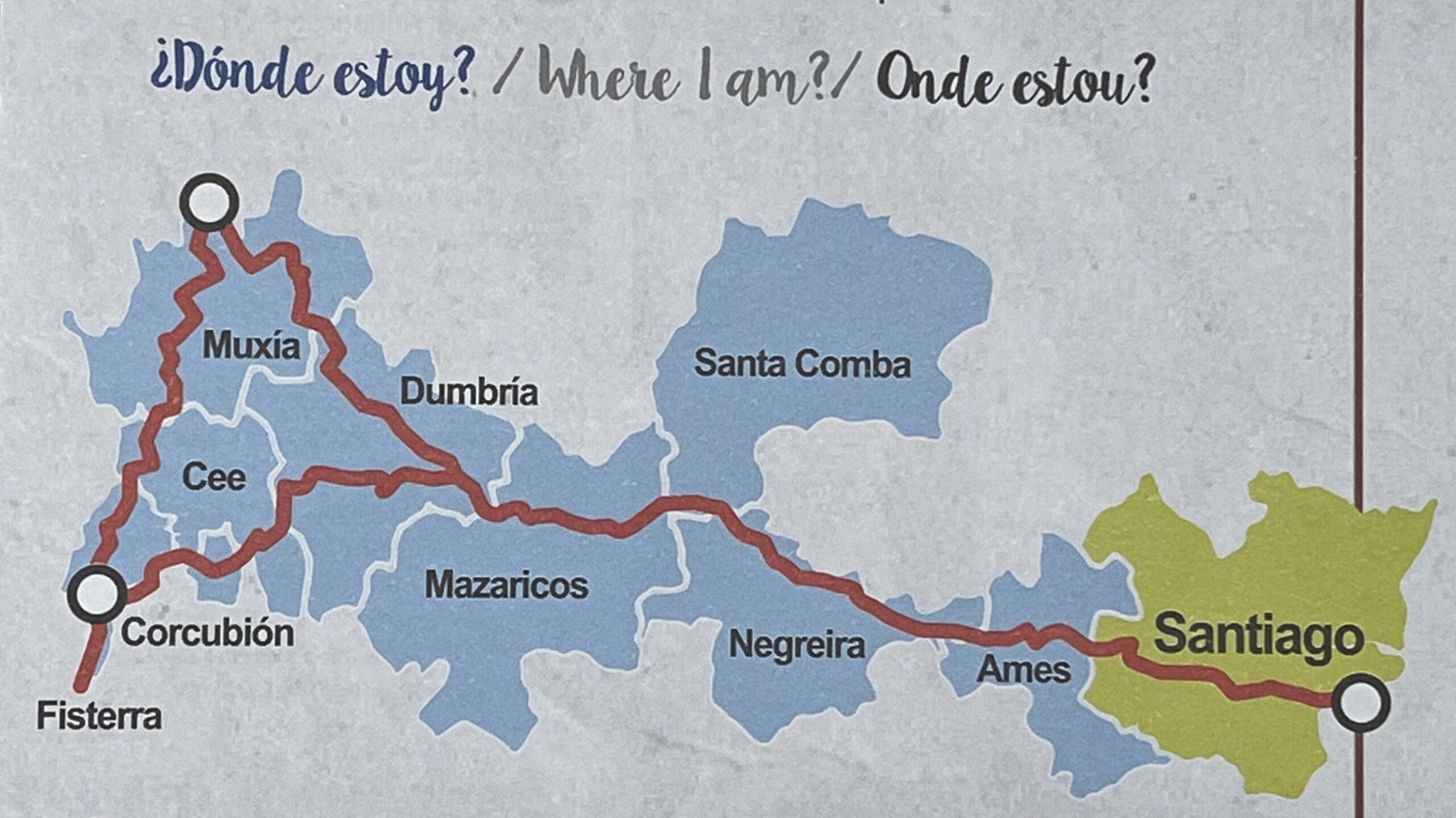
There is an authorized western Camino that runs about 90 kilometers (kms) from Santiago through Hospital to Cabo Finisterre (“Cape at the End of the Earth”), and then proceeds north to Muxia, about 30 kms, totaling 120 kms – enough to qualify you for the coveted Compostela certificate. If you are keen to “get in more steps,” you can go up and down those steep hills, back to Santiago, for an impressive total of 236 kms or 147 miles.
At The End of the Earth
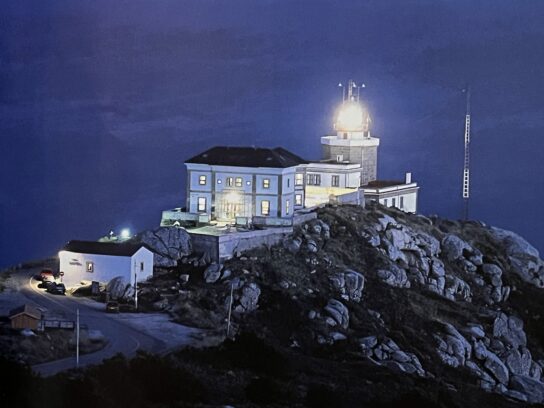
I drove through the narrow coastal town of Fisterra and was excited to see the famous hotel and lighthouse at the dramatic tip of the Cabo Finisterre peninsula. The Romans gave it that name because they believed it was the final, dangerous edge of the world. Later the Celts build an altar to the Sun here. In 834 AD King Alfonso II of Asturias was the first recorded Santiago pilgrim, reacting to the reported discovery of the remains of disciple and apostle St. James in 813 AD. Since then, many Christian pilgrims on the Camino de Santiago have extended their journey to the Cape to collect a scallop shell, the symbol of St. James, and pray and meditate while watching the sunset over the Atlantic.
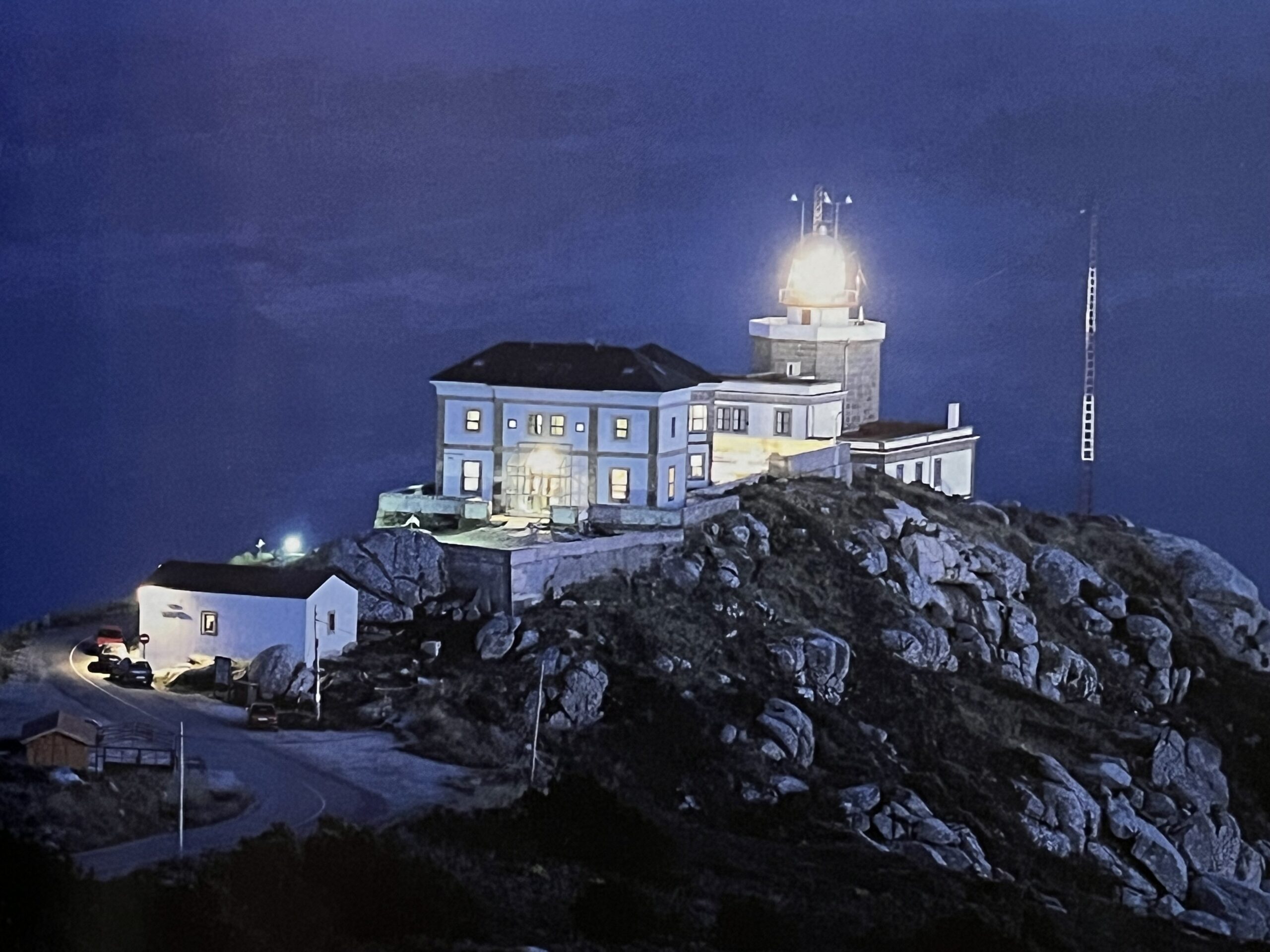
Now the Cape has a lighthouse built in 1853, 238 meters above the sea, the most important and impressive light on this dangerous, rocky coast. The adjacent Hotel o Semaforo (Lighthouse Hotel) was dramatic and the food was good, but my unusual room had no windows, only skylights, and was rather pricey at 240 Euros (about $279) per night.
South Along the Coast
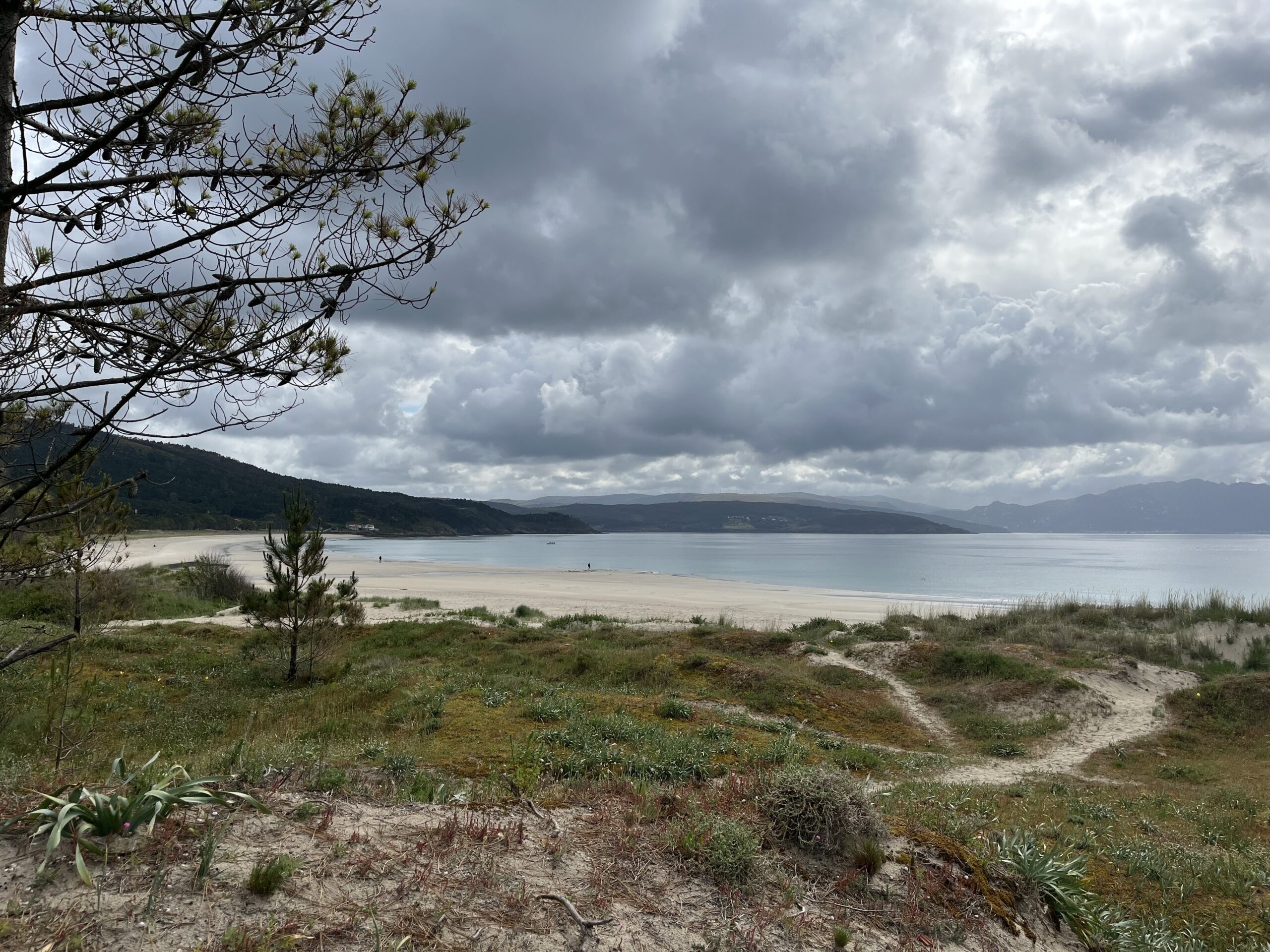
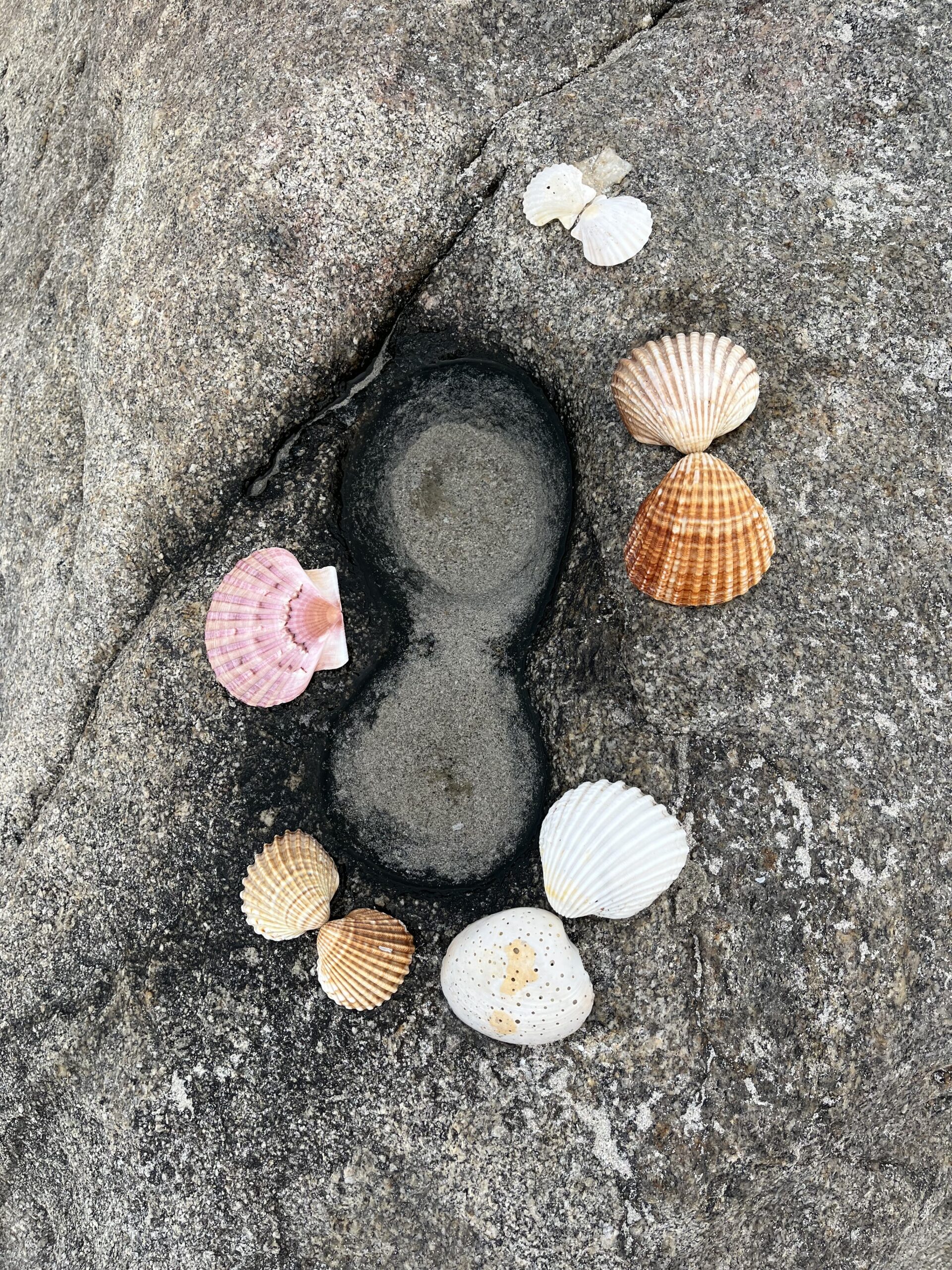
The next day I drove along the dramatic coastline, stopping first at the famous Langosteira Beach in the NE part of Fisterra. The long, gorgeous and uncrowded beach had numerous scallop shells at the high water mark. I found a remarkable large stone with a natural “footprint” in the top, a perfect symbol for the end of my hiking pilgrimage.
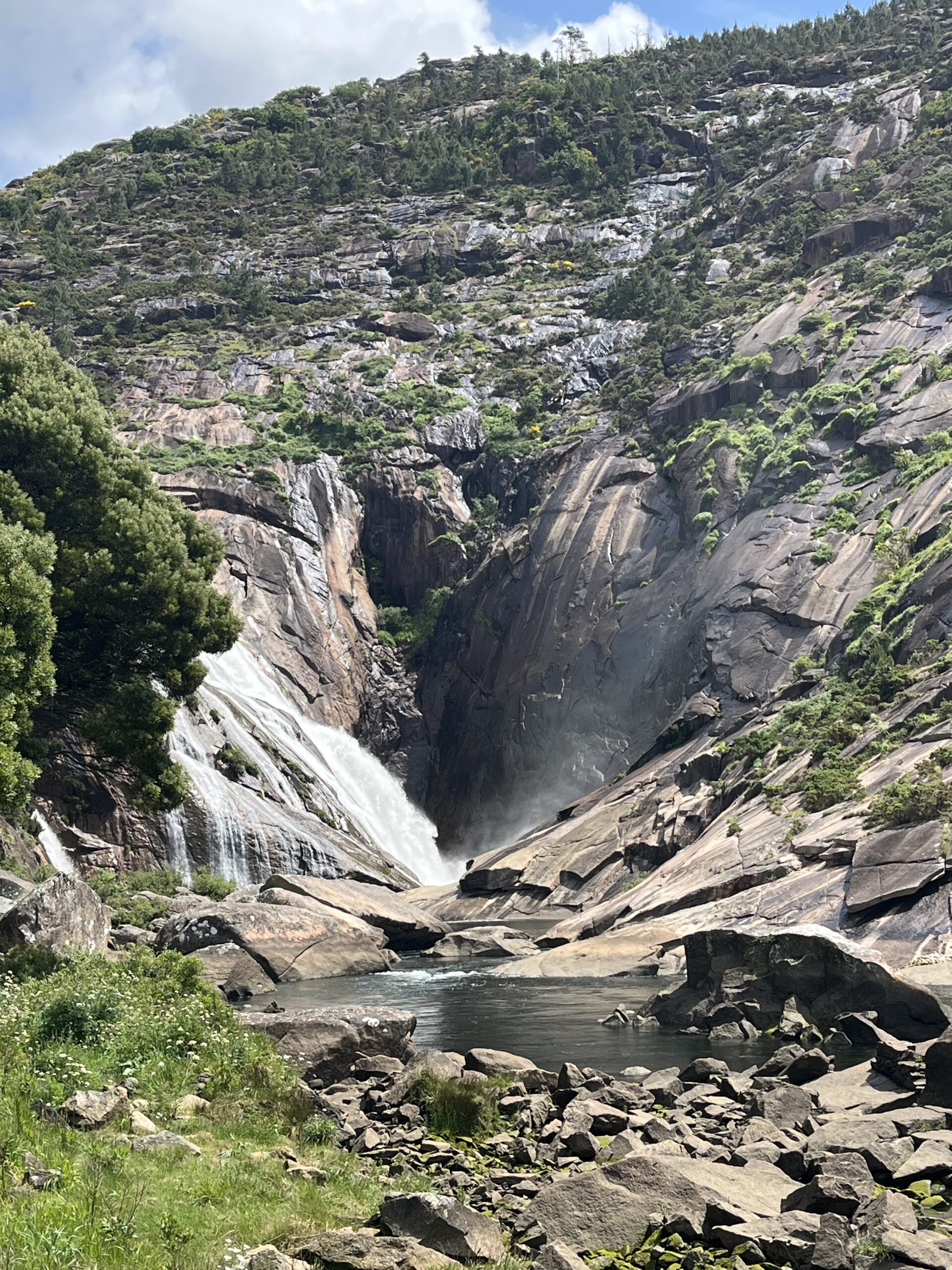
Then I headed south to the Ezaro waterfall, a dramatic 30-meter, sloped cascade on the Xallas River. It is the only waterfall in Europe that falls directly into the sea (here a narrow estuary) and is the best waterfall in Galicia. Wooden walkways provide an easy ten-minute walk to the falls. Some reviewers on-line complain about crowds, but in mid-May I was one of only about seven tourists at the site.
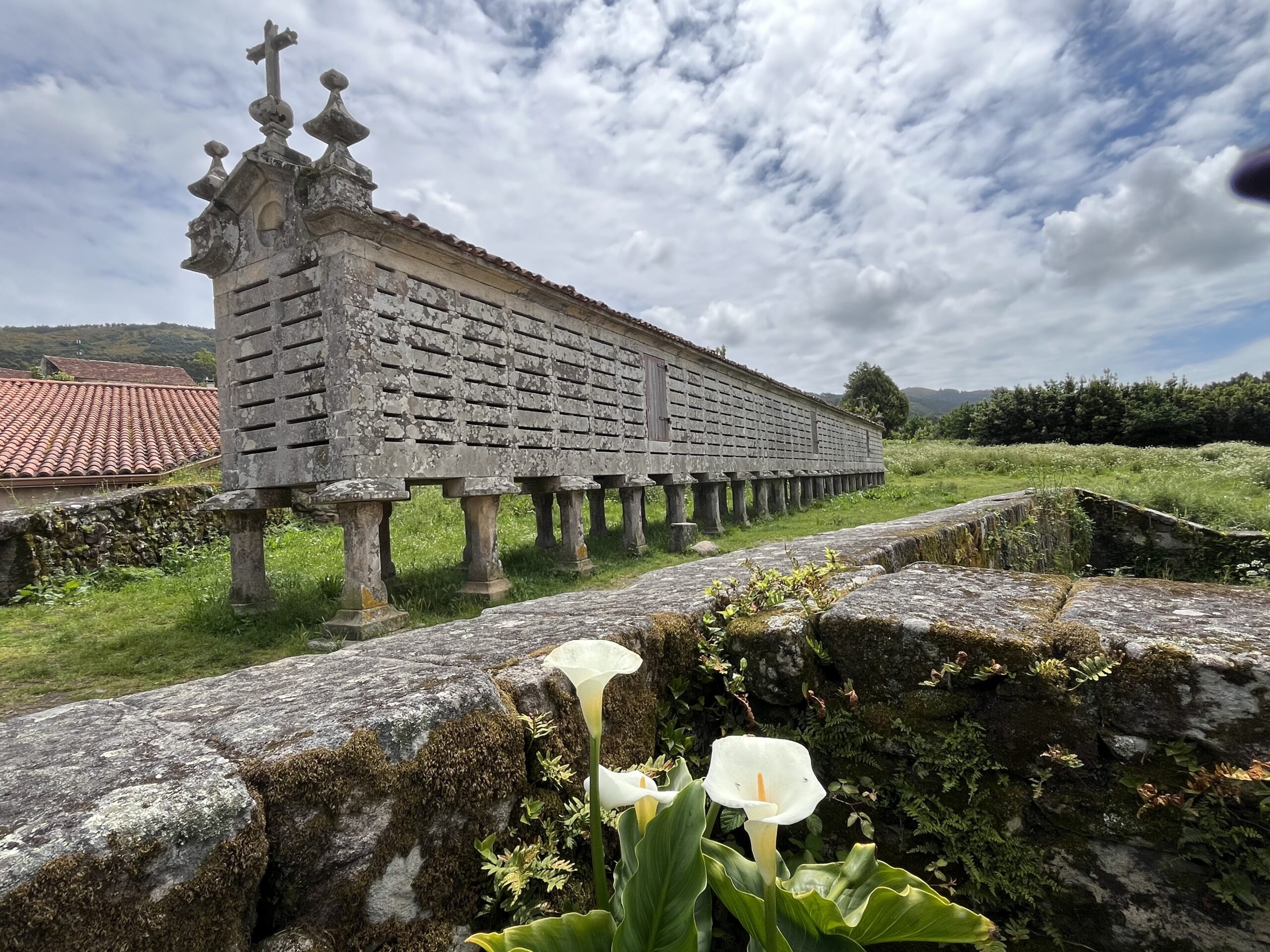
My next stop was in Carnota, to see the longest “horreo” in Galicia and likely in Spain. This strange long structure was built in 1760 and extended in 1783, in a competition to exceed the length of similar horreo in a neighboring parish. All horreos were built as granaries, out of stone, and raised off the ground to defeat rats and mice. But most are only about four meters long. The Horreo de Carnota is 35 meters long (about 114 feet) with 22 stone pillars and a granite roof! It is a Spanish National Monument. Well worth a visit.
The Northern Coast
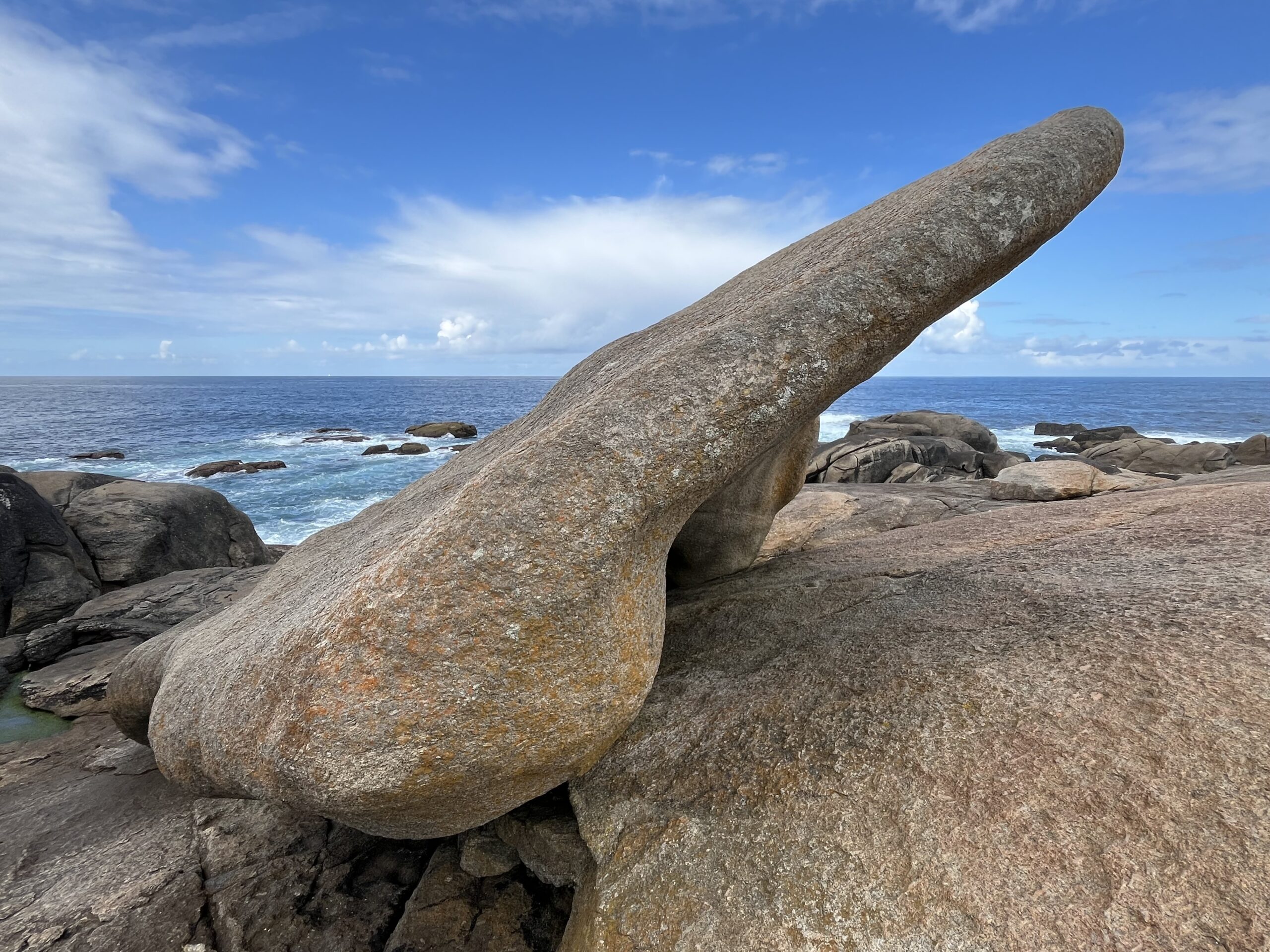
The next day I drove north along the coast, before heading back to Santiago. My main destination was Muxia, legendary site of the triumph of the disciple and apostle St. James. Here he was attempting to convert the local population to Christianity, but was having great difficulties. The Virgin Mary miraculously arrived in a stone boat, accompanied by thousands of angels, and with this backing St. James succeeded.
This holy location is marked by the church of Nosa Senora da Barca (Our Lady of the Ship), and the interior has numerous ship models from every era. The church is dedicated to the mariners of the world, and is located on a dramatic peninsula with a lighthouse and large rocks that are the reported remains of the miraculous stone vessel of the Virgin.
Miraculous Muxia was the perfect place to mark the end of my Camino Pilgrimage. I didn’t really find faith, but I certainly learned to respect the dedication of the millions of people who have walked the Camino over the past 1200 years, and who all acted as Jesus would have wanted – focused on peace, love, empathy, fellowship and good works.
This piece is a follow-up to last month’s article on arriving in Santiago, and my earlier Camino articles. For these pieces see:
- https://www.mymcmedia.org/hiking-the-famous-camino-de-santiago-part-1-logistics/
- https://www.mymcmedia.org/hiking-the-camino-de-santiago-blisters-feet-and-training/
- https://www.mymcmedia.org/hiking-the-famous-camino-de-santiago-part-3/
- https://www.mymcmedia.org/hiking-the-famous-camino-de-santiago-dont-forget-do-forget-this/
- https://www.mymcmedia.org/hiking-the-famous-camino-de-santiago-part-5-i-get-rolling-along/
- https://www.mymcmedia.org/hiking-the-famous-camino-part-6-portomarin-to-santiago/
- https://www.mymcmedia.org/hiking-the-famous-camino-part-7-santiago-and-the-botofumeiro/
- https://www.mymcmedia.org/blog-top-tips-for-tackling-el-camino-de-santiago-part-1/
- https://www.mymcmedia.org/blog-el-camino-de-santiago-part-2-regional-highlights/
1. Map of the western Camino that leaves Santiago de Compostela, heads west and splits at Hospital, and includes a loop along the coast to the town of Fisterra (with Cabo Finisterre) and Muxia.
2. The lighthouse (right) built in 1853, at the tip of Cabo Finisterre – the “Cape at the End of the Earth” – and the adjacent Hotel o Semaforo – the “Lighthouse Hotel” in the center of the photo.
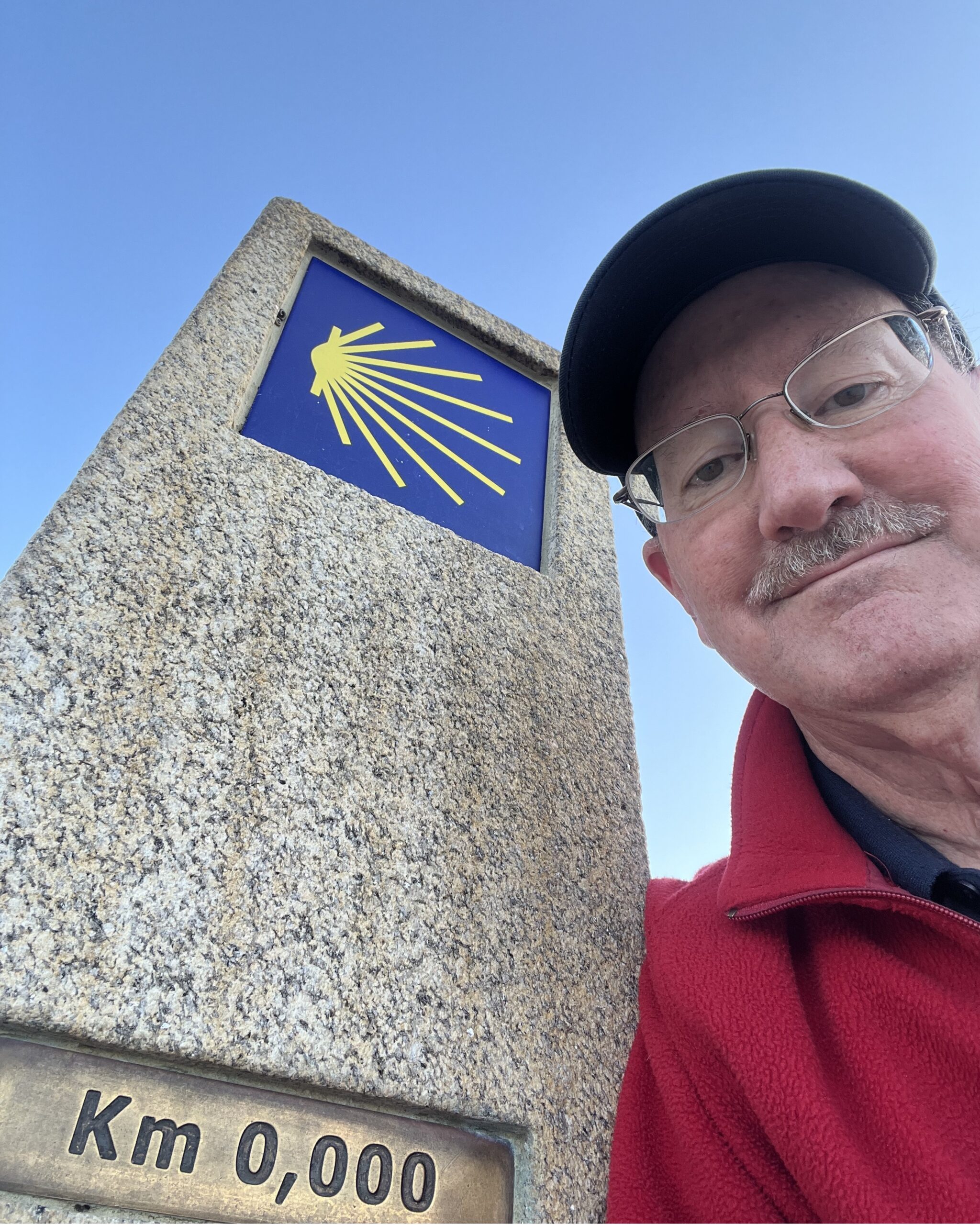
3. Your author at Kilometer Zero at Cape Finisterre.
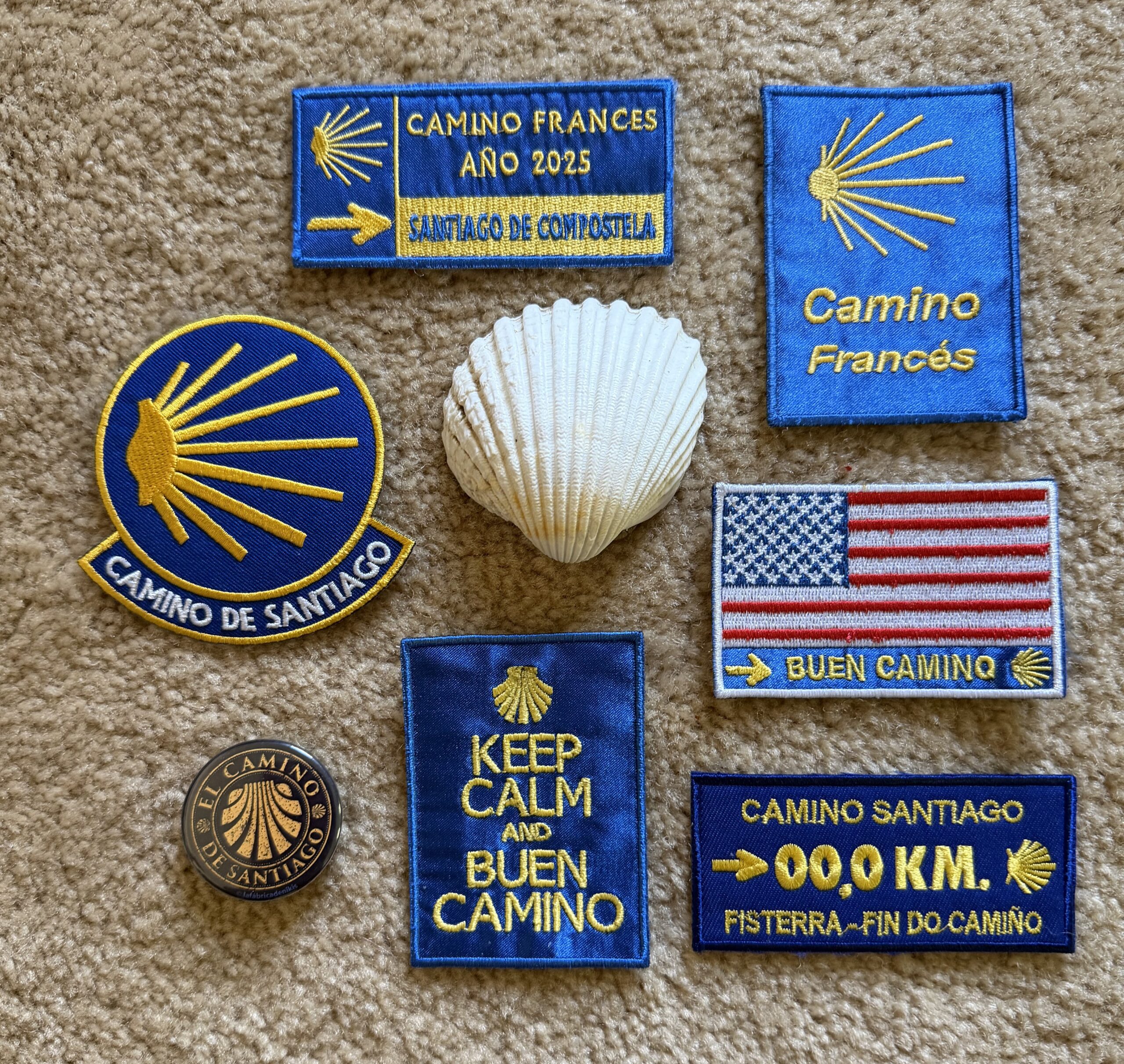
4. Some of the numerous patches and buttons you can collect on Camino, and a scallop shell from the Langosteira Beach near Cape Finisterre.
5. The two-mile-long, beautiful, uncrowded Langosteira Beach is the perfect place to find a scallop shell to remind you of your Camino.
6. A hollow in a large, isolated stone on Langosteira Beach resembles a hiking boot footprint, and is surrounded by scallop shells.
7. The 30-meter-high sloping waterfall at Ezaro, on the rocky, rugged Xallas River, empties into an estuary that is part of the Atlantic Ocean.
8. The longest “horreo” (stone granary) in Galicia, built in 1760 and extended in 1783, raised off the ground to defeat rats and mice. This National Monument is an astounding 35 meters long (about 114 feet) with 22 stone pillars and a granite roof. Rats flee in terror!
9. A massive, 25-foot-long phallic-shaped stone at Muxia, on the west coast of Spain, is reportedly part of the stone vessel that miraculously carried the Virgin Mary to Galicia, to help St. James convert the inhabitants to Christianity.


Comments are closed.