The capital of the Philippines is Manila, and the word comes from the indigenous Tagalog word “Maynila,” meaning “the place where” (“May”) the Nila plant grows. The Nila plant is a flowering, mangrove tree that sprouted in abundance along the coast of Manila Bay. But the mangroves are all gone now.
In this article I will prove that the name should be changed to Maymall or Malltown, since the main thing sprouting up there are massive malls that dominate the economy and even the social life of the capital.
Metro Manila has about 77 (!) major indoor malls, each with air-conditioning, movie multiplexes, multiple levels (often up to five stories), scores of restaurants, and hundreds of retail shops, all jammed with crowds of people. Many of these malls have unusual features, including medical clinics, large churches, government offices, and enormous supermarkets with fresh fruits and vegetables. Some supermalls feature art or culture museums, amusement rides and skating rinks. The Venice Grand Canal Mall contains replicas of the canals of Venice, with singing gondoliers and live 12-foot-high characters on stilts, wearing Carnival masks, to entertain kids and patrons.
By contrast, our DC metro area only has a paltry 13 major malls, and virtually all lack the unusual features that are common in Manila.
Examining the mall penetration and impact in the two metro areas, consider the following statistics:
- Metro Manila has about 73.3 million square feet (1726 acres or 2.7 square miles!) of mall space, vs. only 14.9 million square feet (344 acres or 0.54 square miles) for the DC area.
- The regional population is 14 million for Manila and 6.4 million for DC, yielding a per capita ratio of 5.38 sq. ft. per person in Manila vs. only 2.32 sq. ft. in DC.
- Metro Manila’s major malls have about 530 movie screens, vs. only 172 in the DC area.
- In Metro Manila the per capita income is only about $2400 USD, while in the DC area the figure is about $62000. Median household income is about $9000 and $141000, respectively. Despite these immense disparities, Metro Manila’s major malls capture an astounding $1426 per capita per year of spending, while in the DC area the comparable figure is only somewhat higher, at $1738.
- The estimated annual mall spending in Metro Manila is about $20 billion USD, while in the DC area it is only about $11.2 billion.
What these figures mean is that malls are the economic lifeblood of Metro Manila — but not of metro DC. They are also the center of Manila social life, with crowds at all times of day, busy shops, people doing business, family outings, promenading, dating, with long lines of people waiting to order food at popular venues like McDonald’s and Jollibee.
Why is this? Major drivers of mall popularity in Manila are avoiding the outdoor heat (usually 80-95 degrees F with high humidity and frequent rain), safety (lots of security guards), incredibly numerous helpful staff, and convenience (locations next to bus lines, jeepney routes, and rapid transit).
By contrast, in many DC area mall stores, my wife and I wander in, see no other shoppers, look around, buy nothing, then wander out, speculating that every shop must be making its nut by selling crystal meth under the counter!
Many malls in the US have been closing due to lack of business. But perhaps with global warming, indoor malls with AC will make a comeback in DC and the rest of country, as the US becomes more like the Philippines….
Who owns and controls all this Philippine economic activity? In Metro Manila, the elephant in the room is the Sy family, owner of SM Prime Holdings, with 25 major malls and supermalls (and over 65 malls in other cities) and a net worth of over $10 billion.
Other leading families are the Zobel de Ayala family, with premier malls and the massive 5-mall Glorietta complex in the prestigious Makati area; the Gokongwei siblings, $7.9 billion and owners of the Robinson chain of malls; and Andrew Tan and family, $1.8 billion, owners of the Venice Grand Canal Mall and the Uptown Mall.
By contrast, in the DC area, the major malls are all owned by corporate entities. Examples include publicly traded REITs such as Arundel Mills, Potomac Mills and Tyson’s Corner; Brookfield Properties, owners of Tysons Galleria and Ballston Quarter; and the French/Dutch commercial real estate giant Unibal-Westfield, which owns Westfield Montgomery and Westfield Wheaton — and 64 other malls across Europe, US and the UK.
The wealthy mall families in Manila often live in prestigious neighborhoods such as Forbes Park, Dasmarinas Village and Undaneta Village. These are close to the malls and commercial centers, lined with beautiful trees, and are gated communities with serious security and hundreds of walled-surrounded free-standing homes that cost from $1.7 million to $60 million USD. Yikes!
Money attracts controversy, and the mall economy is no different. Some recent issues include:
The Sy family, owners of SM Prime Holdings, is the largest retail employer in the country. SM has been accused of the “contractualization” or the “Endo” practice — terminating new, probationary employees just before they reach six months on the job. By doing this, SM allegedly avoids the legal requirement of providing job security, paid leave, social insurance contributions and other benefits, which kick in at six months from the start date, under Article 296 of the Philippine Labor Code. Charming. Numerous protests have been launched against this practice.
In 2007, the Glorietta 2 mall, owned by the Ayala family, suffered a massive explosion which killed 11 persons and injured over 100. The cause was traced to a biogas buildup and structural maintenance failure. This led to public protests and a major government investigation.
In 2022, Andrew Tan’s Megaworld Mall was threatened with immediate closure by order of the national Bureau of Internal Revenue (BIR), over a local real estate tax audit. This caused widespread financial panic and controversy. Megaworld counter-attacked and was able to prove that it had paid all the appropriate tax. As a result, the BIR task force involved was disbanded in disgrace.
So, did I prove that Manila should be renamed? QED?
Next month I will describe in more detail some of the many attractions you can see when you visit Malltown.
-
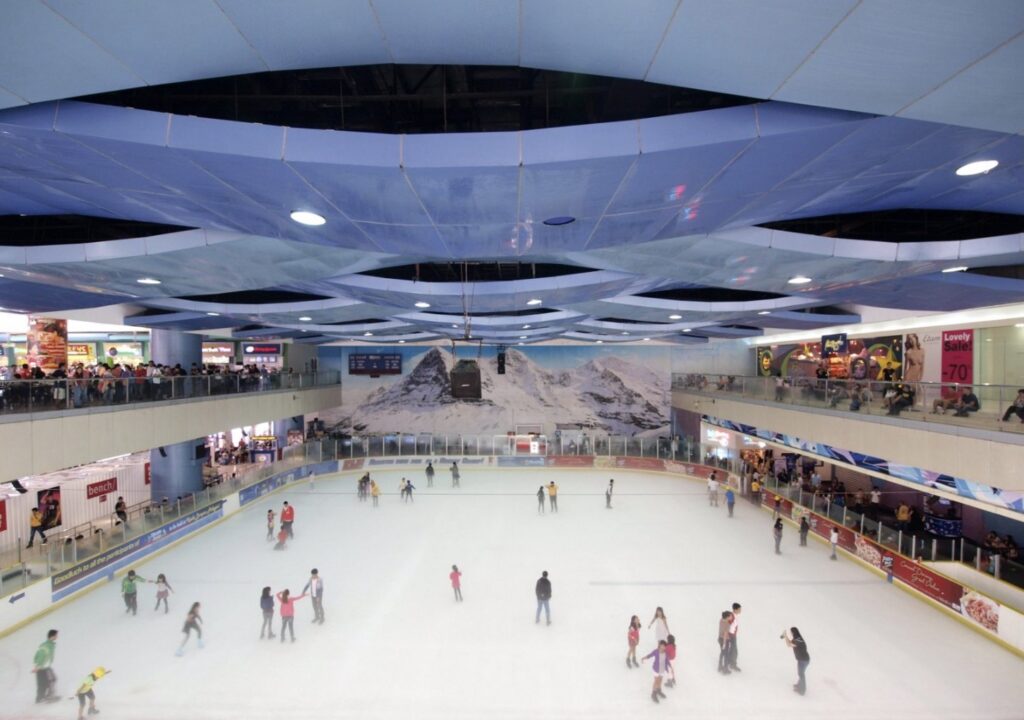
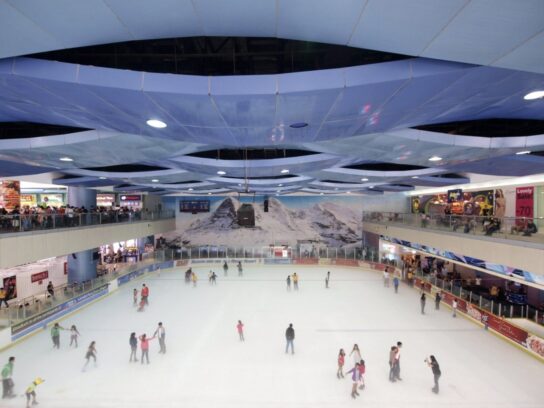
- A. The Olympic-sized ice-skating rink at the SM Mall of Asia (or MoA), the largest mall in the Philippines, at 6.3 million square feet. It is the fifth largest mall in the world, was opened in 2006 by Philippine President Gloria Arroyo and tycoon Henry Sy, and had over 1 million visitors on opening day. It has 663 shops, 4 main buildings, 8 carpark buildings, 8,000 parking slots, a Disney store, music hall, office space, entertainment area with bowling, billiards, archery, game room, karaoke, game arcade, IMAX, 13 other cinemas, sports bar, indoor sports arena, amusement park with 17 rides, Ferris wheel, and a football pitch. Does your shopping mall have an ice-skating rink?
-
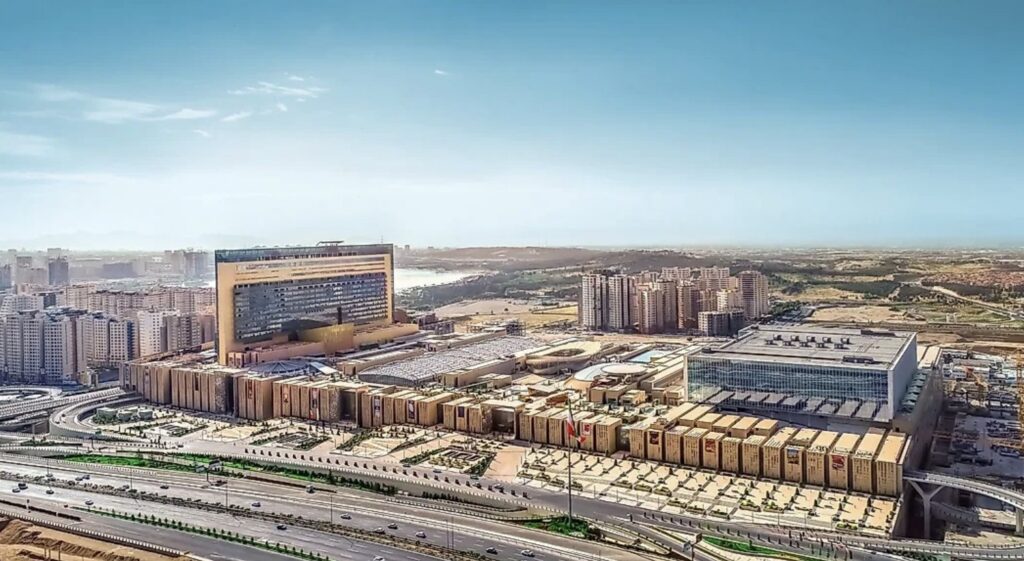
- B. The largest mall in the world is in – wait for it – IRAN! The Iran Mall is in NW Tehran, has 21.0 million square feet, over 700 stores, parking for 15,000 cars, a five-star hotel, a traditional bazaar, and a grand library modeled on an Iranian medieval scriptorium. Also — of course — an ice-skating rink. By contrast, the Mall of America in Bloomington, Minnesota, the largest mall in the US, has only 5.6 million square feet – and no ice-skating rink. As DJT would say, “Sad!” How do we expect to win a war with Iran when they outnumber us over 3 to 1? BTW, the Mall of America is not even in the world’s top 10 by size – so “sad”. The other top 10 include malls in Kuwait, Malaysia, China (3), Thailand (2) and Iraq (!).
-
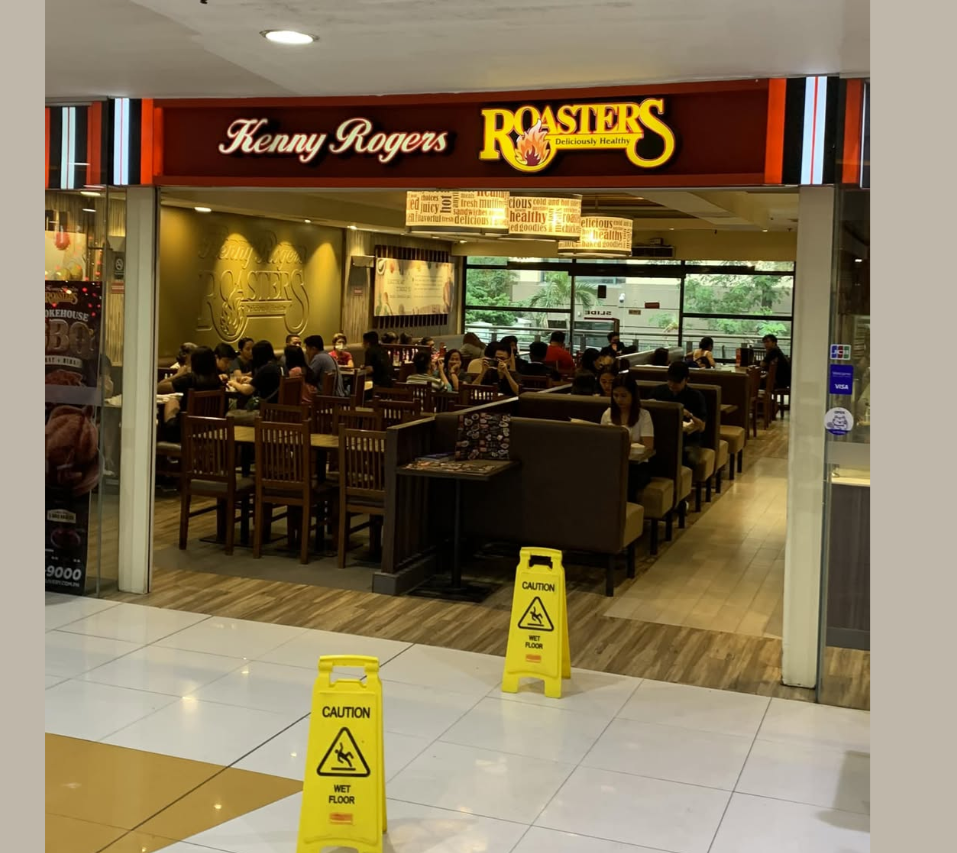
- C. There is a Kenny Rogers Roasters chicken restaurant in many of the malls in Manila and elsewhere in the Philippines, with over 100 locations in that country and about 75 more across Asia (and none in the US). The “Caution” signs are unwarranted, since the chicken is pretty good and juicy – I survived. Country music legend Rogers founded the chain in 1991, but it exited the US market in 2011 and is now based in Malaysia. American brands dominate many markets in the Philippines.
-
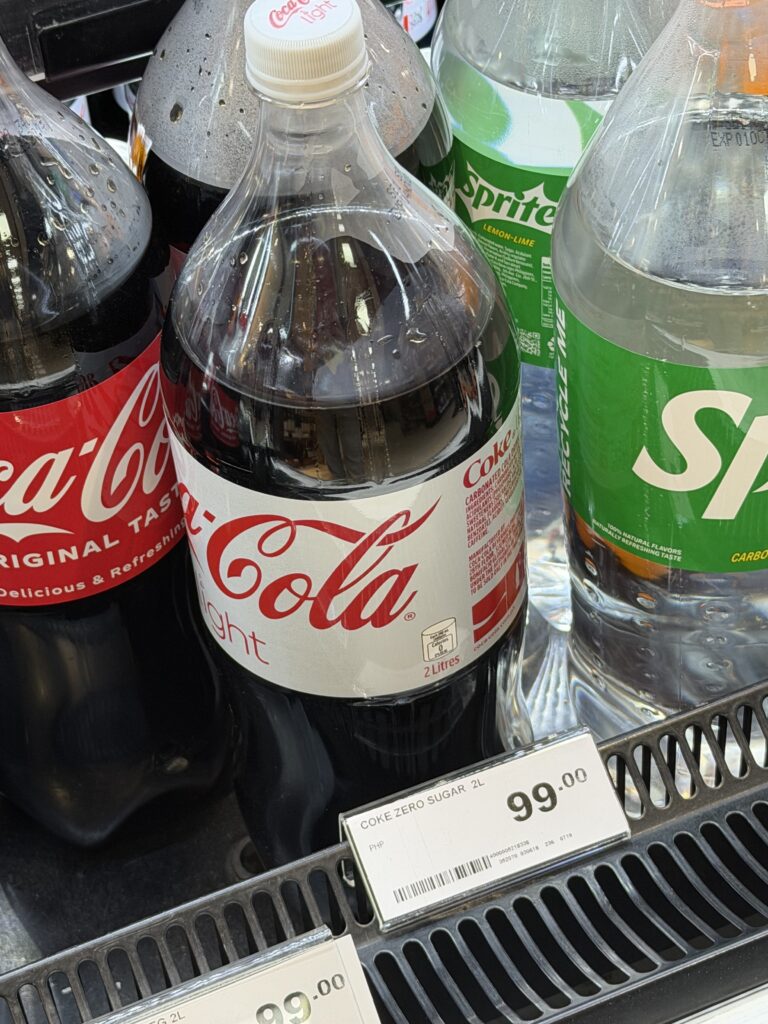
- D. Shown here are Diet Coke (called Coke Lite locally) and Coke Zero two-liter bottles at a standard price of 99 pesos each, about $1.58 USD, compared to current US prices of around $3.50 to $4.09. The price of Coke products like two-liter Diet Coke in the US has gone up 10% compounded over the last five years, much higher than inflation. Coincidentally (?), the value of DC/MD/VA Coca-Cola Consolidated bottler stock (ticker COKE) has gone up 385% in that same period. What a surprise!
-
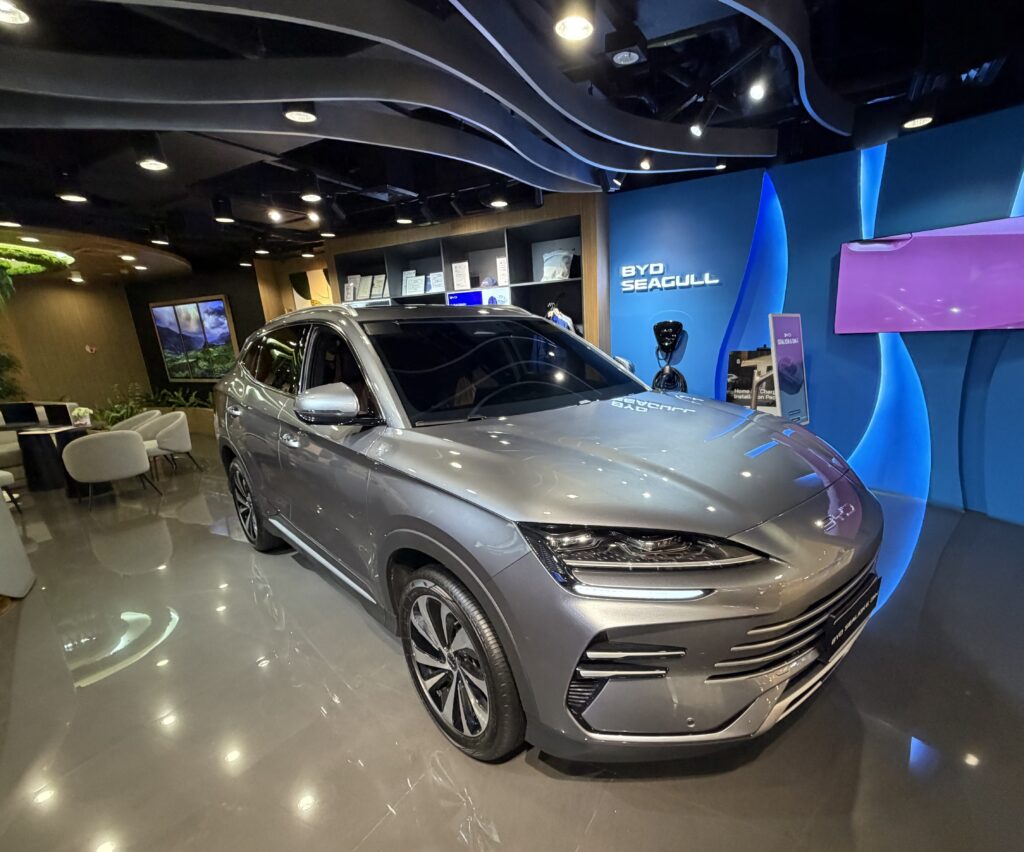
- E. A BYD Seagull all-electric Chinese vehicle for sale in the Glorietta Mall in Makati, an upscale area of Manila. BYD is an acronym for Build Your Dreams, and the company was founded on that philosophy in 1995 as a battery company with 20 employees. It entered the car market in 2003, got a big $230 M boost from Warren Buffet in 2008, and now employs over 965,000 workers. In 2025 BYD sold 2.3 million vehicles globally vs. Tesla’s 1.6 million. The Seagull is a compact city hatchback that has a range of 180 miles, can fast recharge to 80% in 30 minutes, has a 10-inch tiltable info screen, and costs only $17,100 USD. The roughly comparable Chevy Bolt costs about $29,000. We’re in deep ca-ca.
-
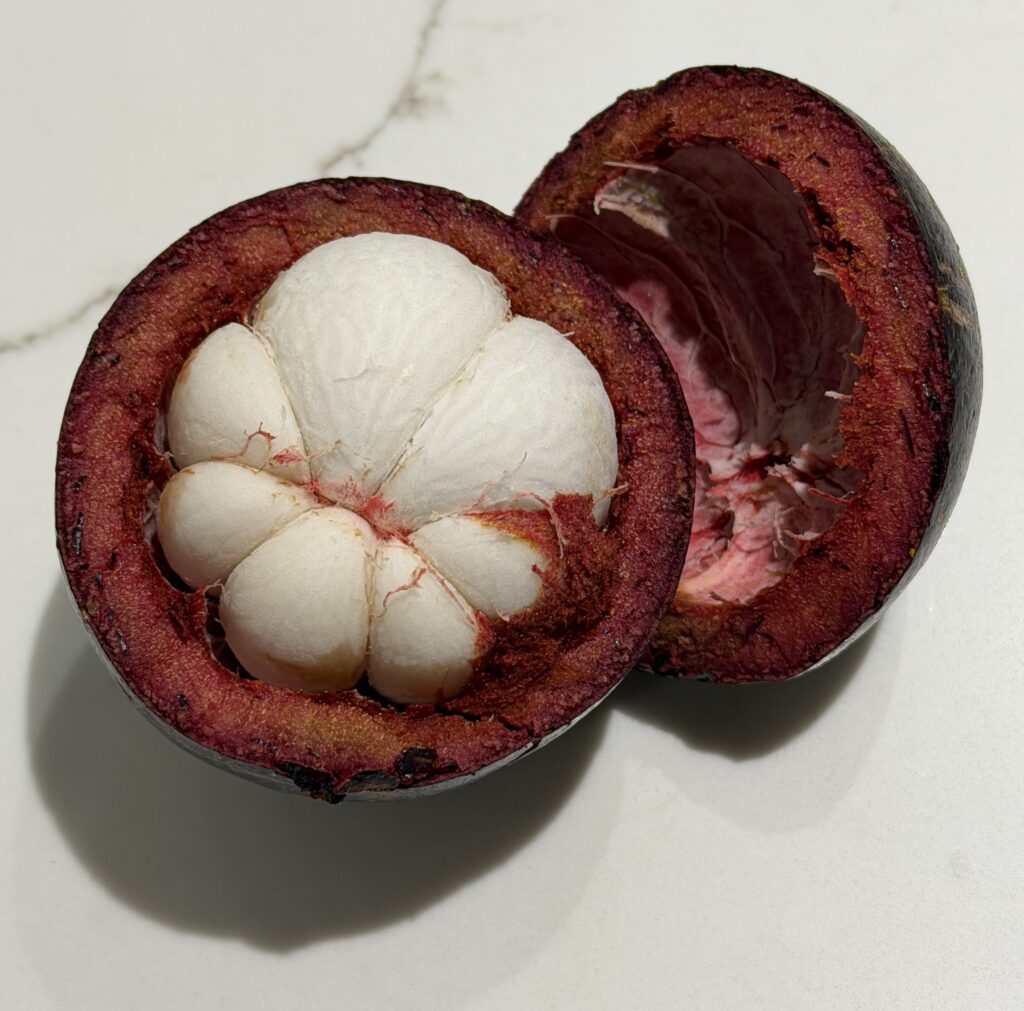
- F. This mangosteen is a terrific fruit found only in SE Asia, especially in April through June. The white interior is juicy and delicious, but don’t eat the reddish-brown shell or get its liquid on your clothes. The smaller fruits, at about 3-4 inches wide, are sweeter. I think this is one of the greatest fruits in the world. Mangosteens can be found in the massive basement grocery stores of many major malls in Manila and elsewhere in the country.
-
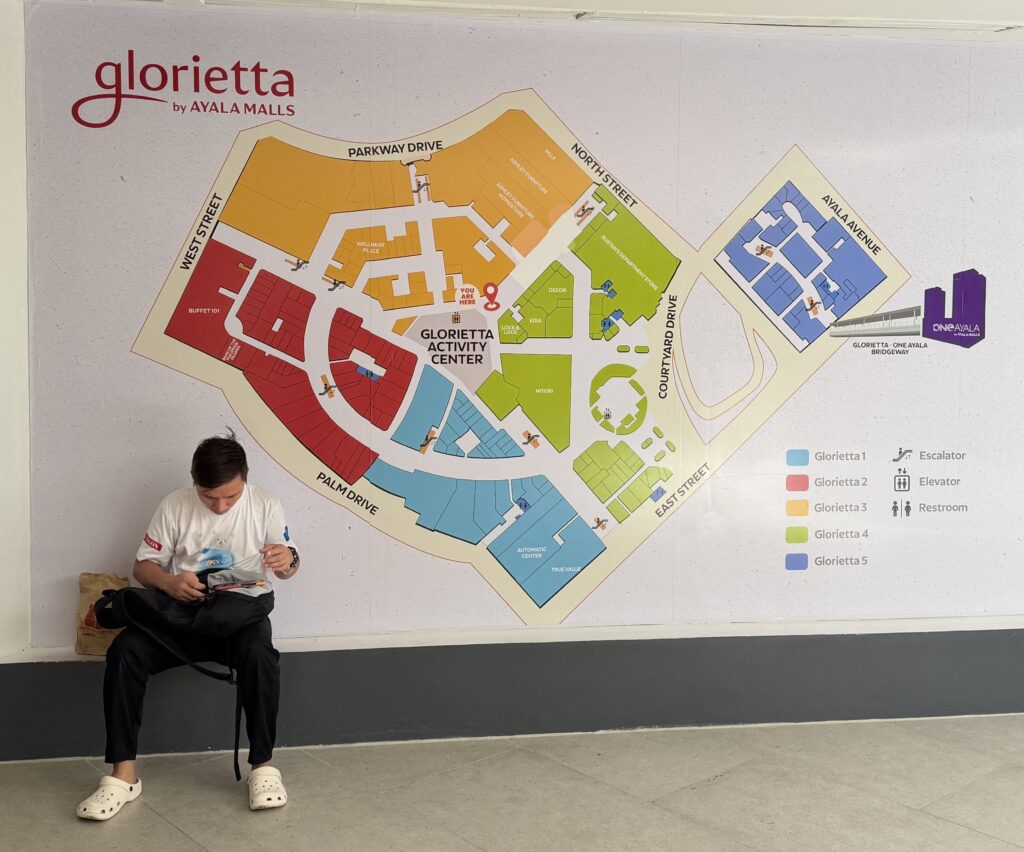
- G. This map of Glorietta Mall(s) shows the five linked malls that form the official complex. But the map omits the adjacent Greenbelt mall(s) in five sections, the SM Makati mall, and the Landmark Makati. So, depending on how you count, this makes 12 linked but separate, air-conditioned indoor malls in one gigantic complex! The entire complex has about 6 million square feet. I stayed in the adjacent Holiday Inn Express (HIX) – much nicer than most HIXes in the US, with an executive lounge with snacks, free food and drinks and beautiful views, a pool, a decent gym, and innumerable terrific staff.
-
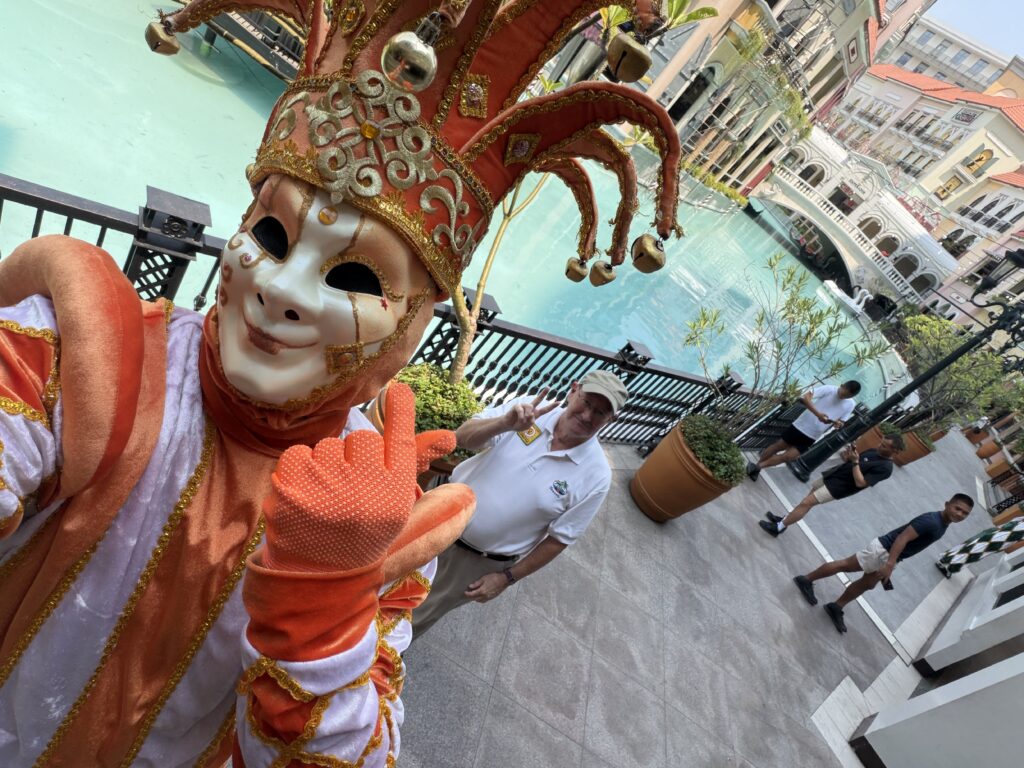
- H. A 12-foot-tall stilt entertainer and your author at the Venice Grand Canal mall in Manila. The entertainers request a small fee if a photo is taken. The mall was built in 2015 and, unusually, is partly outdoors and thus exposed to the heat. Gondola rides, sometimes with singing gondoliers, are about 15 minutes long and cost about $9 per person, expensive for most locals.
-
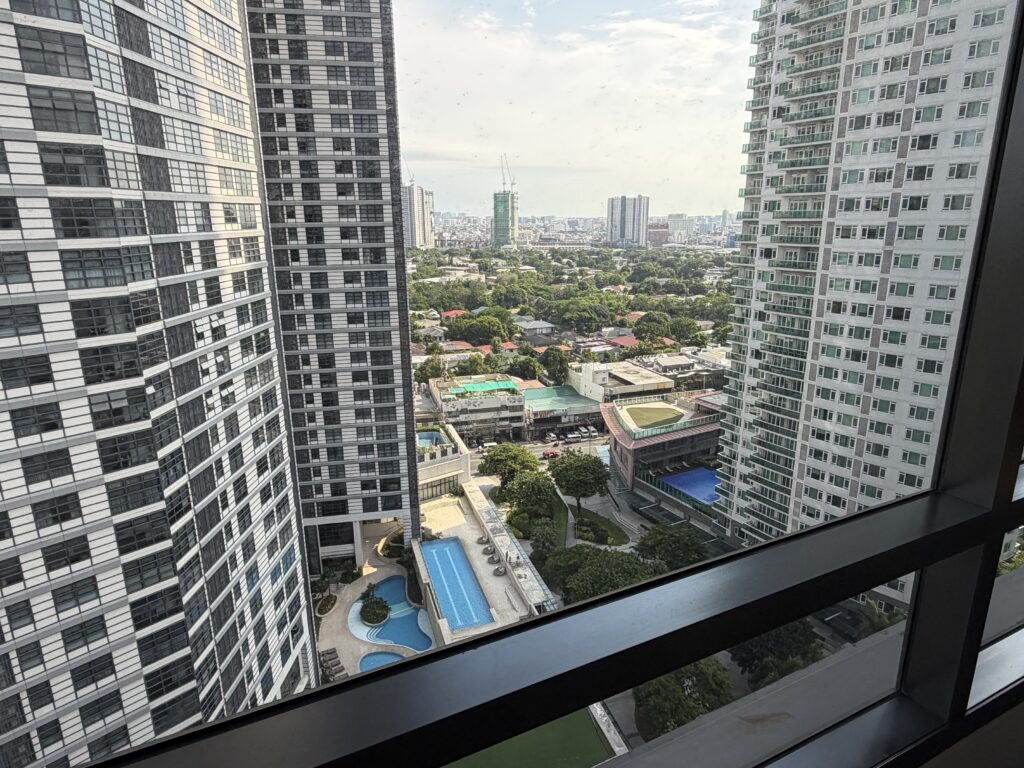
- I. One of the views from the 15th floor executive lounge of the Holiday Inn Express beside the Glorietta Mall in prestigious Makati, Manila. In the foreground are tall condos for sale and rent. In the middle ground is a green, tree-lined gated community of about a square mile, with many expensive villas and mansions within their own high walls. In the distance to the ESE is another even more prestigious area with malls and tall condos, BGC (Bonifacio Global City), developed on an old US Army base, Fort McKinley, founded in 1901.