On my recent visit to the Philippines, I flew into Manila and visited the cities of Clark and Subic Bay, northwest of Manila, all three on the main island of Luzon. Clark started as a small US calvary post in 1903, evolved into the largest US overseas air base in the world, and was only abandoned by the US in 1991, after the massive eruption of Mt. Penatubo and the rejection of a new bases authorization treaty by the Philippine Senate. Similarly, strategic Subic Bay was seized by the US under President Theodore Roosevelt in 1899, evolved into the largest US Navy overseas facility, and was only relinquished by the US in 1992.
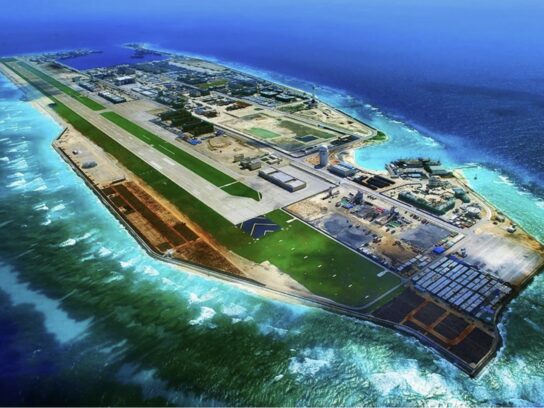
That was then; this is now. The US is back, and is cooperating with the Philippine military to counter the expansionist Chinese (PRC), who are building military and dual-use outposts via dredging in the Spratly and Paracel islands in the South China Sea on Antelope Reef, Mischief Reef, Subi Reef and on numerous other reefs and sandbars. The Chinese claim virtually the entire Sea, illegally ignoring the legitimate claims of Vietnam, Philippines, Indonesia, Brunei, Taiwan and Malaysia.
The Chinese have also obstructed freedom of international navigation through the Sea, where over $4 trillion in annual world trade, over 20% of the total, passes each year. And the Chinese Peoples Liberation Army Navy (PLAN) has rammed, obstructed, harassed and water-cannoned Philippine Navy, Coast Guard and civilian vessels dozens of times over the last few years.
To counter this threat, the US is constructing or expanding joint US-Philippine facilities at four new locations, three on Luzon and one on Palawan. These are in addition to five existing joint bases. The US does not own these facilities, but is guaranteed access for joint training, equipment pre-positioning, defense, and humanitarian and disaster relief. Runways are being upgraded, aircraft parking and protection facilities improved, and drone intelligence and tactical operations centers built.
This all sounds justified, and the cost is a reasonable $144 million. There are at least four concerns, however.
First, local corruption. The Philippines has just suffered through a massive corruption scandal, in which billions of dollars of funding for badly needed flood control projects was diverted, stolen or corruptly awarded at high expense. This led to huge protest demonstrations and the resignation, firing or investigation of numerous officials including Cabinet ministers. Up to 40% of funds disappeared in this scandal, and some locals in-country told me the figure might be 80%! (That would almost match the record I had a fleeting knowledge of in Panama under Noriega, when the small consulting firm I was working for was asked to bid on a $3 million economic analysis contract in Panama. I learned that 85% of the value of the contract would go to Noriega’s nephew, and only 15% would go to our firm to do the actual work! I strongly recommended we not bid on the contract, and the firm’s owners agreed.)
Second, Philippine politics. The country has had political problems as bizarre as those in the US. Past President Rodrigo Duterte is in detention at the International Criminal Court at the The Hague, charged with crimes against humanity including mass murder, torture and rape. His daughter and current Vice President Sara Duterte is now being impeached by the Philippine Senate for graft and corruption, and for threatening the life and organizing a plot to kill current President Ferdinand Marcos, Jr., the First Lady, and the Speaker of the House. (Note that the Philippines, a third world country, can impeach a VP in its House and try her in the Senate, while the US, a supposed democracy, cannot manage to do this for an obviously corrupt President.)
Also, Filipinos rightly resent the long imperialist history of US occupation and repression, due to the killing by the US of about 20,000 Filipinos in the Philippine-US War of 1899-1902, with up to a million deaths by famine and disease in that war, and the subsequent US repression of early nationalist movements. Thus the nine joint bases could be endangered by organic or Chinese-inspired anti-American sentiments. There are already intermittent demonstrations against the bases, held outside the US Embassy in Manila.
Third, US politics. The Trump Administration has shown itself to be incredibly incompetent in international relations, offending almost all democratic US allies, and endorsing criminals such as Vladimir Putin, Kim Jong Un and Benjamin Netanyahu. Regarding the Philippine—China conflict, Trump vacillates wildly, first attacking China then seeming to endorse the “Mafia boss” theory of geopolitics, that allows Xi Jingping to imprison one million Uyghurs and other Muslims for no reason, threaten to invade Taiwan, and lord it over other small countries in the region. According to the Pentagon, the US alliance with the Philippines is “iron-clad,” but that could quickly change if Xi just delivers a really mushy, romantic “love letter” to Trump at the upcoming September 24, 2026 summit in Washington, DC.
Fourth, US lack of military capacity and leadership. The US has expended much of its conventional anti-missile defense capability (the Patriot PAC-3 and THAAD), has stupidly not developed a Ukrainian-level cost-effective drone offense, and is obviously losing its idiotic and unnecessary war with Iran. The Secretary of “War” is obsessed with pushups instead of geo-strategy, and is rightly despised by much of his officer corps. The US Navy still relies on its 11 nuclear carriers and their air wings, costing $17 billion a pop for power projection. In an era of naval drones and scarce, high-cost anti-missile missiles, this could be a losing strategy to protect Taiwan and South China Sea nations like the Philippines. Is this really the team that the Philippine military wants to hook up with?
As the brilliant Naval War College geopolitical strategist Sarah Paine observes, what is going on here is that China is an imperial, expansionist continental power that would like to also be an expansionist maritime power. But the Chinese PLAN is hemmed in to “narrow seas” by the “first island chain” of Japan, Taiwan, the Philippines, Indonesia, Malaysia and the Malacca Strait.
China is desperate to break out of these narrow seas, and with a weakened, badly led United States, I estimate that the chances of an invasion of Taiwan by China have now increased substantially. In this I disagree with the recent US Intelligence Community Annual Threat Assessment and private prediction markets, which put such an invasion at only about 5% likely. I think the chances have increased to at least 20%, with April/May or September/October of 2028 being the most likely dates. During those months the Taiwan Strait will be calm, the US will be distracted by Trump and the Republicans trying to steal the next Presidential election, and Xi will have likely launched an effective charm offensive against Trump’s tiny brain.
The nine US-Philippine joint bases would quite possibly be drawn into a Taiwan-China war. What would this mean for the Philippines? As SecState Henry Kissinger once privately said, “It may be dangerous to be America’s enemy, but to be America’s friend can be fatal.”
-
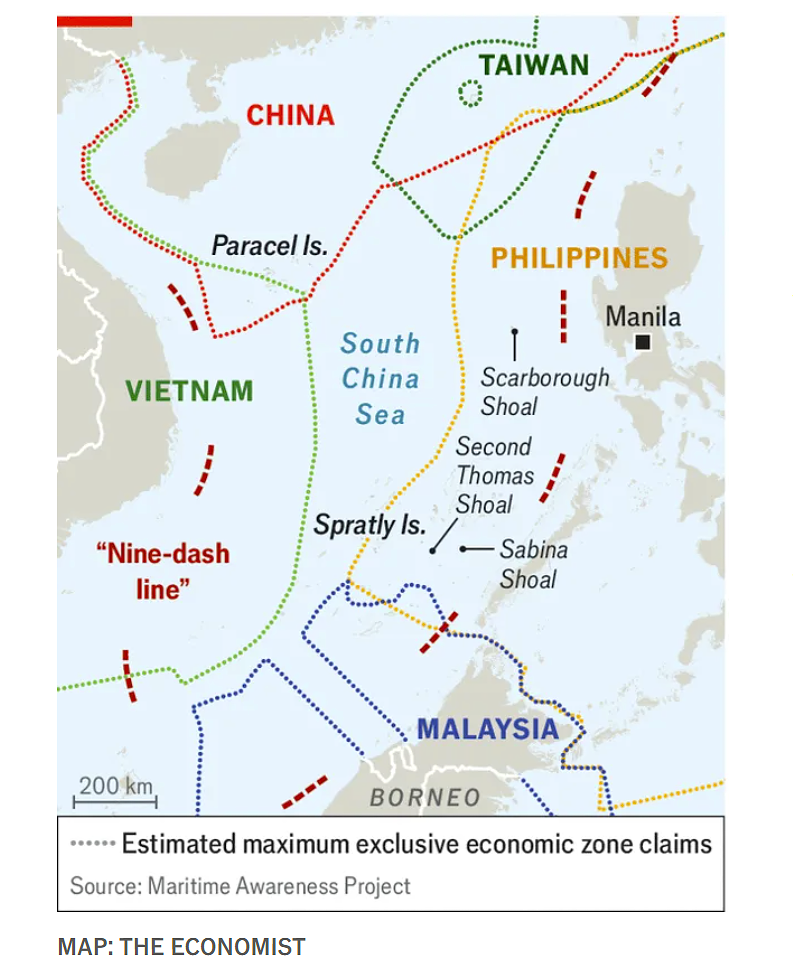
- A. Map of the South China Sea. The red dotted line is the infamous “nine dash line” which China says historical maps justify its claim to control the entire Sea. This claim has been rejected by an international tribunal in The Hague, but China ignores that ruling. The other lines are the legitimate claims of other countries to an Exclusive Economic Zone (EEZ) that extends up to 200 nautical miles (NM) from the coast. (The Territorial Sea, with full sovereignty, extends out 12 NM, and the Contiguous Zone, with Customs jurisdiction, extends out 24 NM.)
-
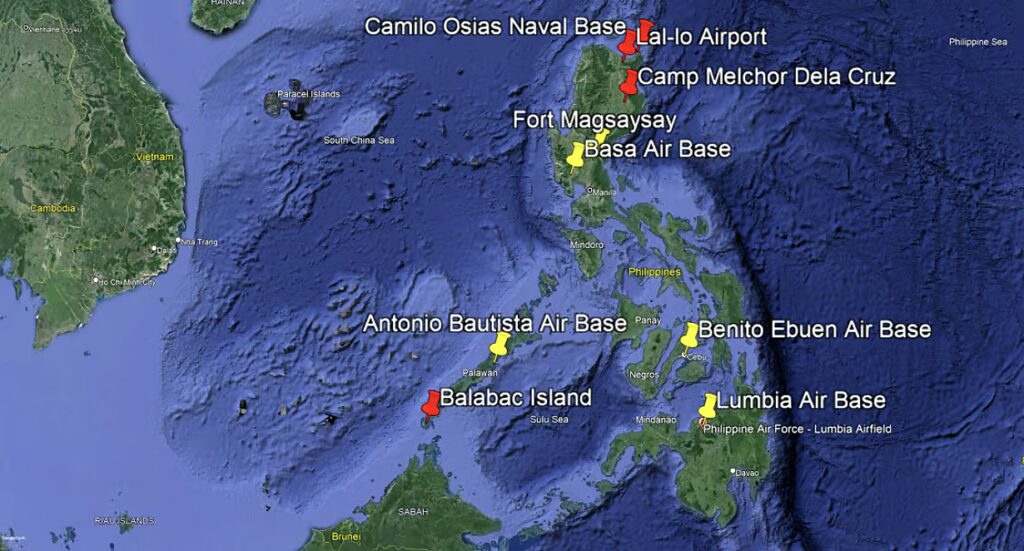
- B. Map showing the nine new and existing US-Philippine joint military bases. Red markers are new bases, yellow are existing. The bases are used for joint exercises in humanitarian assistance (since the Philippines is threatened by cyclones, flooding, earthquakes and volcanic eruptions), and to deter the Chinese forces in the South China Sea.
-
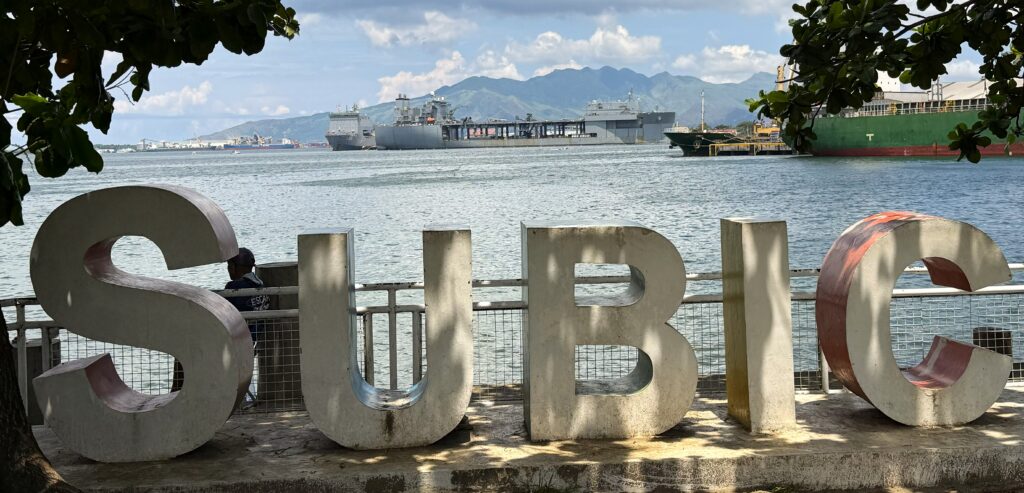
- C. Two naval vessels I spotted at Subic Bay Naval Operating Base in July 2026. The gray vessel in the center is the USN John L. Canley, ESB-6, and the vessel on the left is the Australian HMAS Choules, L100. The Expeditionary Sea Base Canley and other ships in this class carry large helicopters and do troop staging, equipment storage and operations support from the upper flight deck and unusual, large, flexible open area below. The HMAS Choules is a Landing Ship Dock (LSD), a versatile heavy lift platform, designed to deliver troops, heavy vehicles and humanitarian assistance to locations without a dock, via helicopters, landing craft, and 66-foot-long Mexeflote rafts. The large green vessel on the right of the photo is a civilian tanker.
-
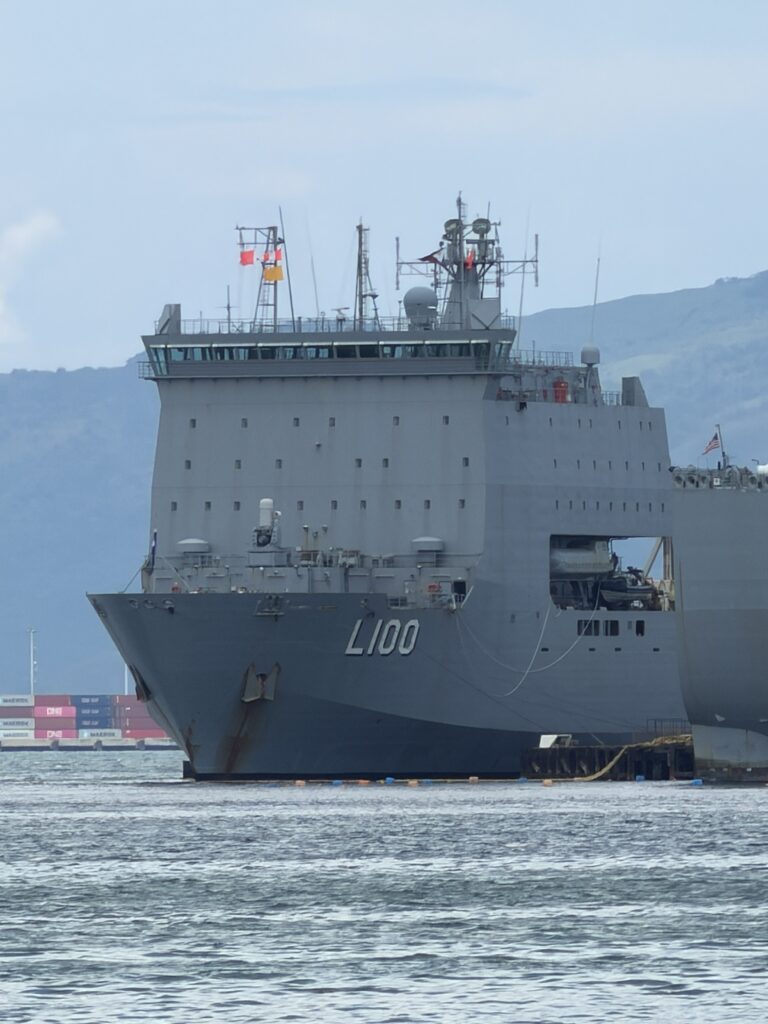
- D. The HMAS Choules (shown here in closeup) and the USS Canley participated in the annual, large Operation Pacific Partnership in June and July 2026, focusing on disaster relief, medical and humanitarian assistance drills. Participating vessels visited the Philippines, Vietnam, Timor Leste, Indonesia and Malaysia. The exercise also sent a message to the Chinese that the Americans were close by. Choules flies a US flag on the stern to show she is part of a US-led naval operation.
-
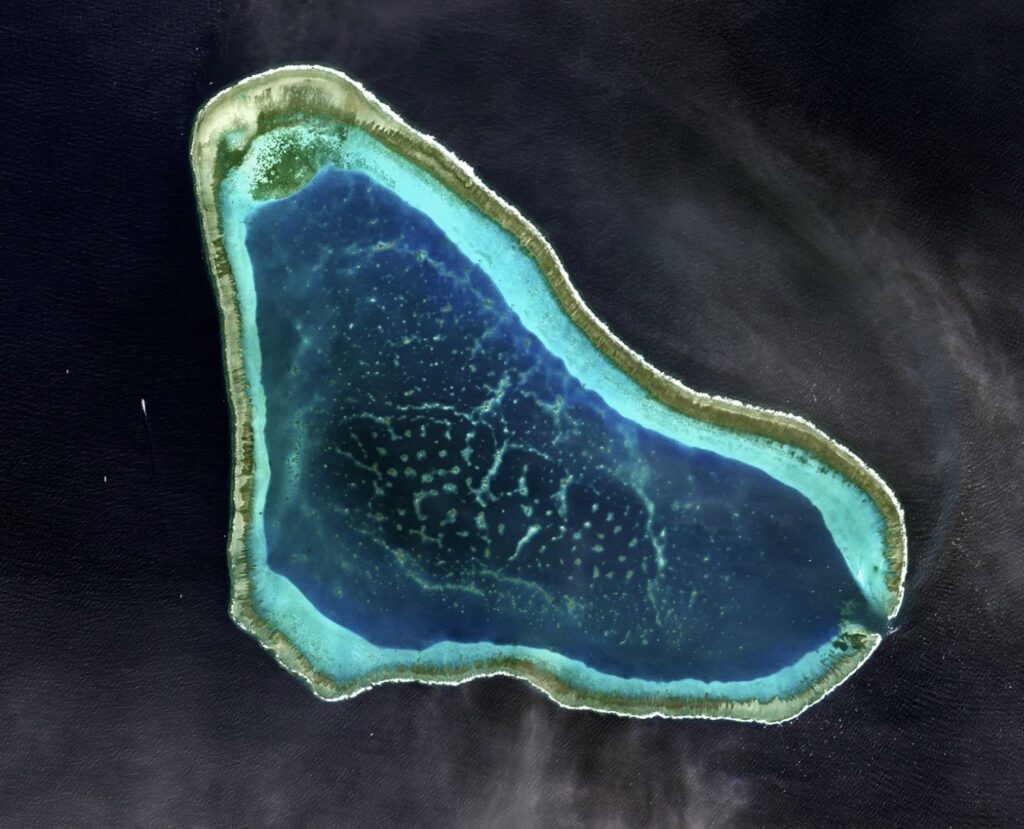
- E. Scarborough atoll in the South China Sea. It is the most contested island in the Sea, just 119 NM off the west coast of Luzon, the principal Philippines island, and thus very close to Manila, the capital of the country. China has not yet built a base or airfield there, but illegally attacks ships who approach the atoll.
-
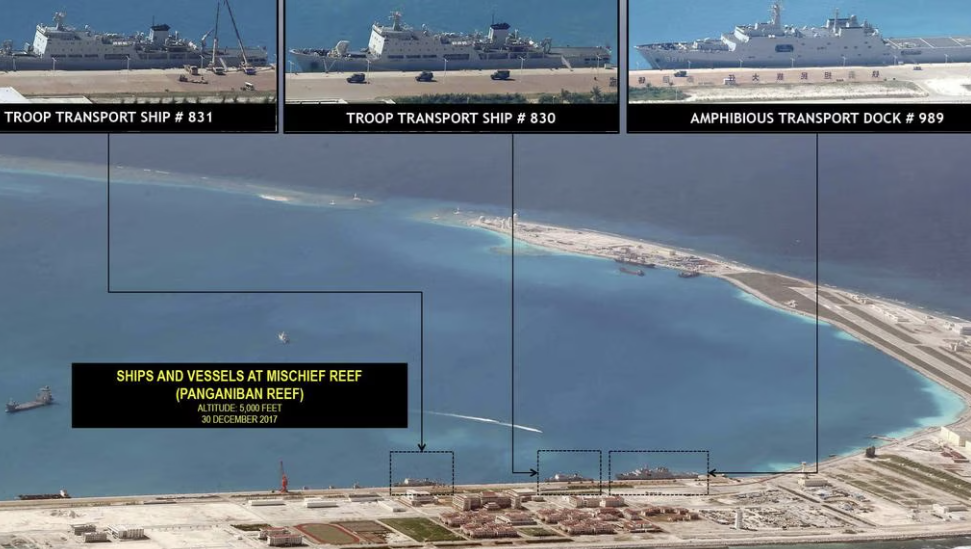
- F. Mischief atoll in the Spratlys, illegally seized and completely fortified by the Chinese with missiles, docking facilities, other installations and warships. China has 27 illegal outposts in the South China Sea — 7 in the Spratlys and 20 in the Paracels.
-
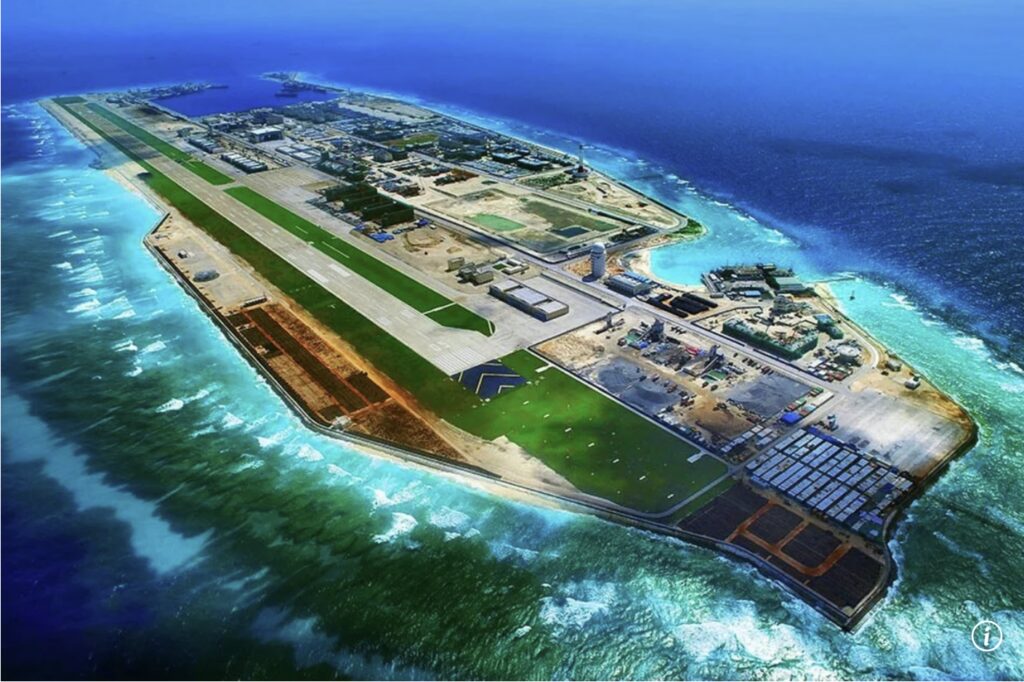
- G. Fiery Cross reef in the Spratly islands of the South China Sea was illegally transformed from a submerged atoll to a 274 hectare (680 acres) military base featuring a 3125 meter (10252 feet) airstrip.
-
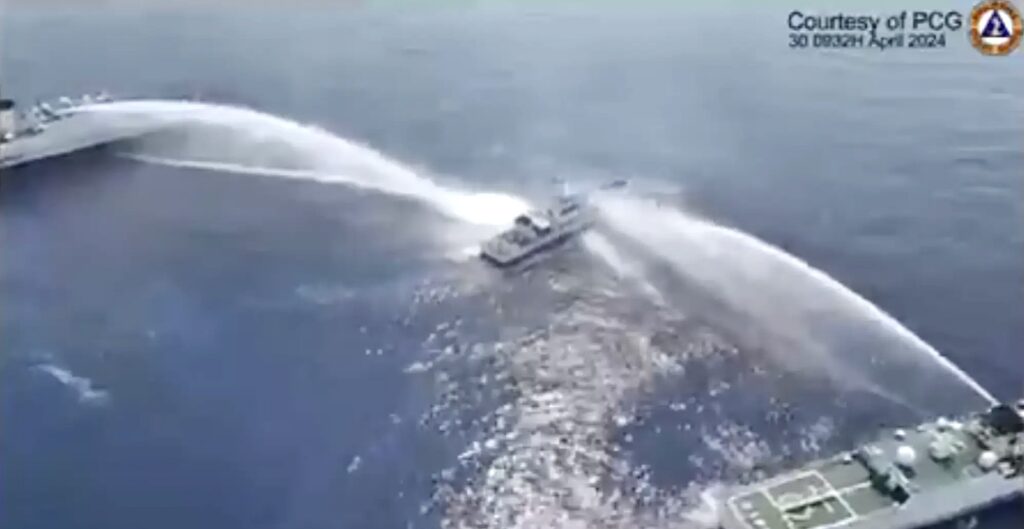
- H. Chinese PLAN warships firing water cannons at a Philippine Coast Guard vessel in 2024, off Scarborough atoll. Shortly after this photo was taken one of the PLAN ships intentionally collided with the Philippine vessel, and damaged its radars with its water cannons.
-

- I. Current Philippines President Rodrigo “Bong Bong” Marcos and his Vice President Sara Duterte in happier times. The tattoo on her left arm was originally the German phrase “Ich bin der Sturm” – “I am the storm” — but she covered it up with a traditional Philippine design. Sara was impeached and is now on trial in the Philippine Senate, for alleged corruption and conspiring to kill Bong Bong. Bad bad!


Comments are closed.